Garmin CIRQA vs WHOOP vs Polar LOOP vs Fitbit Air vs Helio Strap Pro: 2026 Comparison
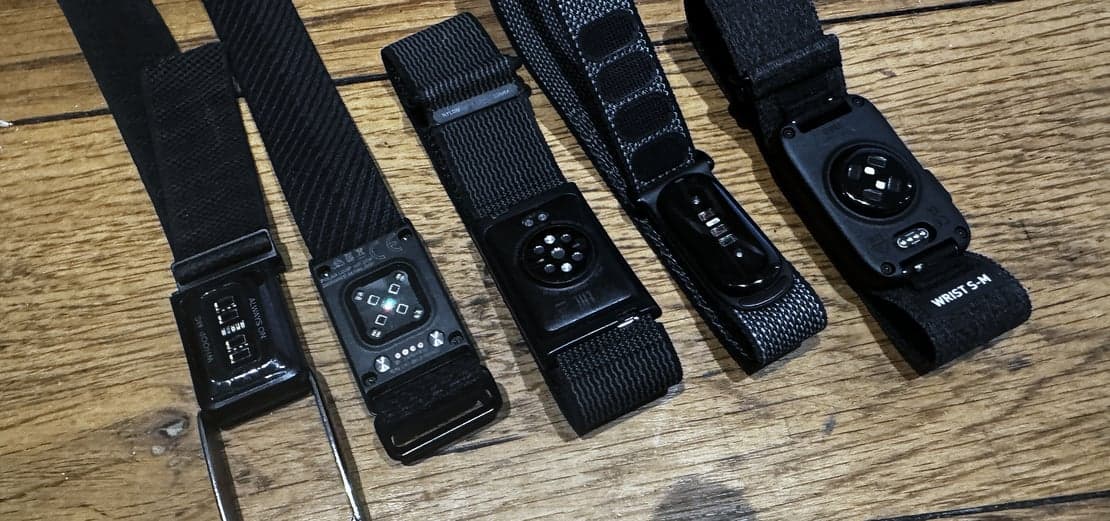
Five screenless trackers are now fighting for the same wrist. In 2026, the category has matured fast: Garmin CIRQA at $199, WHOOP 5.0 on subscription, Polar LOOP at around $149, Amazfit Helio Strap Pro at $129, and Fitbit Air at $109 all promise recovery metrics, continuous heart rate, and no screen to distract you. The question is which one actually delivers for athletes who train seriously.
Sensors and Hardware
All five use optical PPG sensors on the wrist to measure blood volume changes and derive heart rate and heart rate variability. None of these use electrical impulses like a chest strap would. The differences are in how they process that PPG signal. Garmin's CIRQA runs the Elevate 4.1 sensor, not the Gen 5 found in the Forerunner 965 or Fenix 8 series, which is a real question mark given the price point , we broke that down in detail in our [Garmin Elevate 4.1 in CIRQA piece](/en/articles/garmin-elevate-4-1-in-cirqa-why-not-gen-5-2026-08-07). WHOOP 5.0 uses its fifth-generation optical array with five LEDs and four photodiodes, which is the most sophisticated hardware in this group. Polar LOOP leans on Polar's proven optical stack, solid but not cutting-edge. Helio Strap Pro and Fitbit Air are the budget tier: functional PPG, but less raw accuracy in high-motion conditions.
Heart Rate, HRV, and Recovery Accuracy
This is where the field splits. WHOOP 5.0 remains the reference for continuous HRV tracking in this screenless category. Its 100 Hz sampling rate during sleep and its proprietary recovery algorithm, which factors in HRV, resting HR, respiratory rate, and sleep performance, is still the most complete picture available without a screen. Garmin CIRQA is competitive during rest and low-intensity activity, and in our [Hyrox and open water accuracy test](/en/articles/garmin-cirqa-accuracy-tested-hyrox-open-water-real-results-2026-08-07) it held up better than expected in functional fitness conditions. Polar LOOP's HRV accuracy is strong in sleep but Polar's recovery score, called Nightly Recharge, is well-established and trustworthy for endurance athletes specifically. Fitbit Air and Helio Strap Pro lag here. Fitbit's HRV reading is adequate for casual users but the sample rate and algorithm depth don't match WHOOP or Garmin.
App Quality and Ecosystem
The app experience decides the winner for many athletes. WHOOP's app is still the cleanest screenless experience: strain scores, recovery percentages, sleep coaching, and monthly performance reports that actually teach you something. Garmin Connect is the deepest ecosystem here by a wide margin , if you already use a Garmin watch, the CIRQA feeds data into the same dashboard, the same training load model, and the same Body Battery metric. That integration is genuinely useful. But the CIRQA's dependency on Connect+ for some features is worth understanding before you buy; our [battery and Connect+ dependency article](/en/articles/garmin-cirqa-battery-life-and-connect-dependency-explained-2026-08-06) covers what you actually need the subscription for. Polar Flow is reliable and well-suited for runners and cyclists who care about long-term training load trends. Fitbit's app has improved but still feels consumer-grade next to WHOOP or Garmin. Amazfit Zepp is functional, nothing more.
Battery life is a real differentiator in daily use. Garmin CIRQA claims 14 days and gets close to that in practice, around 11 to 12 days with continuous optical HR on. WHOOP 5.0 claims 14 days too but realistically lands at 9 to 10 days with its aggressive sampling. Polar LOOP hits 7 days. Fitbit Air manages 6 days. Helio Strap Pro surprises with up to 10 days at moderate sampling rates. If you hate charging, CIRQA and Helio Strap Pro are your best bets. WHOOP's charge-while-wearing battery pack is a clever solution but adds bulk.
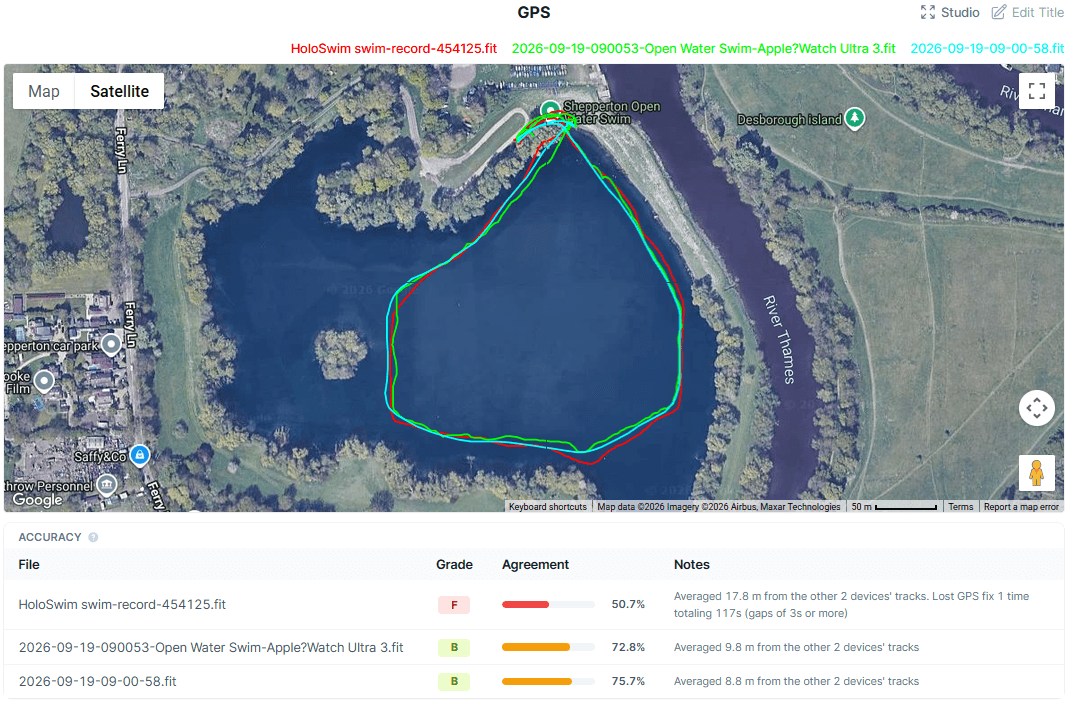
For swimmers and triathletes, waterproofing ratings matter but so does optical accuracy in water. All five are rated 5 ATM or better. WHOOP 5.0 and Garmin CIRQA both handle open water swimming reasonably well for continuous HR monitoring, though neither will replace a chest strap for real swim intervals. Polar LOOP's swim tracking is limited to basic stroke and duration metrics. Fitbit Air and Helio Strap Pro are essentially swim-proof but not swim-smart.
What Each Tracker Gets Wrong
No product here is without compromise. WHOOP's subscription model, currently $30 per month for the full experience, makes it the most expensive option over two years by a significant margin. Garmin CIRQA has no GPS and no screen, which sounds obvious but athletes keep expecting more from a $199 Garmin product , the specs and positioning are explained well in our [CIRQA specs and bicep wear article](/en/articles/garmin-cirqa-specs-price-and-bicep-wear-explained-2026-08-07). Polar LOOP's ecosystem is strong but the hardware itself has not advanced as fast as competitors since 2024. Fitbit Air feels underpowered for any athlete training more than five hours per week. Amazfit Helio Strap Pro has almost no third-party integrations, which kills it for anyone using Training Peaks, Intervals.icu, or Strava as their primary training log.
The CIRQA's full review goes deeper on the WHOOP comparison if you want one direct head-to-head: [Garmin CIRQA Review: $199 Screenless Band vs Whoop 5.0](/en/articles/garmin-cirqa-review-199-screenless-band-vs-whoop-5-0-2026-08-06). Short version: CIRQA wins on ecosystem integration and battery, WHOOP wins on algorithm depth and app polish.
Buy WHOOP 5.0 if recovery coaching and algorithm depth matter most and you are willing to pay the subscription. Buy Garmin CIRQA at $199 if you are already in the Garmin ecosystem and want your band to talk to your Fenix or Forerunner without any friction. Polar LOOP suits the endurance athlete who trusts Polar's sleep science and wants a lower price. Skip Fitbit Air unless your training load is genuinely light. Helio Strap Pro is the best budget option under $130 but outgrows its app within six months of serious use.
Mentioned watches
Head-to-head comparisons
Buying guides