Garmin Fenix 9: 18 Variants Leaked Before August 25 Launch
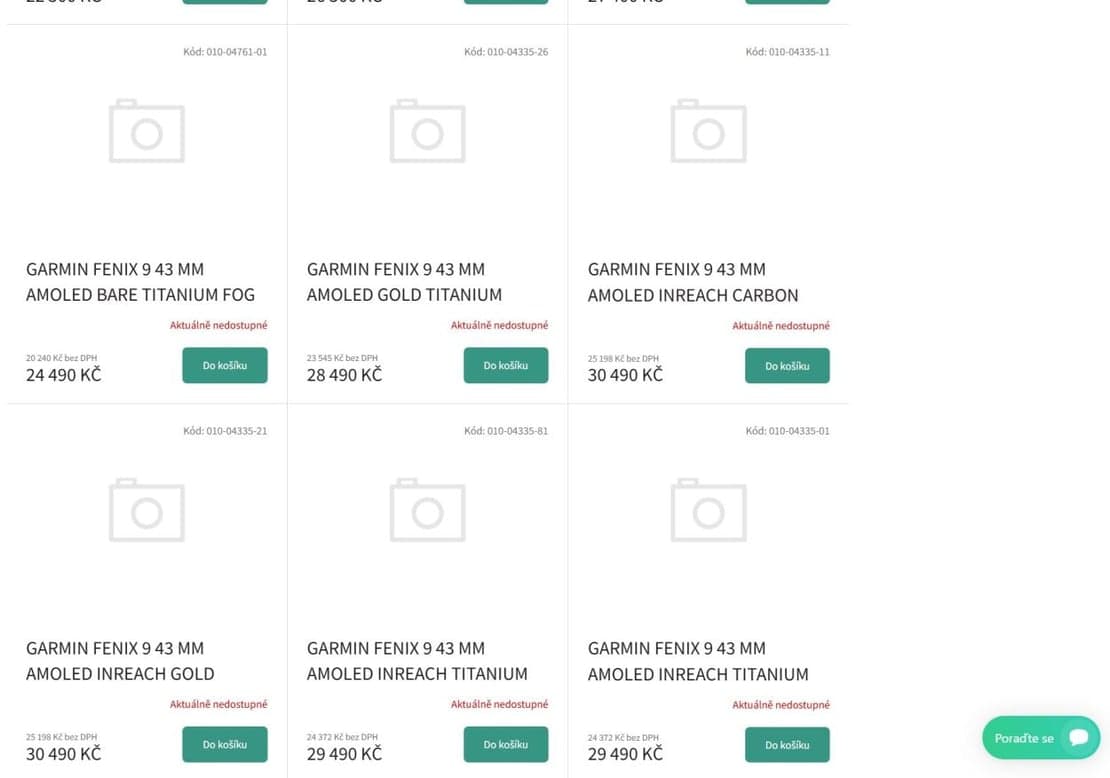
A Czech retailer just listed 18 Fenix 9 product configurations ahead of Garmin's August 25 livestream, and the leak was spotted by Fitness Tracker Test before anyone could pull it down. That's not a rumor. That's a retailer with stock codes in a database, which means the Fenix 9 is real, it's close, and 18 variants is a serious product line. For context, the Fenix 8 launched with a similarly wide SKU spread covering titanium, sapphire, solar, and size options.
What 18 Variants Actually Signals
Eighteen configurations is a lot, but it follows Garmin's established playbook. Expect size splits (47mm and 51mm at minimum, possibly a 43mm), material tiers (DLC-coated steel, titanium), glass options (Gorilla Glass vs. sapphire), and solar vs. non-solar. The Fenix 8 already offered six size-and-material combos before you even counted color variants. Garmin has been pushing solar harder since the Fenix 7 generation, and the [Fenix 9 rumor roundup we published](/en/articles/garmin-fenix-9-edge-1060-lte-microled-august-2026-rumor-roundup-2026-08-22) points to a possible MicroLED display option in at least one SKU. If that's accurate, the pricing ceiling on the top-tier Fenix 9 could go significantly above the Fenix 8 Solar Sapphire's current street price.
The August 25 livestream is expected to reveal three watches at once: the Fenix 9, a Fenix E (likely a more accessible entry point, similar to how the Instinct 3 sits below the Fenix line), and the Enduro 4. That's a full ultraendurance lineup drop in one event. Garmin doesn't usually do that unless the products are genuinely differentiated. The Enduro 4 is almost certainly targeting the Coros Vertix 3 and its claimed 140-hour GPS battery life, a number the Fenix 9 probably won't match in standard GPS mode but may approach with multiband off.
Sensors and Performance Expectations
The Fenix 8 already runs Garmin's Elevate v5 optical PPG sensor at the wrist, reading blood volume changes via light to estimate heart rate and SpO2. The Fenix 9 will almost certainly stay on optical PPG for wrist HR, with chest strap ECG (electrical impulse) pairing for athletes who want true beat-to-beat accuracy during intervals. What matters more for the Fenix 9 is whether Garmin upgrades the barometric altimeter precision and multiband GPS chipset. The Fenix 8 with multiband GPS is already competitive with the Coros Vertix 2S and Polar Grit X2 Pro on track accuracy, typically holding within 1 to 2 percent distance error on technical trail routes. A hardware refresh here would matter for ultra runners doing 100-mile events where accumulated GPS drift adds up.
Recovery metrics are where the Fenix line has been playing catch-up with Whoop 5.0. Whoop's continuous PPG sampling and HRV analysis gives athletes a daily recovery score that most endurance coaches treat as genuinely useful. Garmin's HRV Status on the Fenix 8 is solid but requires a stable overnight reading and doesn't update continuously. If the Fenix 9 moves toward more frequent HRV sampling windows, that's a meaningful upgrade for triathletes and cyclists who train twice a day and want intra-day recovery signals.
Use Cases: Who This Watch Is For
For Hyrox athletes and CrossFitters, the Fenix 9's indoor tracking and barbell-based workout detection will matter more than raw GPS precision. The Fenix 8 already handles this reasonably well, but the auto-rep counting is inconsistent on Olympic lifts. Any improvement there in the Fenix 9 firmware would make it more competitive against the Apple Watch Ultra 2, which actually handles gym workouts with a cleaner UI even if its battery life is nowhere close (36 hours max vs. the Fenix 8's 18 days in smartwatch mode). Swimmers get a watch that's rated to 10ATM with automatic stroke detection and SWOLF scoring, same as the Fenix 8, so expect continuity there rather than a reinvention.
Cyclists pairing the Fenix 9 with a power meter will care about the cycling dynamics data and structured workout execution. Garmin's Connect platform still has the deepest third-party integration in the category, including direct TrainingPeaks and Zwift sync. Coros is closing that gap with its own training load tools, but the ecosystem depth still favors Garmin for athletes who are already embedded in that world. Running-specific features like running power (wrist-derived, not footpod), vertical oscillation, and ground contact time have been on the Fenix since Gen 7. Expect refinement, not removal.
What's missing from this pre-launch picture is pricing and any confirmation of the MicroLED rumor. If MicroLED is real on even one SKU, that's a display brightness and efficiency leap that would make the Fenix 9 Solar genuinely different from the competition. But unconfirmed hardware is unconfirmed. The 18 variant count also raises questions about where the Fenix E sits in pricing. A cheaper Fenix-branded watch risks cannibalizing the Forerunner 965, which currently does most of what a mid-tier Fenix does at a lower price point.
The Fenix 9 looks built for serious endurance athletes who want one watch for trail ultras, triathlons, gym sessions, and daily HRV tracking without swapping devices. If the MicroLED SKU lands under $1,100 and battery life improves by at least 20 percent over the Fenix 8, it makes a strong case over the Coros Vertix 2S at $699. If it's just incremental sensor polish at higher prices, the Fenix 8 on sale becomes the smarter buy. Tuesday will settle it.
Mentioned watches
Head-to-head comparisons
Buying guides