Google Pixel 11 Ad Reveals Unannounced Wearable: Fitbit Charge 7 or New Device?
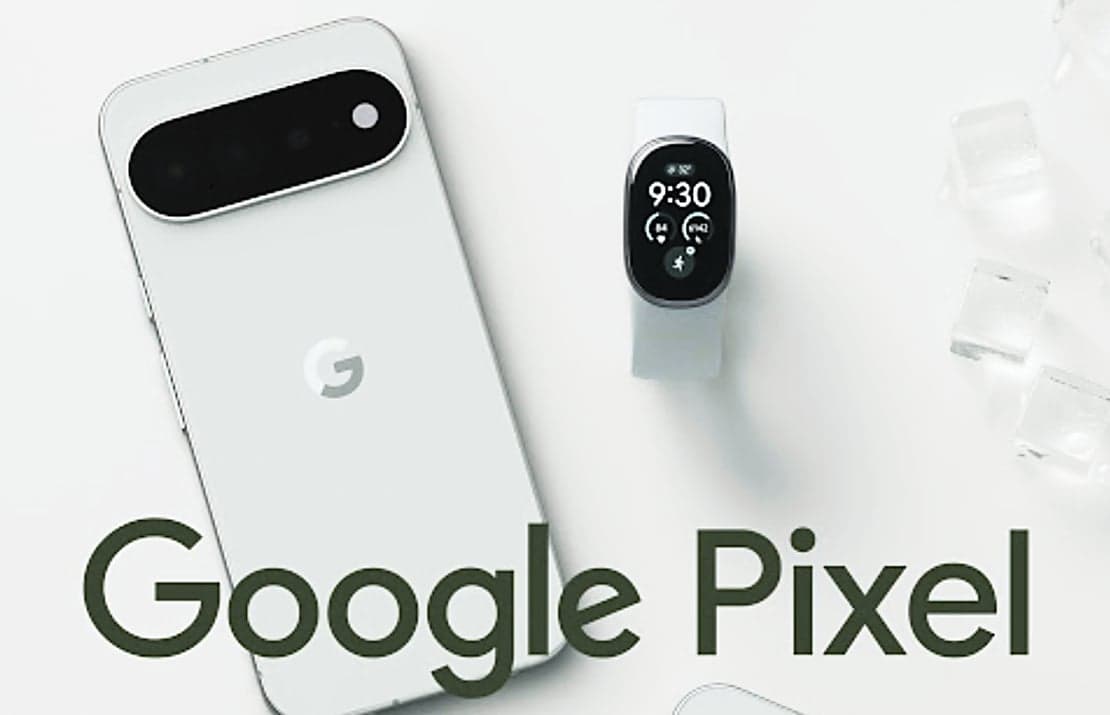
Google's own marketing team may have just leaked their next wearable. In Pixel 11 promotional ads, a mystery device appears twice, same silhouette, same color options, and it matches neither the Pixel Watch 5 nor the recently spotted Fitbit Air. Two appearances rule out a stray render or production error. Whatever this thing is, Google chose to put it on screen intentionally, or someone on the creative team had very loose approval protocols.
What the Device Actually Looks Like
From the ad footage, the form factor reads more like a fitness band than a full smartwatch. The profile is thinner and longer than the Pixel Watch 5's circular case, which sits around 41mm and runs Wear OS with a full app stack. The mystery device looks closer to the Fitbit Charge 6's rectangular tracker silhouette, roughly 36mm display area with a slim band. Color variants visible in the ads suggest a consumer-focused, accessible price point rather than a premium positioning. Google hasn't confirmed a name, a spec sheet, or even that the device exists officially.
The Fitbit Charge 6 launched in late 2023 at $159, and a Charge 7 would fit neatly into Google's strategy of keeping a budget fitness tracker below the Pixel Watch line. The Charge 6 uses a PPG optical sensor array at the wrist for heart rate and SpO2 tracking, plus a built-in GPS and ECG capability via the touchscreen electrode. If the Charge 7 follows that template, you'd expect similar optical-based heart rate monitoring with potential improvements to the sensor stack. Fitbit's optical PPG accuracy on wrists has historically trailed Garmin's Elevate v5 and Polar's Precision Prime in dynamic running conditions, so there's real room to improve.
How This Fits Google's Wearable Strategy
Google is currently running two parallel wearable tracks. The Pixel Watch series competes in the $349-plus smartwatch tier against Apple Watch Series 11 and Samsung Galaxy Watch 8. The Fitbit brand handles the sub-$200 fitness tracker segment, where Garmin's Vivosmart 6 and Whoop's subscription model create genuine competition. A Fitbit Charge 7 would reinforce that lower tier without cannibalizing Pixel Watch sales. The question is whether Google adds any meaningful sensor upgrades or just refreshes the design.
For endurance athletes, the Charge lineup has always been a casual fitness tool rather than a serious training device. No multi-band GPS (the Charge 6 uses single-frequency L1 GPS), no barometric altimeter with the precision Garmin packs into even its Forerunner 165, and no structured workout planning beyond basic activity tracking. A Hyrox athlete or a marathoner running track intervals needs more than step counts and zone-two heart rate estimates. That said, the Charge series does appeal to the athlete who wants a lightweight 24/7 recovery monitor alongside a more capable primary watch, a pairing strategy similar to how some athletes use a Whoop 5.0 strap for sleep and recovery while racing with a Garmin Forerunner 965.
Sensor Expectations and Realistic Upgrades
If the Charge 7 lands with upgraded optical sensors at the wrist, the benchmark to beat is Garmin's Elevate v5, which uses multiple PPG wavelengths to improve accuracy during high-cadence activities like cycling and running. Polar's Precision Prime system, used across the Vantage and Ignite lines, combines green and red light wavelengths to handle motion artifact better than older single-wavelength designs. Google acquired Fitbit's sensor team in 2021, and five years of iteration should theoretically produce something more competitive. SpO2 monitoring, if included, would still rely on optical methods using red and infrared light to estimate blood oxygen saturation, the same physics every wrist tracker uses.
A built-in ECG feature, as seen on the Charge 6, works differently from optical sensors. It measures electrical impulses from the heart when a finger touches the bezel electrode, completing a circuit across the chest. That's a genuine single-lead ECG reading, not PPG. Garmin's ECG app on the Venu 3 and Fenix 8 series works the same way. Whether the mystery device carries this feature forward matters for users who want AFib detection screening, though it's a passive tool, not a clinical diagnostic.
What's missing from everything we know is training-specific software depth. Garmin's Training Readiness score, Coros's EvoLab VO2max modeling, and Polar's Training Load Pro are genuinely useful for periodized training plans. Fitbit's metrics have always stayed surface-level: daily readiness score, sleep stages, and zone minutes. Unless Google has built new algorithms into this device, serious athletes will still treat any Charge successor as a secondary tracker at best.
The real disappointment, if this is a Charge 7, is what Google probably won't include. No multi-frequency GPS means route accuracy on tree-lined trails or urban canyons will still drift. No detailed running dynamics, no power meter integration for cyclists, no open-water swimming stroke detection. The Garmin Vivosmart 6 at a similar price point still trails Garmin's sport-watch ecosystem in depth, and a Charge 7 would face the same ceiling. For $159 to $199, the competition from budget Coros options and Garmin's own Forerunner 55 at $199 with full GPS and structured workouts is genuinely tough.
Bottom line: if you're a triathlete or a runner logging serious mileage, the mystery Google device is probably not your primary watch. It could make sense as a lightweight daily wear and sleep tracker paired with a Garmin Forerunner 965 or Coros Pace 4, similar to the role Whoop fills for recovery-focused athletes. At an expected sub-$200 price, it competes with the Garmin Vivosmart 6 and Fitbit Charge 6 itself. Wait for confirmed specs before forming any strong opinion, but don't expect a tool that replaces a real multisport watch. Google's wearable ambitions, as we've covered tracking [the broader market shifts](/en/articles/garmin-s-ring-cirqa-band-and-glasses-bet-on-wearables-growth-2026-08-20), seem focused on the mass consumer rather than the performance athlete.
Mentioned watches
Head-to-head comparisons
Buying guides