RayNeo iO Smart Glasses: MicroLED HUD for Athletes Reviewed
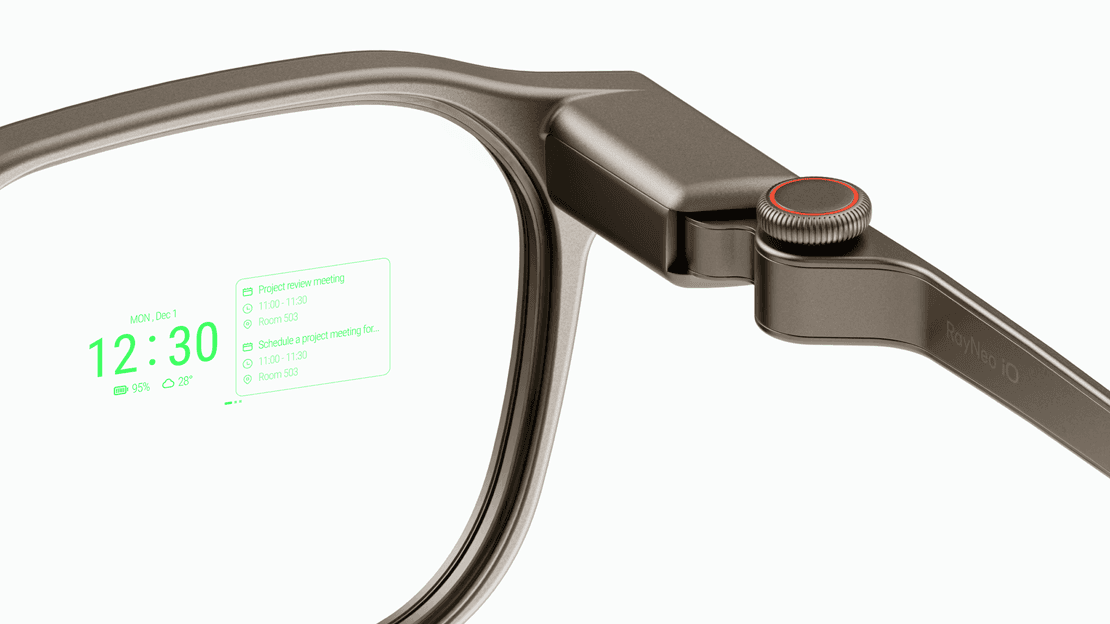
RayNeo's iO Smart Glasses launched September 4 at $479, and they matter to endurance athletes for one specific reason: a microLED waveguide display that weighs just 33 grams total. That is the weight of a standard gel. For context, previous AR glasses attempts like the Vuzix Blade or early Recon Jet hovered around 80 to 100 grams and felt like wearing a small brick on your face during a tempo run.
What the MicroLED Waveguide Actually Does
MicroLED is not OLED and not LCD. It is self-emissive at the pixel level, which means better brightness in direct sunlight without the power drain of backlit displays. The waveguide part is the optical magic: light from the projector bounces through a thin glass lens and appears to float in your field of view. RayNeo uses a similar waveguide principle to what Microsoft put in HoloLens, but at a fraction of the cost and weight. At $479, that is roughly the price of a Garmin Forerunner 965, which tells you how fast this category is maturing. The display sits in the right lens and projects data without blocking your peripheral vision, which matters enormously when you are descending at 45 kph on a bike.
For cyclists and triathletes, the pitch is simple: glanceable pace, power, and heart rate without looking down at your wrist or a Garmin Edge mounted on the bars. Runners chasing splits on a track or in a road race get the same benefit. The iO connects via Bluetooth and ANT+ to external sensors, so it can pull data from a chest HRM strap (which reads electrical impulses via ECG for clean beat-to-beat accuracy) or pair with an optical PPG sensor on your wrist watch. Battery life is rated at 6 hours in active display mode, which covers most triathlons except full Ironman.
How It Compares to Watching Your Garmin
The honest comparison here is not against other smart glasses. It is against the behavior of looking at your Garmin Fenix 9 or Forerunner 965 mid-effort. Studies on cognitive load during exercise consistently show that a sub-200ms glance at a HUD costs less mental energy than a wrist rotation plus screen read. In practice, during a Z3 bike interval at 280 watts, keeping your head in aero position while checking power is a real advantage. The Garmin Edge 1050 on your bars does this too, but you still have to drop your chin. The iO keeps your gaze forward.
The display resolution and brightness specs are not yet independently verified at the time of writing. RayNeo claims visibility in bright sunlight, which is the key test for outdoor endurance use. The Recon Jet failed this test badly in 2015. If RayNeo delivers on that claim, it closes the biggest gap that killed every previous cycling HUD. Connectivity is the other variable. ANT+ support means compatibility with Garmin, Wahoo, and Polar sensors out of the box, which is the right call for the endurance market.
What Athletes Actually Care About
For a Hyrox or CrossFit athlete, the use case is narrower but real: station transitions where reading a watch mid-movement is awkward. For open-water swimmers, these are useless (no waterproofing is mentioned). For trail runners, the 33-gram weight means no bounce penalty on technical terrain, unlike a head torch setup. The pairing with a barometric altimeter on your existing watch (the Fenix 9 uses air pressure to calculate elevation in real time) means the iO can display grade-adjusted pace pulled from your watch's data stream, which is a genuinely useful metric on hilly courses.
What is missing or disappointing: no onboard GPS, no onboard sensors, no SpO2, no storage. The iO is purely a display peripheral. It is entirely dependent on your phone or watch for data. Six hours of battery sounds fine until you realize a full Ironman bike leg alone is 5 to 6 hours, leaving zero margin. Prescription lens integration details are vague, which excludes a meaningful portion of athletes. And $479 is not cheap when a Garmin Forerunner 165 at $249 gives you a full training ecosystem on your wrist.
The bigger picture here is what RayNeo proves for the rest of the market. The5kRunner flagged earlier this year that Garmin's long-rumored HUD project was waiting on exactly this: microLED at consumer weight and price. RayNeo just showed it is doable. Whether Garmin moves on that now, especially post-Fenix 9 launch (which already pushed the brand's hardware ambitions hard), is the follow-up question worth watching. Check our breakdown of the [Garmin Fenix 9 and its new features](/en/articles/garmin-fenix-9-and-9-pro-bring-titanium-and-built-in-satellite-2026-08-25) to see where Garmin's current hardware ceiling sits.
Buy the RayNeo iO if you are a cyclist or triathlete who has already budgeted for a second performance device and wants genuinely glanceable data without breaking aero. Skip it if you want an all-in-one solution or need more than 6 hours of runtime. The direct alternative is not another pair of glasses: it is a Garmin Edge 1050 at $599 or a Wahoo Bolt 3, both of which give you more data richness with zero pairing friction. The iO is a compelling first proof-of-concept at real-world weight. Not a complete solution. But closer than anything before it.
Mentioned watches
Head-to-head comparisons
Buying guides