RunSync Builds Structured Garmin Workouts with AI and Training Paces
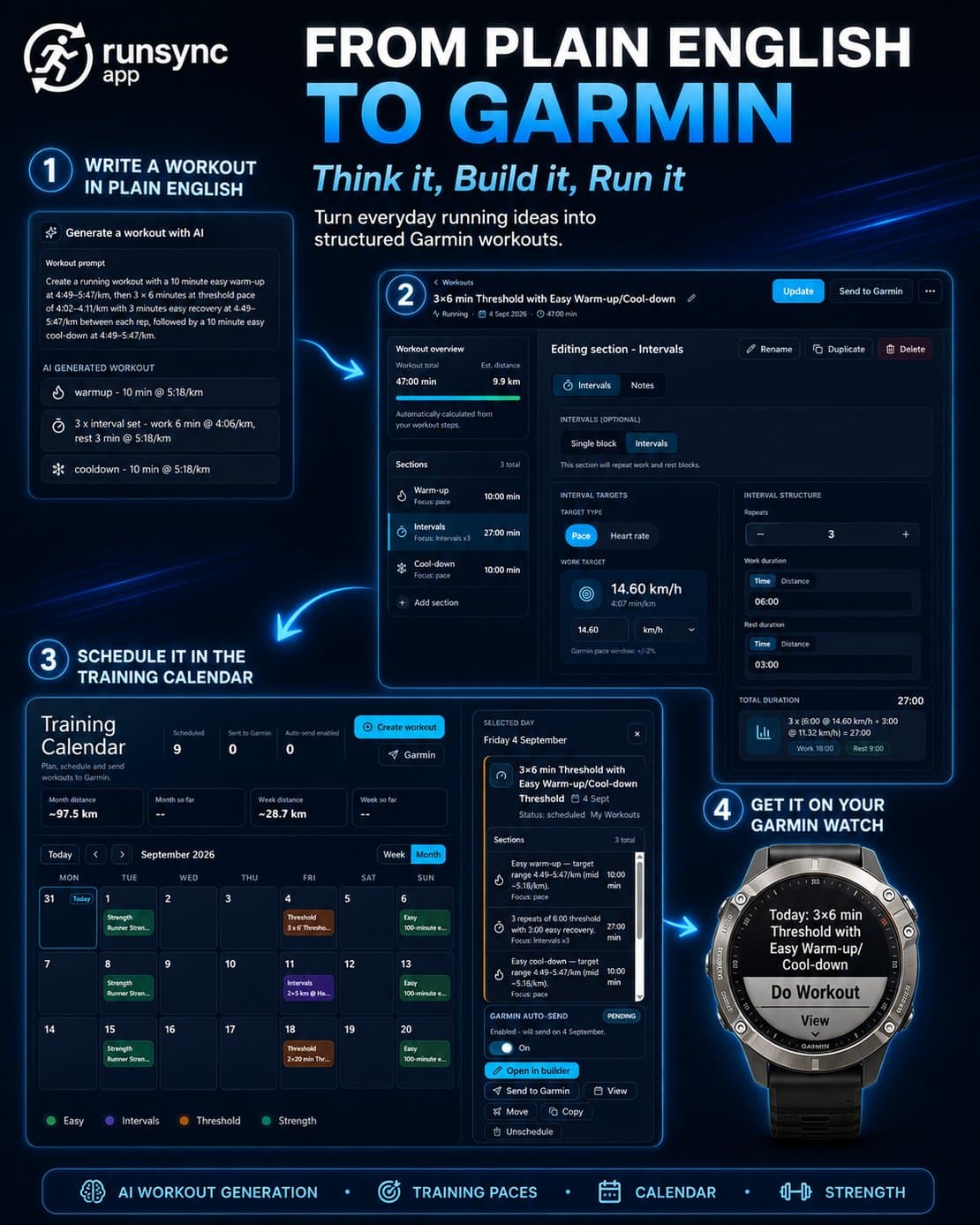
RunSync is a web-based workout builder that lets self-coached runners create, save, and schedule structured workouts directly to their Garmin devices. It sits in a growing category of third-party tools filling the gap that Garmin Connect's own workout builder leaves open , clunky interface, limited AI input, no smart pacing templates. If you coach yourself and run on a Garmin Forerunner 965, Fenix 8, or Epix Pro, this is worth your attention.
Building Workouts and Syncing to Garmin
The core feature is structured workout creation with step-by-step interval logic: warmup, intervals, recovery, cooldown. You set targets by pace zone, heart rate zone, or power, and RunSync formats it as a proper Garmin structured workout file. Sync happens via Garmin Connect IQ or direct API integration, so the session lands on your watch and triggers the on-device guided workout experience with audio cues and auto-lap. That last part matters. A lot of builders stop at export; RunSync closes the loop. It also integrates with a similar workflow to what [AquaPlan does for swim sessions](/en/articles/aquaplan-sends-structured-swim-sessions-directly-to-garmin-2026-07-30), which shows this API path is becoming a reliable standard for third-party tools.
The AI input layer lets you describe your goal in plain text , "I'm racing a half marathon in 6 weeks, current 10K PB is 48 minutes" , and it generates a workout suggestion you can edit before saving. This is not a full training plan generator. It produces single session suggestions, not periodized blocks. Think of it as a smarter starting template, not a coach replacement. The AI output quality is reasonable for common workout types like tempo runs, cruise intervals, and progression runs, but it gets vague on more specific sessions like race-pace lactate work or strides with specific rest protocols.
Training Paces and Templates
RunSync calculates training paces from a recent race result or a manual VDOT entry. Enter a 5K time of 22:30 and it spits out zones: easy at 6:10 to 6:40 per kilometer, tempo at 4:55 to 5:05, interval at 4:35 to 4:45. These are standard VDOT-derived ranges, similar to what TrainingPeaks or Final Surge use, and they hold up. The template library covers the usual suspects: 10x400m, 6x1K, 20-minute tempo, long run with marathon pace finish. You can save custom sessions and build your own library over time, which is genuinely useful if you repeat the same key sessions across training cycles.
Strength training is also in the feature set, though it feels like a secondary priority. You can log strength sessions and add them to your schedule, but the Garmin sync for strength is limited compared to running. No rep-by-rep guidance lands on the watch the way running intervals do. It is more of a calendar placeholder than a structured strength protocol. For anyone doing hybrid training , think Hyrox prep or triathlon S&C blocks , this gap is real. The [Wahoo app's approach to layering metrics](/en/articles/wahoo-app-gets-three-subscription-tiers-and-3dp-running-metric-2026-08-15) shows how subscription-tiered tools are trying to own more of the training stack, and RunSync will need to decide if strength is a real feature or just a checkbox.
Scheduling and Platform Fit
The scheduling interface works as a basic training calendar. You drag sessions onto days, view the week, and the workouts sync to Garmin automatically. There is no Training Stress Score calculation, no load management, no recovery readiness score. If you want that layer, you still need Garmin's own Training Readiness (which sits on the watch using HRV measured via wrist optical PPG sensor overnight) or a separate tool like Whoop, which uses its own PPG-based recovery algorithm. RunSync does not touch the physiological monitoring side at all , it is purely a workout builder and scheduler.
Compared to TrainingPeaks, RunSync is simpler and cheaper. TrainingPeaks Premium runs around 19 USD per month and includes TSS, PMC charts, and coach sharing. RunSync is aimed at self-coached athletes who do not need that depth but want something smarter than building workouts manually in Garmin Connect. It is a narrower tool, deliberately. Whether that is a strength or a weakness depends on your setup.
What is missing is notable enough to flag clearly. No Coros sync. No Polar sync. No Apple Watch support. If you are on a Coros Pace 3 or a Polar Vantage V3, RunSync does not help you today. The Garmin-only focus makes sense as a starting point , Garmin's Connect IQ ecosystem and open API make it the easiest target , but it cuts out a big slice of the self-coached market. The AI session suggestions also lack nuance for experienced runners. A 2:55 marathoner building 100-mile weeks is not going to find useful AI output here; the tool is better calibrated for recreational to intermediate runners in the 25 to 55 minute 10K range.
RunSync is a solid, focused tool for self-coached Garmin runners who want to build and schedule structured sessions without wrestling with Garmin Connect's interface or paying for a full coaching platform. At its current pricing tier, it undercuts TrainingPeaks Premium meaningfully. It is not for Coros or Polar users, not for athletes who need load management, and not a replacement for a real coach. But if you are a Garmin user running 40 to 70 kilometers per week and building your own plans, it removes real friction from the process.
Mentioned watches
Head-to-head comparisons
Buying guides