Sugar Sense Brings Live CGM Glucose Data to 140+ Garmin Watches
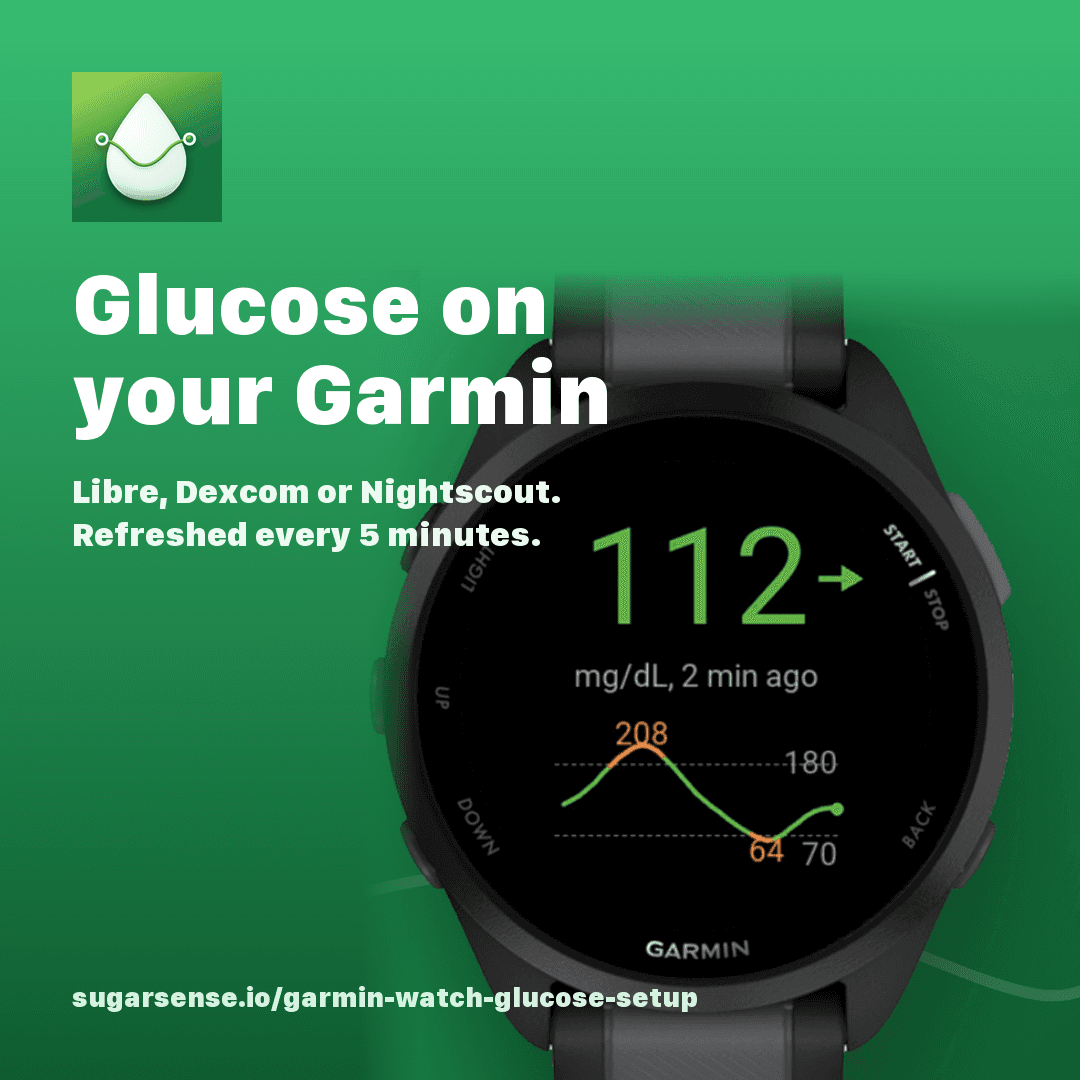
Sugar Sense is a Connect IQ app that pushes real-time continuous glucose monitor (CGM) data directly onto your Garmin watch face and activity screens. It supports FreeStyle Libre, Dexcom, and Nightscout, and works across 140+ Garmin devices. For athletes managing diabetes or experimenting with metabolic tracking, this closes a genuinely frustrating gap: you no longer need to pull out your phone mid-run to check glucose levels.
How the Integration Actually Works
Sugar Sense ships as two separate pieces: a Connect IQ widget for glancing at glucose on your watch face, and a data field you can drop into any activity screen. The data field is the more useful part for endurance athletes. You can place your current glucose reading alongside pace, power, or heart rate on a cycling or running screen, giving you a full metabolic picture in one glance. The widget handles the always-on display side when you are not in an activity.
The CGM sensors themselves (Libre, Dexcom) read interstitial fluid glucose using tiny electrochemical sensors under the skin. That is not the same as optical PPG sensors on your wrist, which measure blood volume changes via light to estimate heart rate. Sugar Sense is not doing any glucose sensing on the watch itself. It is purely a data relay: the CGM talks to your phone via Bluetooth, the phone pushes data to the Garmin via the Connect IQ API. Latency is typically under two minutes in real-world use, which is acceptable for pacing decisions but not for split-second alerts.
Compatibility and Setup
The 140+ device claim covers most current Garmin hardware: Forerunner 255 through 965, Fenix 7 and 8 series, Epix, Enduro 3, Instinct 2 and 3, and older mid-range devices. The setup requires the Garmin Connect app on your phone, the Sugar Sense companion app, and your CGM app (LibreLink or Dexcom G6/G7 app) running in the background. Nightscout support is the standout for more technical users: it lets you pull glucose from a self-hosted server, which means Libre users on older transmitters without direct Bluetooth streaming can still get data on their wrist via a workaround pipeline.
For context, no Garmin watch has native CGM support built into its firmware in 2026. Polar, Coros, and Apple Watch are in the same position. Apple Watch has the tightest CGM ecosystem thanks to direct Dexcom G7 integration via the Dexcom app, but it requires keeping your phone nearby just like Sugar Sense does. The difference is Apple handles the pairing natively; Sugar Sense requires you to manage three apps simultaneously, which adds friction during setup.
Real Use Cases for Endurance Athletes
For a triathlete doing a long ride with a target zone of 90 to 140 mg/dL, having glucose visible on a Garmin Edge or Fenix alongside normalized power and heart rate (measured via optical PPG on the wrist, or electrical impulse from a chest strap for accuracy) is legitimately useful. You can spot a glucose drop before it turns into a bonk, rather than reacting to it. Runners doing two-plus hour efforts in a fasted or semi-fasted state will find the same value. CrossFitters and Hyrox athletes working shorter, more intense sessions may find the two-minute relay delay slightly frustrating when glucose is swinging fast, but it is still more actionable than checking a phone between sets.
Whoop 5.0 has leaned hard into recovery and strain metrics but has no CGM integration as of mid-2026. Coros watches, fresh off their [patent dispute settlement with Garmin](/en/articles/garmin-and-coros-settle-cardiacsense-heart-tech-patent-dispute-2026-05-16), also have no CGM connectivity in their current firmware. Sugar Sense fills a gap that the major brands have not prioritized, and that matters for the estimated 537 million people globally living with diabetes, a portion of whom are serious endurance athletes.
What Is Missing
The relay-dependent architecture is the biggest limitation. If your phone battery dies, your CGM data disappears from the watch. There is no local caching on the Garmin side. Alert functionality is also limited compared to dedicated CGM apps: you get glucose displayed, but high and low threshold alerts depend on your CGM app doing the work, not Sugar Sense itself. The Connect IQ platform also has known refresh rate ceilings, so you will not get sub-minute updates regardless of what your CGM can technically deliver. Setup is genuinely fiddly for non-technical users managing Nightscout.
For athletes already using a Garmin and a CGM, Sugar Sense is close to a no-brainer install. It costs nothing to try via the Connect IQ store. The Dexcom G7 direct integration on Apple Watch is cleaner if you are platform-agnostic, but if you need a baro altimeter, 89-hour GPS battery life, or ANT+ power meter support, Garmin wins and Sugar Sense makes it workable. Not a replacement for a dedicated CGM display. But solid.
Mentioned watches
Head-to-head comparisons