Vitara App Turns Apple Health Data Into Athlete Training Insights
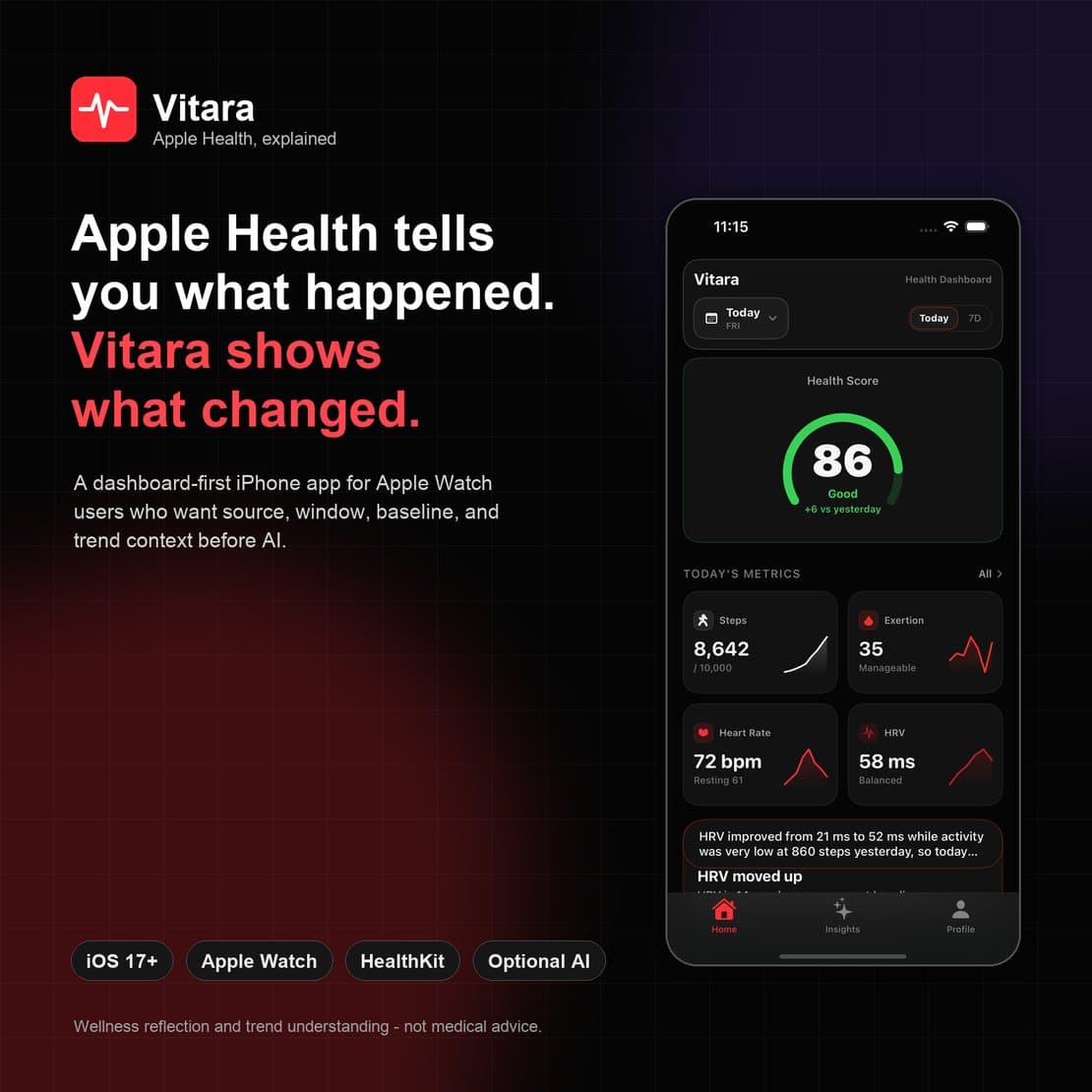
If you train with an Apple Watch and feel like the Health app just dumps numbers at you without meaning, Vitara is worth your attention. It sits on top of Apple Health, pulls in your existing data, and reframes it as trends, recovery context, and training load patterns that actually tell you something useful.
What Vitara Actually Does With Your Data
Vitara is not a replacement for your Apple Watch or its sensors. It is a third-party iOS app that reads the data Apple Health already collects from your Apple Watch's PPG optical sensor (heart rate, HRV), barometric altimeter (elevation), and GPS (pace, distance, route). The app does not generate new measurements. What it does is layer context on top of raw numbers, surfacing week-on-week trends in resting heart rate, HRV scores, sleep patterns, and workout load. For an Apple Watch Series 11 or Ultra 3 user logging 10 to 15 hours of training weekly, that context gap is real. The Health app shows you your HRV was 42ms on Tuesday. Vitara tells you that is down 18% from your 30-day baseline and flags it alongside a 90-minute threshold run the day before.
The HRV handling is where Vitara earns its keep for endurance athletes. Apple Watch measures HRV using the optical PPG sensor during sleep, capturing RMSSD values overnight. Vitara takes those nightly readings and builds a rolling baseline, then visualises deviation in a clean dashboard. This is comparable in concept to what Whoop does with its recovery score, though Whoop uses a dedicated wrist PPG sensor with a higher sampling rate and builds its entire product around that single metric. Vitara is working with whatever Apple Watch captured, which is already solid data, and just presenting it better than Apple does natively.
Comparisons to Dedicated Training Platforms
Garmin's Training Readiness score on a Fenix 8 or Forerunner 965 does something similar but bakes it into the watch itself, pulling from chest strap ECG electrical impulse data if you pair one, optical wrist PPG otherwise, plus sleep, load, and stress metrics. Garmin's ecosystem is self-contained. Vitara's approach is different: it assumes you already own an Apple Watch and just want better analysis software. For athletes already deep in the Apple ecosystem, that is a reasonable assumption. Polar's Nightly Recharge on the Vantage V3 is another comparison point, using optical PPG to measure autonomic nervous system recovery overnight. Polar's interface is arguably more sports-science-forward, but it requires buying Polar hardware. Vitara asks only that you already own an Apple Watch and have been wearing it consistently.
For cyclists and triathletes, Vitara surfaces workout trends across modalities. A triathlete logging swim, bike, and run sessions through the Apple Watch's native workout app will see those sessions categorised and totalled in Vitara's load view. The app does not connect to power meters directly or parse TSS the way Training Peaks or Garmin Connect do. It works from time, heart rate zones (derived from PPG optical data), and distance. That is enough for many runners and cyclists who train by feel and heart rate rather than power, but serious cyclists chasing FTP targets will find it shallow compared to what Garmin Connect or Coros's training hub offers.
AI Summaries and the Optional Layer
Vitara offers optional AI-generated summaries of your health trends. These are plain-language paragraphs explaining what your data showed in a given week, written for someone who does not want to interpret charts. For a busy age-group triathlete juggling work and 12-hour training weeks, that framing has practical value. The summaries are not prescriptive training plans. They are more like a coach glancing at your log and saying "your recovery metrics dipped mid-week, probably worth noting." Coros's AI coach feature goes further, actually adjusting suggested workouts based on load. Vitara stays in the analysis lane, which feels honest about what the app can responsibly do with Apple Watch data.
What is missing is direct integration with third-party hardware. If you run with a Garmin chest strap for ECG-accurate heart rate data and want that feeding into Vitara, you are out of luck unless it routes through Apple Health first, which most Garmin devices do not do natively. Swimmers will also find the data thin. Apple Watch Ultra 3 handles pool and open water swim tracking, but the metrics Vitara surfaces from swim sessions are basic. Detailed stroke rate, SWOLF scores, or distance per stroke do not appear in the dashboard. Cyclists using smart trainers via Zwift or Wahoo will see those sessions only if they are synced into Apple Health, which is an extra manual step some setups require.
Vitara is a smart, well-designed layer for Apple Watch users who feel lost in the Health app's raw data dump. It will not replace a Garmin Fenix 8 for athletes who want native advanced metrics, and it will not satisfy Whoop subscribers who want a single-number daily recovery score with aggressive marketing emails. But for an Apple Watch Series 11 or [Ultra 3](/en/articles/apple-watch-ultra-3-and-series-11-hit-lowest-ever-prime-day-prices-2026-07-21) owner already training consistently, Vitara at its subscription price (around $4 to $6 per month) is genuinely useful. Cheaper than adding a Whoop band, more honest than most AI fitness apps, and it works with what you already have.
Mentioned watches
Head-to-head comparisons
Buying guides