Fitbit Air Review: The $99 Screenless Tracker Changing Everything
A New Era for Wearable Technology
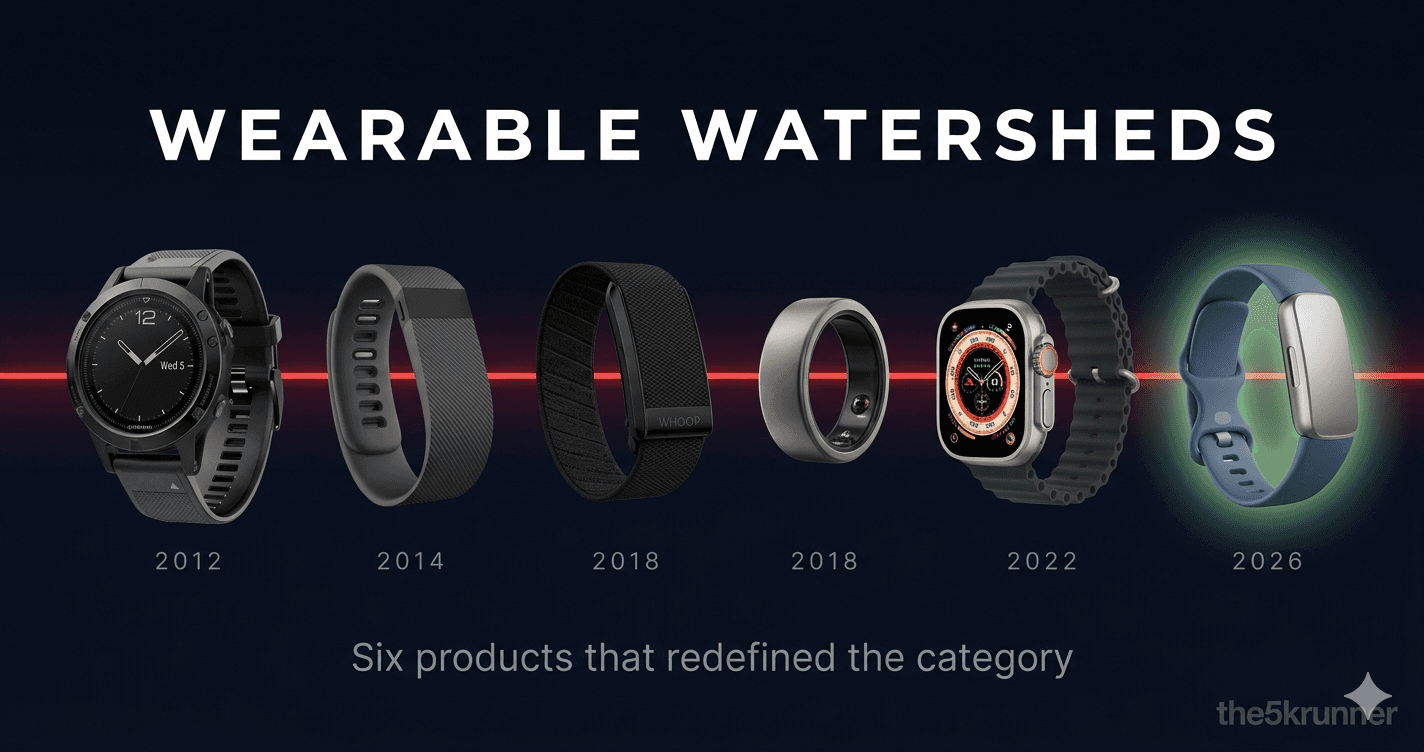
The wearable tech landscape has seen only a handful of truly transformative moments since 2012, and the Fitbit Air appears to be the latest. Launched at $99.99 with no subscription required and shipping from late May 2026, this screenless tracker arrives at a moment when the market is ripe for disruption. It is not simply another fitness band. According to industry observers, it represents Google executing a long-term platform strategy, using hardware as a customer acquisition tool in much the same way it once used Gmail, Maps, and Google Photos. The implications stretch well beyond the spec sheet.
Key Features: What the Fitbit Air Brings to the Table
- Screenless design: Following a minimalist approach similar to Whoop and the Oura Ring, the Fitbit Air strips away the display entirely, prioritizing sensor accuracy and battery efficiency over on-wrist readability.
- 7-day battery life: A full week between charges is a practical milestone for daily wearers and endurance athletes who dislike frequent interruptions to tracking continuity.
- No subscription model: Unlike Whoop, which requires an ongoing membership to access its data, the Fitbit Air delivers full functionality at the point of purchase, a significant differentiator in a crowded market.
- LLM-powered AI Coach: Fitbit has integrated a large language model coaching system that industry analysts argue moves the category into a new knowledge era, one that leaves the basic machine learning approaches of rivals like Garmin and Strava looking dated.
- Google Health ecosystem integration: Backed by Google's data infrastructure, the Air connects into a broader health platform, which is both its greatest strength and, for privacy-conscious users, its most notable consideration.
Real-World Performance and Competitive Context
The Fitbit Air enters a crowded field that includes the Whoop strap, Polar Loop, Amazfit Helio Strap, and Oura Ring 4. Of these, Whoop is the clearest target. The subscription-free pricing alone removes one of the most common objections fitness enthusiasts have about committing to a screenless wearable. Whether the sensor suite, which includes the heart rate and recovery metrics expected at this tier, can match Whoop's accuracy in real training conditions remains to be confirmed through independent long-term testing.
The competitive timing is also telling. Garmin's rumored twin launch of the Cirqa and Vivosmart 6 appears directly aligned with the Fitbit Air's ship date, suggesting Garmin views this release as a genuine threat. Analysis of the two products points to a clear ecosystem split: existing Garmin users are likely to stay within that platform, while Google ecosystem users have a compelling reason to choose the Air. The critical battleground is the Whoop switcher audience, athletes who are subscription-fatigued and looking for a capable alternative.
One area that warrants scrutiny is data privacy. Research across 14 fitness platforms shows Fitbit collects 23 data types, the highest among the platforms analyzed, compared to 12 for Garmin Connect. While Garmin has no third-party ad tracking, Fitbit's position within the Google advertising ecosystem raises legitimate questions that any prospective buyer should weigh carefully.
Who Is the Fitbit Air For?
- Budget-conscious endurance athletes who want recovery and health tracking without a recurring monthly fee.
- Whoop users frustrated by subscription costs who are willing to trade some of Whoop's depth for a one-time purchase price.
- Google ecosystem users already invested in Android, Google Fit, or Google Health services.
- Casual to intermediate athletes who prioritize simplicity, battery life, and AI-driven coaching insights over advanced GPS sport modes.
Verdict
The Fitbit Air is one of the more strategically significant wearable launches in recent memory. At $99.99 with a 7-day battery, no subscription, and an LLM-powered coaching layer, it challenges the subscription model that has defined the premium screenless tracker segment. It will not replace a full-featured GPS running watch for serious competitors, but for the vast majority of health-focused wearers and recovery-oriented athletes, it presents a genuinely compelling case. The data privacy trade-off is real and worth considering. Everything else, however, points to a product that could meaningfully reshape where the entry-level smart tracker market sits in 2026.