Garmin Fenix 9 Review: Brilliant Maps, Poor Upgrade Value
What it is
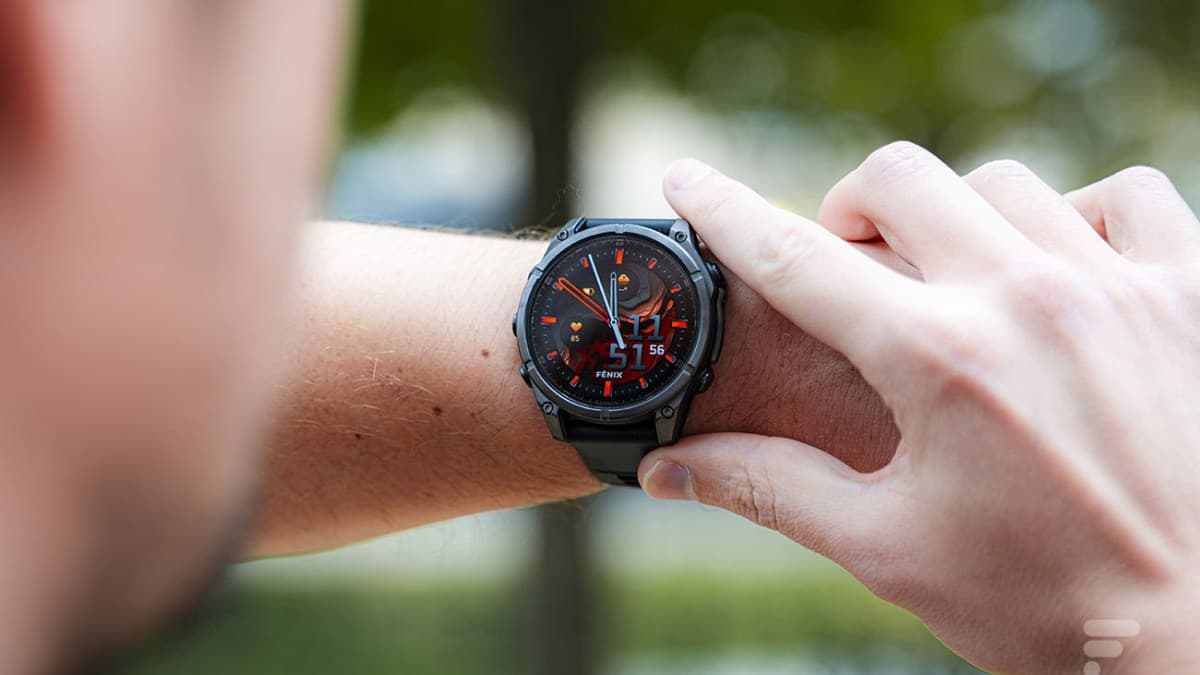
The Garmin Fenix 9 is Garmin's $999.99 flagship outdoor multisport watch for runners, cyclists, hikers, swimmers and triathletes who want serious navigation and training data on the wrist. This is a premium tool, not a casual smartwatch: the standard 47 mm version combines a titanium bezel and case back with a reinforced polymer case, sapphire glass, offline maps and a 1.4-inch AMOLED display. It is expensive, but it is aimed at people who will actually use topo maps, structured workouts, multisport modes and long GPS tracking rather than just count daily steps.
Key specs
- GPS: Multi-band GNSS, simultaneously using GPS, GLONASS, Galileo and BeiDou. Garmin claims positional error below 1.5 m in open sky.
- Battery: Up to 16 days in smartwatch mode and about 90 hours of GPS tracking for the standard Fenix 9. That is excellent endurance for an AMOLED watch, although the Coros Vertix 3 reaches 140-plus hours in standard GPS mode.
- Heart rate and health sensors: Garmin Elevate Gen 5 optical wrist sensor, using PPG LEDs to read blood-volume changes. It supports wrist heart rate, optical SpO2 and HRV-derived recovery metrics. Skin-temperature tracking is also included.
- Altitude: Barometric altimeter with temperature-compensation refinements. It calculates altitude from air pressure, rather than GPS elevation.
- Display: 1.4-inch, 454 x 454 AMOLED touchscreen, sapphire protected, with roughly 2,000 nits peak brightness. Garmin says it is twice as bright as the prior generation.
- Build and weight: The 47 mm standard model weighs 75 g, or 53 g for the case alone. It has a titanium bezel and rear cover, not a full titanium chassis.
- Water resistance: The supplied sources do not state an official water-resistance rating for the standard Fenix 9, so I would not invent one. Confirm the rating for the exact size and regional SKU before buying for diving or regular open-water use.
- Storage: 64 GB, enough for maps and Garmin's estimate of up to 7,000 songs.
Performance in the real world
The Fenix 9's strongest practical upgrade is navigation. Garmin says the revised map engine, backed by 50% more RAM, pans and zooms up to 30% faster than the Fenix 8. That sounds like a minor spreadsheet improvement until you are stopped at a trail junction, trying to drag a detailed topo map around with cold fingers. On a watch that sells itself as an outdoor computer, faster maps are much more valuable than another obscure readiness score. The 64 GB storage also removes a real irritation: you can keep regional maps and offline music on the watch without constantly deleting one to fit the other.
GPS performance should be excellent. Multi-band satellite positioning is exactly what you want under tree cover, around cliffs and in dense city blocks, where ordinary single-band GPS can wander or inflate distance. Source testing describes a tighter trail line than single-band tracking, broadly comparable to the Coros Vertix 3 in heavy cover. Garmin's below-1.5 m open-sky claim is plausible as a best-case figure, but do not treat it as a guarantee in a forested ravine. The meaningful point is that this is a proper multi-constellation, multi-band watch, not a phone-assisted tracker pretending to be an expedition device.
Heart-rate performance is good enough for day-to-day training, steady running and endurance pacing, but the Fenix 9 does not overturn the basic limitations of wrist optics. Its Elevate Gen 5 sensor uses PPG light to observe blood-volume changes. Fit, motion and skin contact therefore matter. During high-cadence intervals, hard strength work and messy Hyrox-style efforts, wrist readings can lag or misread compared with a chest strap. A chest strap such as the Polar H10 detects the heart's electrical impulses via an ECG principle, so it remains the correct choice for athletes who need the cleanest data during maximal efforts. Garmin's training load, Body Battery and HRV-based recovery tools are deep and useful, but they are only as trustworthy as consistent wear and the underlying heart-rate signal.
Sleep and recovery tracking are more useful as trend tools than as medical truth. The Fenix 9 can combine overnight optical heart-rate data, beat-to-beat intervals for HRV-derived metrics, skin temperature and SpO2 into Garmin's broader readiness picture. That makes it more complete than a basic running watch. Still, do not buy it expecting lab-grade sleep staging. Garmin's advantage is how those overnight signals feed into training load and recovery guidance inside Garmin Connect, where the platform remains richer than Polar's for athletes juggling several sports.
The app ecosystem is a major reason to choose Garmin, with detailed Garmin Connect history, structured workouts, maps, sport profiles and broad accessory support. Native running power uses the accelerometer and GPS to estimate watts, and source testing puts a 75 kg runner at threshold around 250 to 320 W. Treat that as a repeatable Garmin metric, not an interchangeable replacement for a Stryd footpod. The watch also supports offline YouTube Music downloads over Wi-Fi to Bluetooth headphones, provided you pay for YouTube Music Premium or YouTube Premium. Garmin estimates storage for about 7,000 tracks. The annoying part is that YouTube Music arrived nearly two months after launch and availability was reportedly inconsistent by region. On a $999.99 flagship, that kind of launch gap is sloppy.
Who it's for / who should skip it
Buy the Fenix 9 if you are an endurance athlete or regular mountain traveller who wants bright AMOLED visibility, dependable multi-band navigation, offline maps and music, plus Garmin's excellent training platform in one rugged package. It is especially compelling for runners and cyclists who navigate unfamiliar routes and want a watch that can last roughly 90 GPS hours rather than one that needs charging after a long weekend.
Skip it if you own a Fenix 8 and are happy with its maps and display. Many of the new software features, including Epic activity recording, Stamina zones, rucking profiles and rowing updates, are coming to supported older Garmin watches. You are paying largely for faster map handling, brighter AMOLED, more storage and refreshed hardware. Also skip it if battery life is your top priority: the Coros Vertix 3 has the clearer endurance advantage. If you want accurate interval heart rate without wearing a chest strap, skip every wrist watch, including this one.
Verdict
The Garmin Fenix 9 is a superb high-end outdoor watch with genuinely better maps, a bright 2,000-nit AMOLED screen and deep Garmin training tools. It is easy to recommend to first-time premium buyers, but existing Fenix 8 owners should keep their money unless faster navigation and 64 GB storage solve a real problem.
Where to buy
Garmin Fenix 9
8.5/10 — TrackerBrief score