Garmin Forerunner: The Endurance Athlete's GPS Watch Lineup
A Legacy Built for Runners
The Garmin Forerunner series has long been the benchmark against which other GPS sports watches are measured. Spanning entry-level models like the Forerunner 70 all the way to the feature-packed Forerunner 970, this lineup covers virtually every tier of endurance athlete, from casual joggers logging their first 5K to seasoned triathletes chasing podium finishes. With consistent firmware updates, a broad ecosystem, and deep training analytics, the Forerunner range remains one of the most compelling choices in the wearables market today.
Key Features Across the Lineup
One of the defining strengths of the Forerunner series is how Garmin segments its models without sacrificing core functionality. Even at the more affordable end, buyers get reliable GPS tracking, optical heart rate monitoring, and structured workout support. At the top of the stack, the Forerunner 970 and 570 recently received firmware version 16.28, which introduced a significant set of improvements.
- Battery Manager Insights: New tools help athletes better understand and optimise battery consumption across different GPS and sensor modes.
- Expanded Multisport Profiles: Triathletes and multi-discipline athletes benefit from additional sport profiles, making transitions and logging more seamless.
- Smart Notification Delays: A quality-of-life upgrade that reduces interruptions during training sessions.
- Bug Fixes: Ongoing stability improvements that reflect Garmin's commitment to long-term software support.
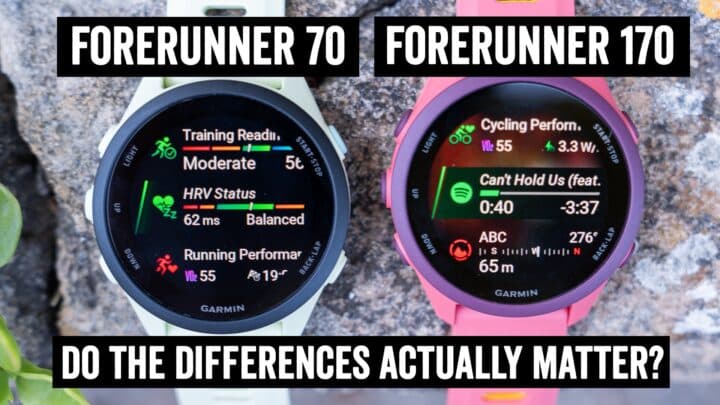
The Forerunner 70 and 170 represent an interesting case study in Garmin's tiered strategy. With only around 27 feature differences and a $50 to $100 price gap, the two watches are remarkably similar, making the choice between them largely a matter of budget and a handful of specific features rather than a dramatic capability jump.
Real-World Performance: GPS and Sensors Under Scrutiny
No watch lineup is without its nuances, and independent testing reveals a mixed but largely positive picture for the Forerunner series. In controlled track testing, the Forerunner 970 faced stiff competition, with both the Huawei Watch GT Runner 2 and Amazfit Balance 2 posting competitive GPS accuracy results, and the Apple Watch Ultra 3 exposing unexpected weaknesses in its own track mode. In open water swimming scenarios, the Forerunner 970 was notably outperformed by the Apple Watch Ultra 3, suggesting that while Garmin excels in land-based disciplines, aquatic GPS accuracy remains an area with room for growth.
On the health monitoring side, an academic study examining the Forerunner 265 raised important questions about HRV reliability. While resting heart rate was measured accurately, the HRV data produced by Garmin's Health Snapshot feature was judged unsuitable for clinical research or rigorous athlete monitoring. This is a meaningful caveat for anyone relying heavily on HRV metrics to guide recovery and training load decisions.
Getting the Most from Your Forerunner
New Garmin owners often underestimate how much setup influences the experience. Adjusting heart rate zones, optimising battery life settings, and configuring data screens from day one can dramatically improve training data quality. The Forerunner ecosystem rewards those who invest time in personalisation, unlocking a level of analytical depth that few competing platforms match.
Who Is the Garmin Forerunner For?
- Beginner and intermediate runners who want reliable GPS, heart rate data, and structured training plans without overwhelming complexity.
- Triathletes and multisport athletes who need seamless sport switching, expanded profiles, and long battery life.
- Data-driven athletes who value Garmin's deep ecosystem, Connect IQ apps, and training load analytics.
- Those cautious about HRV reliance, who should treat Garmin's HRV readings as directional rather than clinically precise.
Verdict
The Garmin Forerunner lineup continues to earn its reputation as the go-to GPS watch series for endurance athletes. Consistent firmware support, a thoughtfully tiered model range, and powerful training analytics give it a durable edge. However, prospective buyers should calibrate expectations around HRV accuracy and open water GPS performance. For running, cycling, and general endurance training, the Forerunner remains a strong, dependable choice built to grow with the athlete wearing it.