Amazfit Cheetah 2 Pro and Whoop on Kejelcha's Wrists at Half Marathon World Record
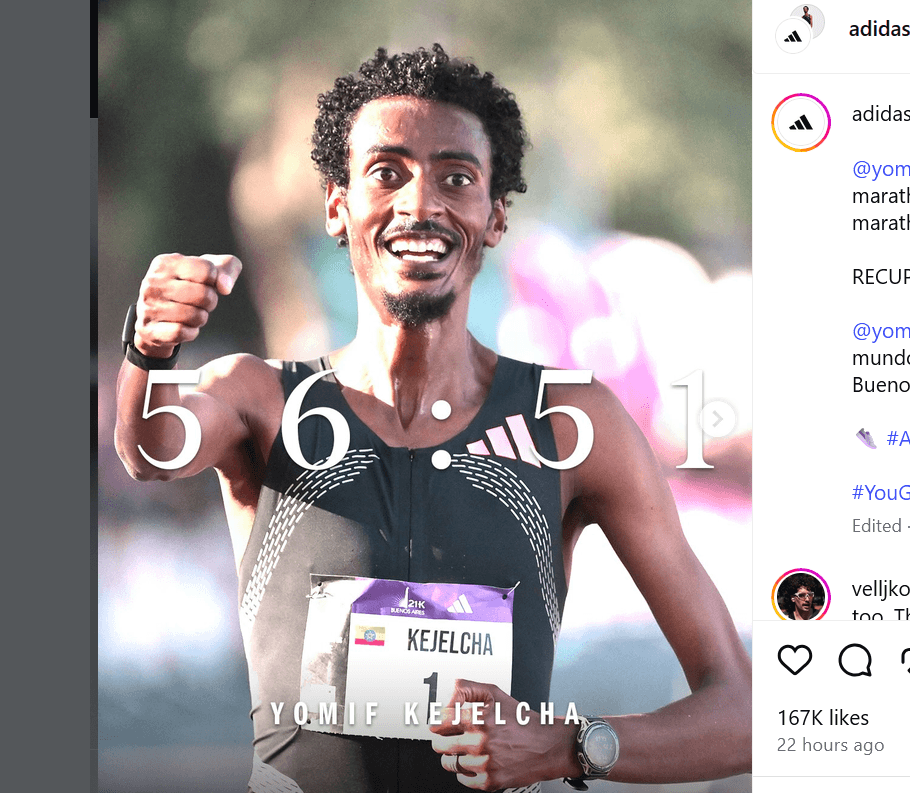
Yomif Kejelcha ran 56:51 in Buenos Aires to set the half marathon world record, and he did it wearing two devices at once: an Amazfit Cheetah 2 Pro on one wrist, a Whoop on the other. That image tells you a lot about where elite athlete tracking sits in 2026. Two completely different tools, two completely different jobs.
What Each Device Was Actually Doing
The Whoop is a recovery and strain monitor first. It runs a PPG optical sensor continuously, reading blood volume changes through the skin to track heart rate, heart rate variability, and sleep. No GPS. No pace data. No display at all. Kejelcha wasn't checking his split on the Whoop mid-race. It was there to log physiological load, period. The Amazfit Cheetah 2 Pro was the actual race watch: dual-frequency GPS, optical PPG heart rate on the wrist, barometric altimeter reading air pressure for elevation changes, and a lightweight build specifically targeting competitive running. These are fundamentally separate categories of device doing separate jobs, and wearing both simultaneously is exactly what serious athletes do.
The Cheetah 2 Pro weighs around 29 grams. That matters at sub-57-minute half marathon pace. Garmin's Forerunner 965 sits at 53 grams, the Coros Pace 3 at 30 grams. Amazfit has been aggressive about targeting the competitive running market with this line, and the weight spec is legitimate. For context, Polar's Vantage V3 is 51 grams. When you're running at roughly 2:42 per kilometer, even wrist weight is a real consideration, not just a marketing talking point.
Sensor Stack and GPS Accuracy
The Cheetah 2 Pro uses dual-frequency GNSS, which means it pulls from L1 and L5 GPS bands simultaneously. This improves accuracy in signal-degraded environments like city canyons. Buenos Aires is a flat urban course, so this matters. Garmin's Forerunner 265 also runs dual-frequency. The Coros Pace 3 does too. Single-frequency budget options like older Amazfit models or entry Garmins struggle more in dense urban settings. The optical heart rate sensor on the Cheetah 2 Pro is PPG-based, reading light reflected off blood vessels beneath the skin. At race intensity, wrist optical sensors on any brand get challenged by motion artifact. That's physics, not a brand problem. If Kejelcha wanted the most accurate real-time heart rate data during the race itself, a chest strap using electrical ECG detection would win every time.
The Whoop 5.0 in 2026 still relies entirely on optical PPG plus an accelerometer and skin temperature sensor. No GPS, no altimeter, no external barometric input. Its strength is the algorithm built on top of continuous 24/7 data collection. HRV-based recovery scores, sleep staging, and strain tracking over days and weeks. That chronic load view is genuinely useful for an athlete managing a training block. It doesn't compete with what a Garmin or Amazfit does during a race. They're not trying to.
Why Elites Wear Two Devices
This isn't unusual at the sharp end of the sport. Elites often separate the real-time navigation and pacing tool from the physiological data logger. Whoop's battery and form factor are built for continuous wear. Amazfit's Cheetah 2 Pro is built for the session itself. Running with both means you don't have to compromise. You get live pace and distance on one wrist and a complete recovery dataset feeding your coaching team on the other. Some Garmin models now integrate recovery metrics that lean on HRV directly, and the Garmin Connect ecosystem has gotten more sophisticated about tracking multi-day load. But Whoop's algorithm and the coaching interface built around it still attract athletes and coaches who want that data separately managed.
For the recreational triathlete or runner, this dual-device setup is overkill. One solid GPS watch handles training load tracking, pace, optical HR, and even rudimentary recovery scoring. The [Cinder app on Apple Watch](/en/articles/cinder-app-review-apple-watch-recovery-scores-with-transparent-formulas-2026-08-19) is a recent example of recovery scoring becoming more accessible without requiring a second device subscription. Amazfit has also been expanding its platform features, with new sport modes and connectivity options rolling out across several models recently, as covered in our [Amazfit rowing and swim tracking update](/en/articles/amazfit-adds-ftms-rowing-and-manual-swim-rest-tracking-to-eight-watches-2026-08-15).
What's Missing or Disappointing
Amazfit's ecosystem remains the weak link. The Zepp app has improved but it still isn't Garmin Connect or even Polar Flow for depth of training analysis. Third-party integrations are patchier than you'd want. If you're a data-driven athlete who lives inside Training Peaks or wants seamless sync to a coach's platform, Garmin and Polar still have structural advantages there. Whoop's subscription model at around $30 per month is also a recurring cost that adds up fast, and the lack of any GPS or display means it will never replace a GPS watch. It's a layer on top, not a standalone solution.
The Amazfit Cheetah 2 Pro sits around $230 to $250. The Coros Pace 3 is a direct competitor at a similar price with a comparable feature set and strong GPS accuracy. Garmin's Forerunner 265 costs more but brings a deeper ecosystem. If you want the lightest possible race watch at that price point and you're a dedicated runner, the Cheetah 2 Pro is worth serious consideration. If ecosystem depth and long-term data analysis matter more than raw weight, Garmin wins. Whoop is an add-on for athletes who want dedicated recovery tracking managed separately. Kejelcha wearing both just confirms that at world record pace, athletes use every tool available.
Mentioned watches
Head-to-head comparisons
Buying guides