Coros Pace 4 Gets Offline Maps at $249: Garmin Beaten Again
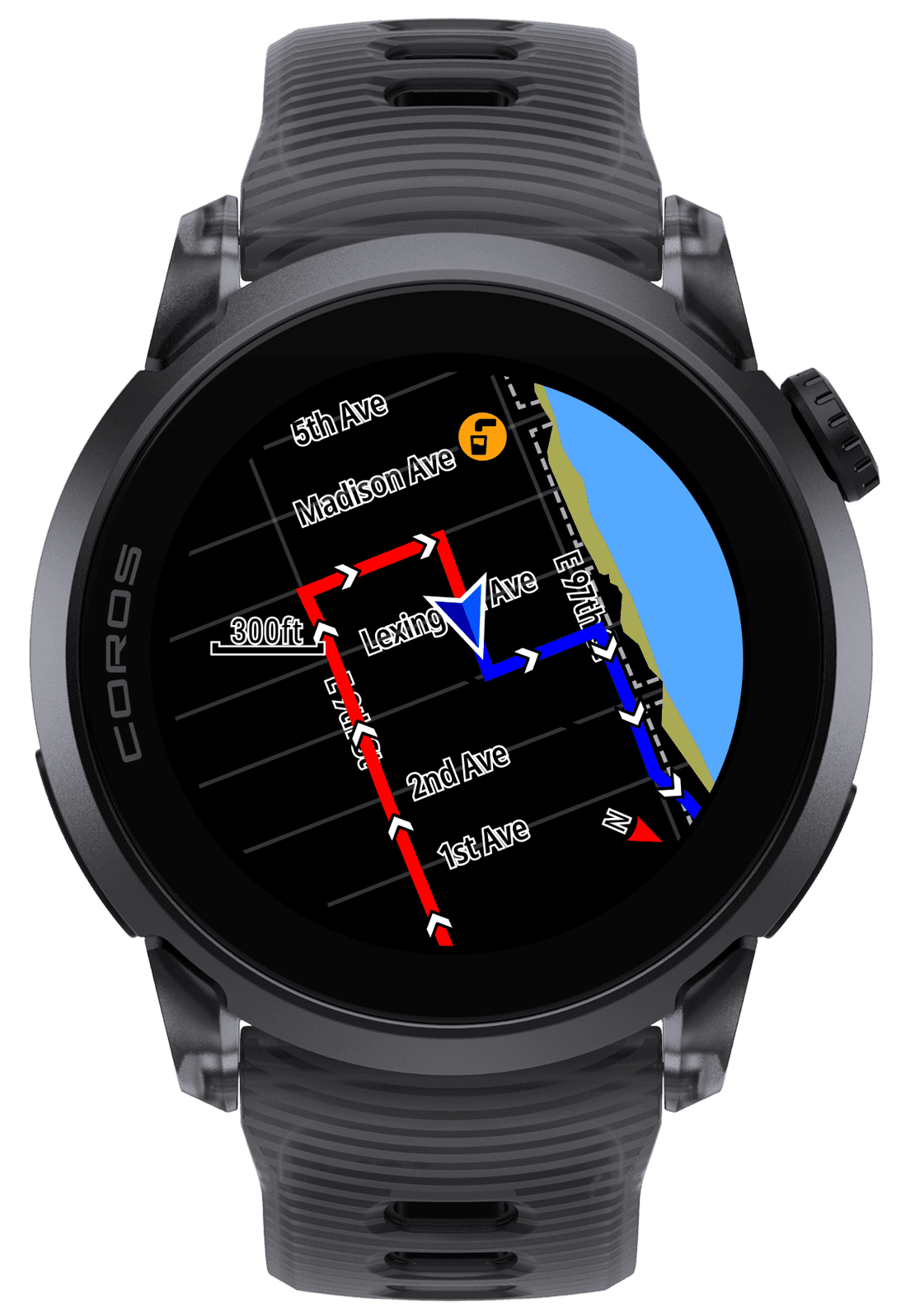
The Coros Pace 4 now ships with offline maps at $249, and that single fact reshapes the entry-level sport watch market in 2026. Until this update, maps at that price point were basically a Garmin Forerunner 965 feature, a watch that costs $599. Coros just blew that gap wide open.
Maps, Price, and What Garmin Actually Offers
Let's be clear about what offline maps mean here. You download terrain and trail data to the watch itself, so you get turn-by-turn navigation and topographic overlays without a phone nearby. Garmin's Forerunner 265 at $449 still doesn't have this. The Forerunner 955 Solar at $499 does. So the Pace 4 undercuts it by $250 and delivers comparable mapping functionality. Suunto Race S had offline maps at around $349, so Coros is now the cheapest option in the field by a meaningful margin. That matters a lot for trail runners and cyclists who want nav without paying flagship prices.
Coros also introduced an Adventure Journal Timeline with this update, which logs your outdoor activities in a visual format tied to map data. Garmin has Garmin Epic for something similar, but Epic leans heavily into social sharing and third-party content. The Adventure Journal feels more athlete-facing, more about your own history than broadcasting it. Whether that's better depends entirely on what you want from a sport watch ecosystem.
Fenix 9 Pro's Map Performance Problem
While Coros adds maps, Garmin is dealing with a different mapping problem: the Fenix 9 Pro apparently can't render them fast enough. Real-world lag tests on map zoom and pan show the Fenix 9 Pro underperforming against competitors, contradicting Garmin's own marketing claims about display speed. That's embarrassing for a $999 flagship. The Fenix 9 Pro uses a memory-in-pixel display, which Garmin markets for outdoor visibility and battery life, but the trade-off seems to be sluggish tile rendering under load. You can dig into the related hardware questions in our [Fenix 9 launch deep dive](/en/articles/garmin-fenix-9-launch-hardware-deep-dive-and-key-questions-2026-09-04).
For triathlon and cycling use cases, slow map rendering is genuinely annoying. Mid-ride, when you're trying to zoom out to check a junction 2km ahead, waiting 2 to 3 seconds for tiles to catch up breaks your focus. The Coros Pace 4's processor handles zoom more responsively in early tests, which is remarkable given the price gap. Apple Watch Ultra 2 also renders maps quickly, though it sacrifices multi-day battery life to do it, sitting at roughly 36 hours in GPS mode versus the Pace 4's claimed 38 hours in full GPS with maps active.
Sensors, GPS, and What the Pace 4 Actually Measures
The Pace 4 uses a wrist-based optical PPG sensor for heart rate, reading blood volume changes through light rather than electrical impulses like a chest strap would. For most steady-state running and cycling, it's accurate enough. For CrossFit or Hyrox workouts with lots of wrist flexion and high-intensity intervals, pair it with a chest strap for reliable data. The SpO2 function also uses optical sensing, as it should. GPS pulls from multiple satellite constellations, and early accuracy reports are solid, though we're watching Garmin's own constellation issues closely after recent firmware changes documented in our [Fenix 9 GPS constellation piece](/en/articles/garmin-fenix-9-pro-gps-constellation-shedding-what-it-means-2026-09-04).
The barometric altimeter on the Pace 4 reads air pressure to calculate elevation, which is the correct method for real-time climb tracking during races. It's the same approach Garmin, Polar, and Coros all use on their serious trail watches. Recovery metrics are present but not as deep as Whoop 5.0, which still leads the field on HRV trend analysis and sleep staging. If recovery monitoring is your primary concern, Whoop remains the better tool. The Pace 4 is built for athletes who want a training and navigation device first.
What's missing is notable in a few areas. The training load and body battery equivalents on Coros remain simpler than Garmin's ecosystem. There's no ECG feature, no skin temperature sensor, and the music storage is limited compared to the Forerunner 965. The display, while readable outdoors, doesn't match the Garmin Fenix 9 Pro or Polar Grit X2 Pro for sheer brightness in direct sunlight. And the Coros app, while improved, still doesn't match Garmin Connect's depth for interval planning or the Polar Flow ecosystem for long-term training load visualization.
The Pace 4 with offline maps is the right watch for runners and cyclists who want nav capability without spending $499 or more. At $249, nothing else comes close on the maps-plus-price equation. If you're deep in Garmin's ecosystem and relying on Connect IQ apps or Garmin Coach, the switching cost is real. But for a triathlete or trail runner building a kit from scratch, this is now the obvious starting point before you'd even look at a Forerunner 265.
Mentioned watches
Head-to-head comparisons
Buying guides