COROS PACE 4 Pro Adds Brighter AMOLED and Mapping
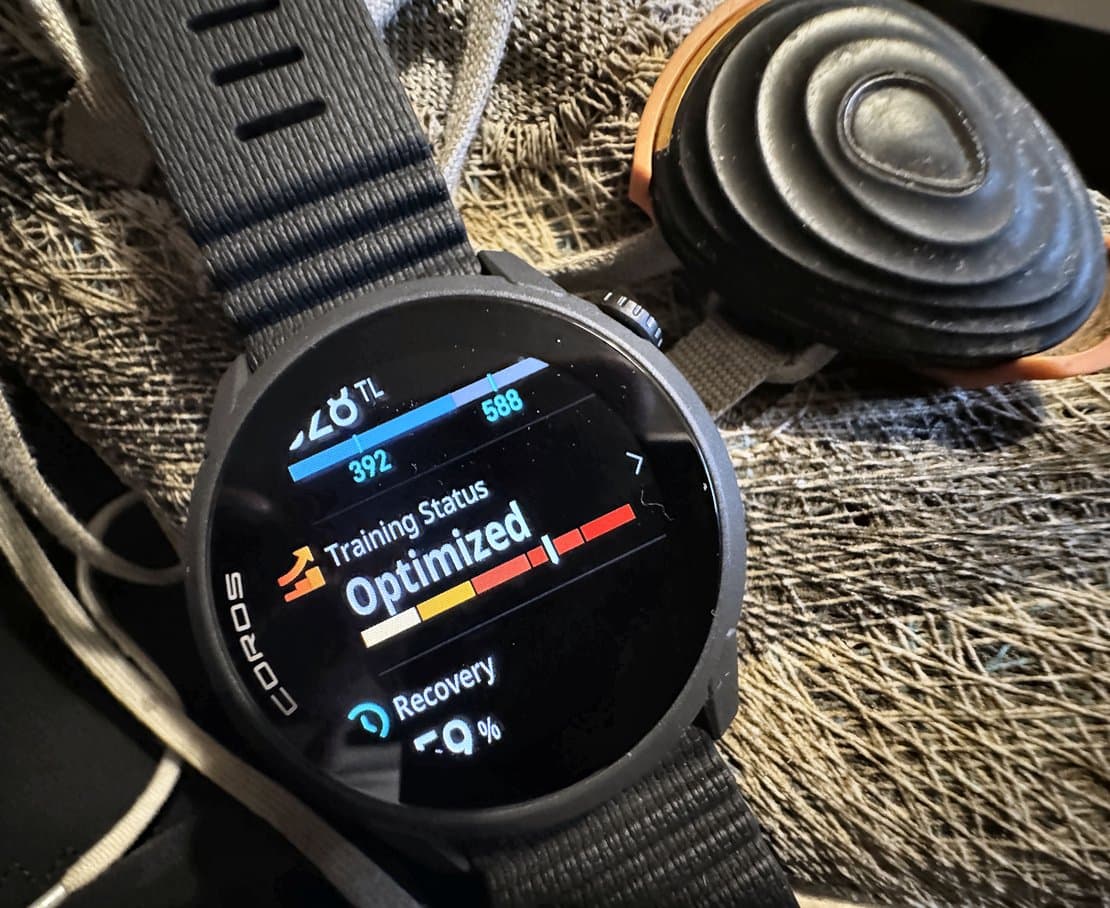
The COROS PACE 4 Pro is the brand’s new top PACE model, positioned above the PACE 4 and replacing the PACE Pro. According to Montre Cardio GPS, it is aimed at the same ambitious endurance-watch space as the Garmin Forerunner 970, Suunto Race 2, Polar Vantage V3 and Amazfit Cheetah 2 Pro. The headline upgrades are a much larger AMOLED display, sapphire glass, an Action button, onboard maps and stronger battery claims. This is a serious runner and triathlon watch, not a token refresh.
It also clarifies the upgrade path for older COROS owners. The5kRunner says the original PACE and PACE 2 no longer receive new features, while the PACE 3 missed the maps update. For those athletes, moving to the PACE 4 Pro is less about chasing a marginal new metric and more about joining COROS’s current interface, navigation and feature set. That matters if training routes, trail days or structured triathlon blocks are central to how we use a watch.
Big screen, low weight
Montre Cardio GPS reports a 47.6 mm case that is 11.8 mm thick, with a 37.5 mm AMOLED display, up from 33 mm on the PACE Pro. The site says the display reaches 3500 nits and uses LTPO technology, allowing its refresh rate to vary from 1 to 60 Hz. In plain English, it should stay readable in harsh light without punishing battery life every time the screen is idle. Sapphire covering is a welcome endurance-sport choice too.
Despite the larger body, the tested watch weighs 43 g with its 5 g nylon strap, or 51 g with silicone. That is a compelling combination for long runs and all-day wear. COROS also brings the newer control layout: a digital dial, back button and Action button. During an activity, the Action button can show or hide mapping, which is exactly the sort of small interaction improvement that makes navigation less annoying when moving.
Mapping, training and battery
The PACE 4 Pro carries COROS mapping with street names, summits and points of interest, plus route creation in the COROS app, turn-by-turn voice alerts and Hill alerts. It supports endurance sports through triathlon, indoor profiles including a Hybrid Fitness profile for HYROX, and structured workouts and plans for running, trail running, cycling and triathlon. There is also running power, Strava Live Segments, training load, fitness tests and Screen Extender, which uses a phone screen to show live watch data.
For navigation-heavy athletes, the battery figures look strong: Montre Cardio GPS lists 60 hours in multi-GNSS mode and 40 hours in dual-frequency multi-GNSS, falling to 45 and 30 hours with always-on display. There is also an automatic positioning mode that switches between the two according to signal quality. The sensor list includes dual-frequency GNSS, an optical heart-rate sensor with blood-oxygen measurement, a barometric altimeter, compass and temperature sensor. Its ECG electrodes are for manual morning HRV recording, not for taking an ECG that looks for atrial fibrillation.
What is missing? COROS has removed the GPS-only mode, and the APEX 4’s multi-GNSS Eco mode does not appear here. The test also flags dark-mode mapping as a negative. Music remains limited to MP3 files, and the wider outdoor profile list still belongs to the APEX 4. So this is versatile, but it does not erase the reasons some mountain athletes may prefer COROS’s higher-tier line.
Verdict: the PACE 4 Pro looks like the right COROS upgrade for runners, triathletes and HYROX athletes who want a big AMOLED screen, proper maps and low wrist weight. Choose the APEX 4 for its extra outdoor profiles; stick with an older PACE only if those newer navigation and interface gains do not matter to your training.
Mentioned watches
Head-to-head comparisons
Buying guides