Obed GVR Targets Rough Gravel Racing
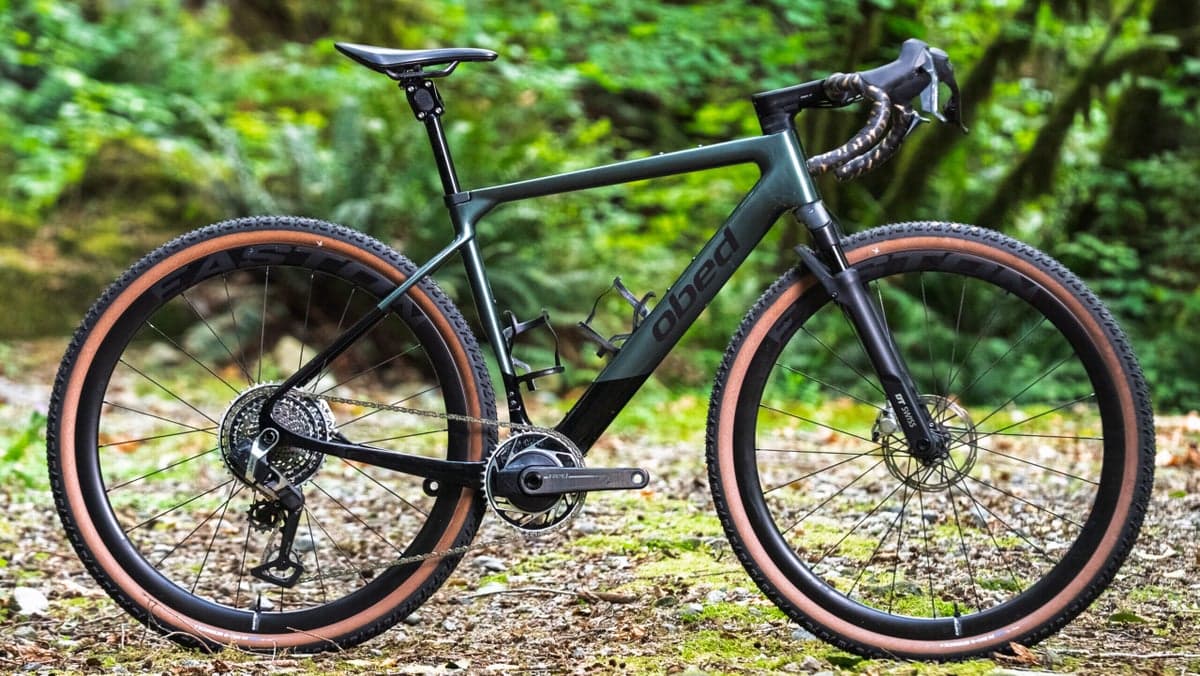
The Obed GVR is a gravel race bike that commits to the rough stuff rather than chasing all-road versatility. VeloNews tested a $9,075 build weighing 21.1 pounds with SRAM Red XPLR, a 42t chainring, 10-46t cassette, 50 mm Schwalbe G-ONE RX tires and a DT Swiss suspension fork. Its headline is clear: clearance for 2.2-inch tires, geometry designed around that rubber, and a front end corrected for suspension use.
Built to stay composed off-road
This is a long, stability-first bike. The medium tested by VeloNews has a 1,056 mm wheelbase, 636 mm front center, 430 mm chainstays, 400 mm reach, a 70.5° headtube angle and 53 mm fork offset. Those figures will matter more to a rider on loose descents than in a showroom. The reported result was traction on steep, loose downhills and composure at speed, without the bike becoming a dead, awkward climber.
The useful detail is that Obed has not simply squeezed huge tires into an existing gravel layout. It has designed the GVR explicitly around 50 mm tires, with room to go bigger. For racers whose courses are trending chunkier, that is the right priority. The suspension fork and large-volume tires should help keep the rider calmer when the surface turns nasty, while the remote lockout lets the front end firm up from the hoods when the road smooths out.
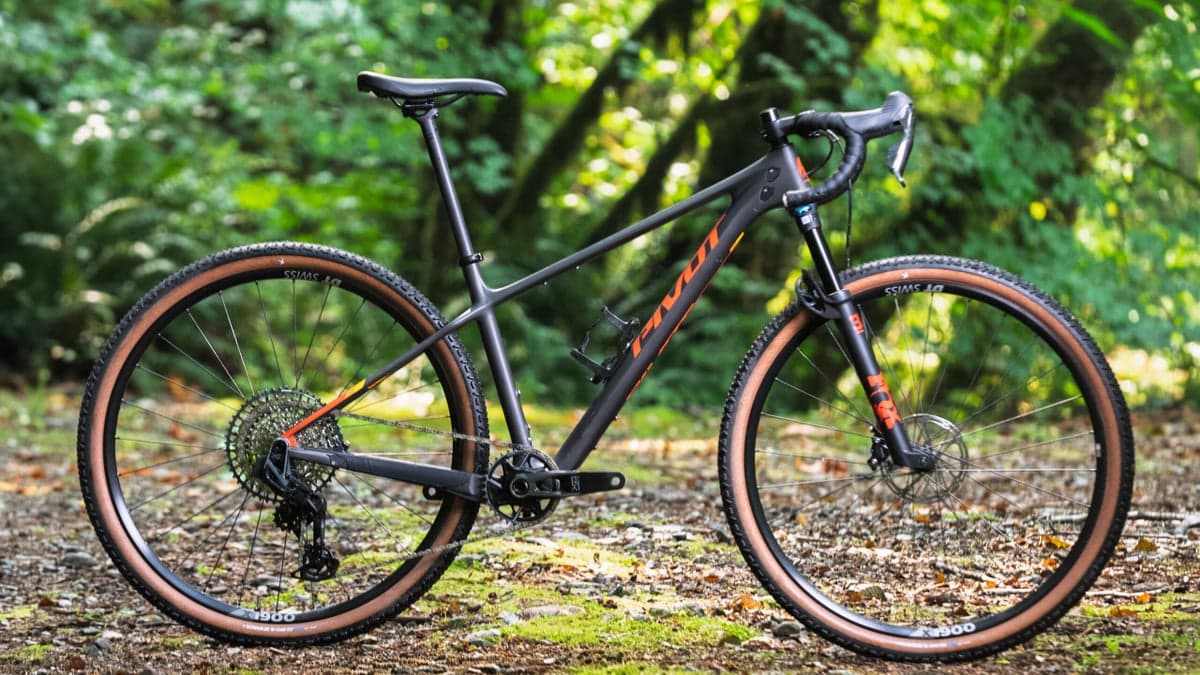
It sits in the same broader conversation as the [Pivot LES SL Drop Bar](/en/articles/pivot-les-sl-drop-bar-brings-100mm-travel-to-gravel-2026-10-30), another recent gravel-focused machine that pushes further into off-road capability. Obed’s approach is less about turning gravel into mountain biking and more about pairing large-tire clearance with a race-oriented pedaling platform. VeloNews also calls out subtle aerodynamic shaping, though this is plainly not a bike built to feel like a road bike with wider tires.
Easy to tailor, easy to maintain
The GVR’s direct-to-consumer setup is a real strength for athletes particular about contact points and gearing. VeloNews says virtually every component can be swapped to the customer’s specification. The frame supports 1x and 2x setups, uses a UDH and T47 bottom bracket, offers cable routing for a cable or Shimano Di2 wire in 2x configurations, and provides accessory or bottle mounts on both sides of the top tube. There is also a choice between an integrated cockpit and a semi-integrated arrangement. This is practical design, not showroom theater.
What is missing is equally clear. There are no rack mounts, fender mounts or internal frame storage, so riders expecting one bike for wet commutes, loaded overnighters and fast events should look carefully elsewhere. The 42t chainring also appears close to the frame’s practical limit: VeloNews reports that a 44t should work, while a 46t would press chainstay clearance. On pavement, the GVR was less lively than other large-clearance gravel bikes, and the suspension-fork build is heavy by the review’s own assessment.
Verdict: the GVR is for gravel racers and hard-charging one-day riders who value control on rough courses over road manners and touring utility. Against more versatile gravel bikes, it gives up some everyday range. For its intended terrain, that focus looks well judged.
Mentioned watches