Fitbit Air Review: $99 Screenless Tracker vs Whoop
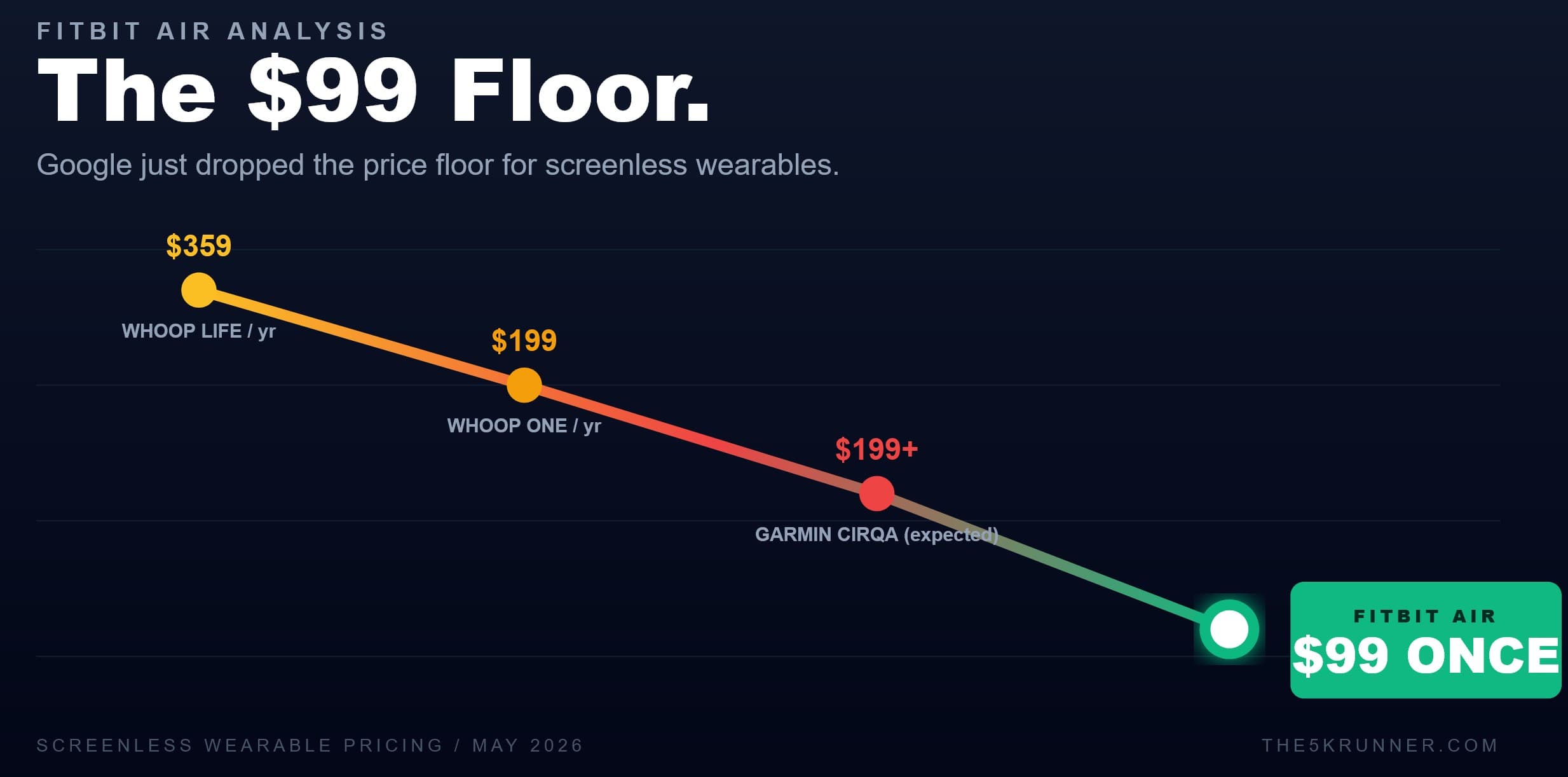
The Fitbit Air lands at $99.99 with zero subscription fees, making it the most direct budget challenge to Whoop's $30-per-month model in years. It sits in a crowded screenless tracker field alongside the Polar Loop, Amazfit Helio Strap, and Oura Ring 4, but that price point is hard to ignore.
No screen means the Air is purely a background data collector, pushing metrics to your phone rather than your wrist. That works fine if you train like a Whoop user already: you wear it 24/7, check recovery scores in the morning, and let the app guide load decisions. If you want splits on your wrist mid-run, look elsewhere.
The key question for endurance athletes is sensor quality. Whoop built its reputation on high-resolution heart rate variability tracking and sleep staging accuracy. Fitbit has solid sleep tracking history on devices like the Sense 2, but HRV precision on a budget strap is a different challenge. We need real data before calling it a win there.
At $99 outright versus Whoop's roughly $360 per year subscription, the savings are obvious. Oura Ring 4 costs $349 upfront. Even the Amazfit Helio Strap requires a subscription above its hardware cost. For a runner or triathlete who wants recovery tracking without ongoing fees, the math on the Air is straightforward.
Not enough data yet to fully commit. But the price, the no-subscription model, and Fitbit's existing health platform make this worth watching closely before pre-order decisions.
Mentioned watches
Head-to-head comparisons