Garmin CIRQA Battery Life and Connect+ Dependency Explained
The Garmin CIRQA claims 10 days of battery life, but that number comes with conditions Garmin never fully quantifies in its own documentation. Three separate drain scenarios are listed, none with hard figures attached. For a device priced to compete with Whoop 5.0 and the Polar Vantage V3 in the recovery-tracking space, that vagueness is a problem worth unpacking before you buy.
Battery Saver Mode: What It Actually Kills
Battery Saver mode on the CIRQA is not a gentle throttle. It switches off core functions, and depending on which ones, it can turn the device into something closer to a basic step counter than a training tool. Garmin has not published a precise list of what gets disabled, which is frustrating. On the Garmin Fenix 8, Battery Saver drops GPS polling rate and dims the display but keeps optical PPG heart rate running. On the CIRQA, the concern is deeper: if Battery Saver cuts the wrist-based optical sensor that reads blood volume changes via light, your 24-hour recovery data has gaps. That matters for a device whose whole pitch is continuous physiological monitoring.
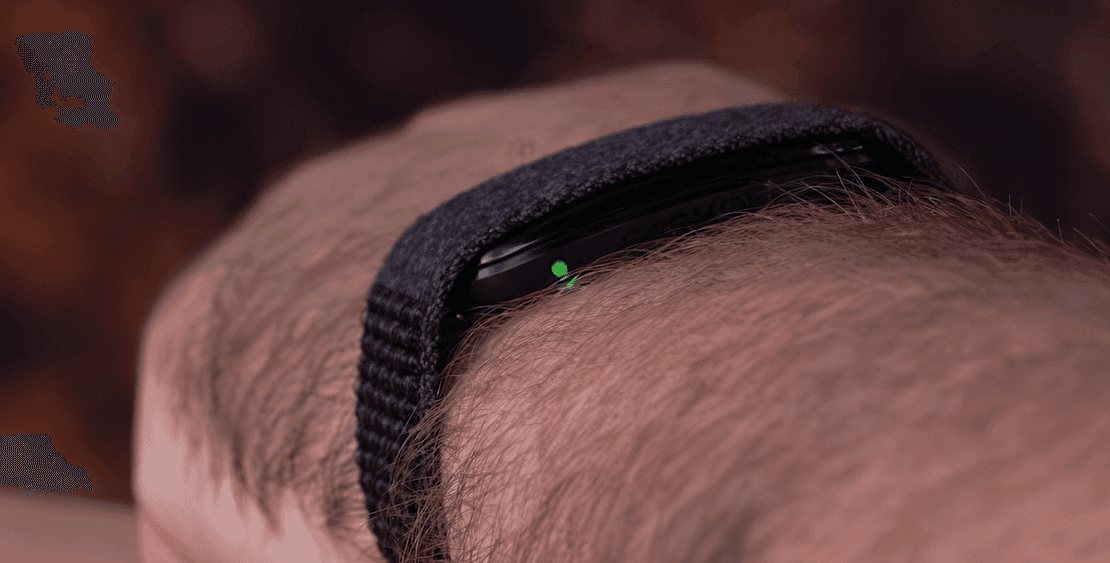
To be clear on the sensor side: the CIRQA uses an optical PPG sensor at the wrist, measuring blood volume pulse through light. It is not an ECG. If that sensor goes dark in Battery Saver, you lose HRV overnight, SpO2 readings, and the stress score inputs. The Whoop 5.0 keeps its optical sensor running at all times, even in low-power states. That is a direct competitive disadvantage for the CIRQA if Garmin cannot clarify what actually shuts down.
The 10-day figure also needs a baseline. Garmin typically calculates smartwatch endurance with always-on display off, no GPS, and minimal Bluetooth. The CIRQA is built around a phone-as-display architecture, meaning Bluetooth is not minimal. It is constant. Coros Pace 3 hits 17 days under similar smartwatch conditions and is transparent about the methodology. Garmin needs to match that transparency here.
Connect+ Is the Engine, Not an Add-On
The CIRQA is the first Garmin device designed from the ground up around Connect+, and that is not a marketing line. It is a structural decision. Indoor and strength workout libraries, guided sessions, and the phone-as-display feature all route through Connect+. Garmin spent roughly 15 months building that infrastructure before shipping this device. For CrossFitters and Hyrox athletes doing station-based workouts indoors, that pipeline delivers something genuinely useful: structured sessions on a wrist device that delegates its screen to your phone when detail matters.
But outdoor workouts are completely absent from the Connect+ CIRQA integration. No structured running plans, no cycling workouts, no triathlon multisport profiles pushed through the platform. That is a hard line. A triathlete who also does strength blocks in the gym cannot use the CIRQA as their single device. They would need a Garmin Forerunner 965 or Fenix 8 for outdoor sessions and carry the CIRQA separately for gym work, which defeats the purpose. Garmin is clearly segmenting its lineup, but athletes who train across disciplines will feel the gap immediately. Our [full accuracy test across Hyrox and open water](/en/articles/garmin-cirqa-accuracy-tested-hyrox-open-water-real-results-2026-08-07) breaks down how the device performs when pushed in those conditions.
Real-World Use Cases for Strength and Indoor Athletes
For a dedicated indoor athlete, the CIRQA proposition is cleaner. A CrossFitter running three to five sessions a week, all inside, with recovery as a priority between sessions, fits the device well. Connect+ delivers the workout library, the phone handles the display for rep counting and load tracking, and the optical PPG sensor provides continuous HRV and resting heart rate data for recovery scoring. That is a coherent stack. The [sensor choice of Elevate 4.1 rather than Gen 5](/en/articles/garmin-elevate-4-1-in-cirqa-why-not-gen-5-2026-08-07) is worth reading before assuming optical accuracy matches the Forerunner line.
The bicep wear option also makes more sense in this context than it does for runners. During barbell movements and pulling exercises, wrist-worn optical sensors are notoriously noisy because wrist flexion creates motion artifacts in the PPG signal. A bicep placement reduces that interference. Polar's Verity Sense proved the concept years ago for indoor cycling and gym use. Garmin is applying the same logic to the CIRQA, and for loaded movements it is the right call. See the [full specs and bicep wear breakdown](/en/articles/garmin-cirqa-specs-price-and-bicep-wear-explained-2026-08-07) for fit and placement details.
What is missing is harder to ignore. No outdoor GPS activity tracking means no baro altimeter data for elevation, no satellite-based pace or distance, and no multisport mode. For a device at this price point, the absence of even basic run tracking feels like a deliberate wall. The Whoop 5.0 does not track GPS either, but Whoop never pretended to be a sports watch. Garmin is a sports watch company, and CIRQA carries that brand weight whether Garmin intended it to or not. Athletes expecting Garmin-level outdoor versatility will be disappointed.
The Connect+ subscription layer also adds a recurring cost that Garmin has not been fully upfront about in promotional materials. If core workout features require an active subscription, the total cost of ownership over two years shifts the value comparison against Coros, which charges nothing for its training platform. That needs to be factored into any buying decision.
The CIRQA is the right device for a narrow athlete profile: dedicated gym and indoor athletes who prioritize recovery tracking, do not run or cycle outdoors regularly, and are already inside the Garmin ecosystem. At its price, it competes with Whoop 5.0 on recovery features but adds structured workout delivery that Whoop cannot match. If you train outdoors even occasionally, skip it and look at the Garmin Forerunner 265 instead. The CIRQA is a focused tool, not a complete one.
Mentioned watches
Head-to-head comparisons
Buying guides