Garmin CIRQA Sleep Tracking Accuracy: 15-Night Real Test
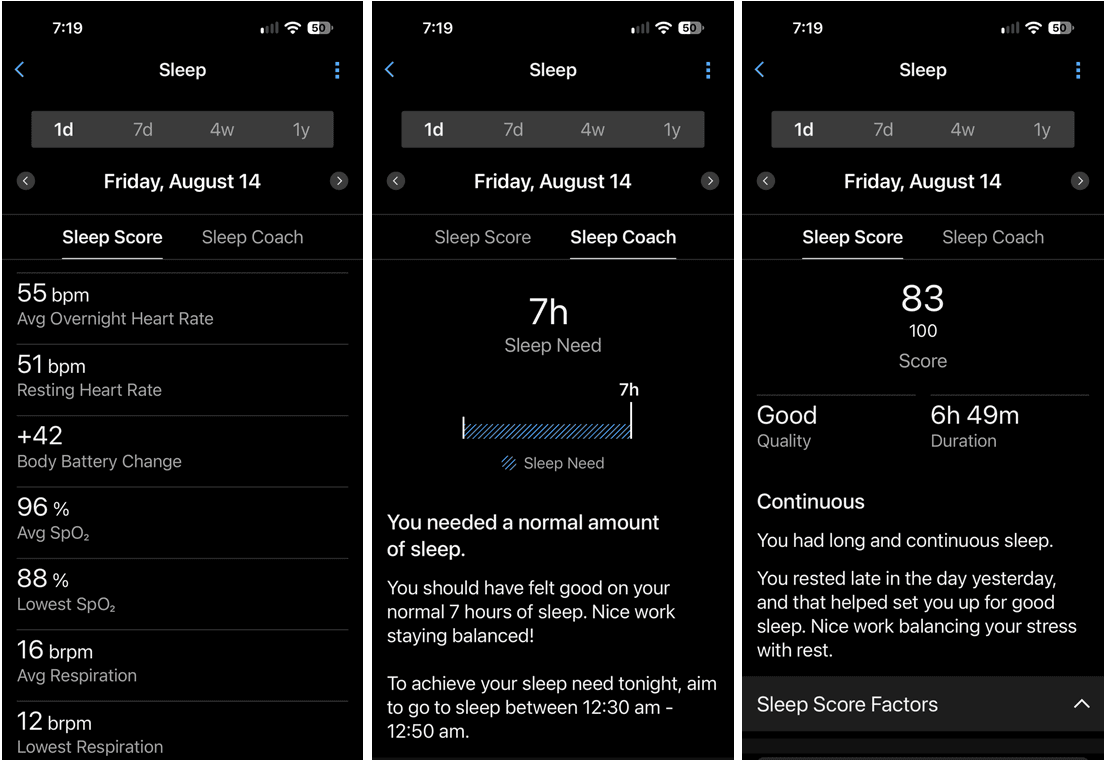
The Garmin CIRQA Band gets sleep duration broadly right. Over 15 nights tested against five other trackers, its night-to-night timing held up consistently, which is a meaningful result for a wrist-worn device in a crowded and often overpromising category. That's the headline. Everything else is more complicated.
What the Sensors Actually Do
The CIRQA uses optical PPG sensors on the wrist, meaning it reads blood volume changes via light to infer heart rate and heart rate variability across the night. It does not use electrical signals. That distinction matters because PPG-based sleep tracking has a hard ceiling on accuracy, especially for sleep-stage classification. No wrist optical sensor, not the CIRQA, not the Whoop 5.0, not the Polar LOOP, can match a clinical polysomnography setup. What you're getting is an educated estimate built on movement, HRV, and skin temperature data fused together.
The CIRQA reportedly pulls skin temperature and SpO2 data into its sleep algorithm as well. SpO2 is also optical, using a different wavelength to estimate blood oxygen saturation. Useful for flagging potential apnea events or altitude-related drops, less useful for stage classification. Garmin has not published the weighting of each signal in the CIRQA algorithm, so you're trusting the black box.
Sleep Duration vs Sleep Stages: Two Different Problems
Total sleep duration accuracy is where the CIRQA earns its marks. Across 15 nights, it tracked timing consistently against competitors including Whoop, Polar, and Fitbit Air. For athletes who need to know whether they got 6.5 hours or 8 hours, that reliability is useful and not trivial. Whoop 5.0 also performs well here, and Polar's LOOP is competitive on duration too, so the CIRQA is not alone at the top.
Sleep-stage breakdown is a different story. The CIRQA showed no consistent pattern in how it assigned REM, light, and deep sleep across those 15 nights. That's not a CIRQA-specific failure. It's the baseline reality of wrist PPG for stage detection. The Oura Ring 4 performs marginally better on stage accuracy due to finger placement reducing motion artifact, but even that gap is smaller than marketing suggests. If you're making training decisions based on exact deep sleep percentages from any wrist band, you're overreading the data.
For endurance athletes specifically, this creates a practical split. A triathlete tracking weekly sleep debt to manage training load can trust CIRQA duration data. A CrossFitter obsessing over their REM percentage to justify skipping a session should not. Use the trend, not the number.
How It Compares to the Competition
Whoop 5.0 costs around $239 per year on subscription and delivers similar duration accuracy with arguably better HRV morning readiness scoring due to its continuous sampling approach. Polar LOOP is subscription-free after purchase, which matters over a 2-year horizon. Garmin's own Connect+ ecosystem ties the CIRQA to an app dependency that has drawn criticism, and battery life is a known concern as well. We covered both of those issues in detail [in our battery and Connect+ explainer](/en/articles/garmin-cirqa-battery-life-and-connect-dependency-explained-2026-08-08).
Coros does not currently have a dedicated recovery band competing here, so the CIRQA is not fighting that battle. Apple Watch Ultra 3 tracks sleep but remains a training watch first, sleep band second. The CIRQA is purpose-built for recovery monitoring, and that focus shows in the interface and data presentation inside Garmin Connect.
Where It Falls Short
The sleep-stage inconsistency is disappointing but predictable. What's less forgivable is the absence of any confidence indicator in the app. Whoop shows you data quality flags. Polar flags nights with poor sensor contact. The CIRQA gives you the numbers without telling you how much to trust them on any given morning. For a device positioned as a recovery tool for serious athletes, that omission is a real gap. The launch period also saw accuracy bugs flagged by multiple users, [documented here at launch](/en/articles/garmin-cirqa-launch-sold-out-accuracy-problems-bugs-mapped-2026-08-15), and firmware stability has been a recurring theme across Garmin products this summer.
The CIRQA Band makes sense for Garmin ecosystem athletes who already run Connect and want consolidated recovery data alongside their Fenix or Forerunner training metrics. Duration tracking is reliable enough to act on. Stage data is directional at best. At its price point, it competes seriously with Whoop on value if you factor out the subscription model. If you're outside the Garmin ecosystem or need the most accurate possible sleep-stage breakdown, Oura Ring 4 remains the better call.
Mentioned watches
Head-to-head comparisons
Buying guides