Garmin Forerunner 170 Review: Real GPS and Battery Results Tested
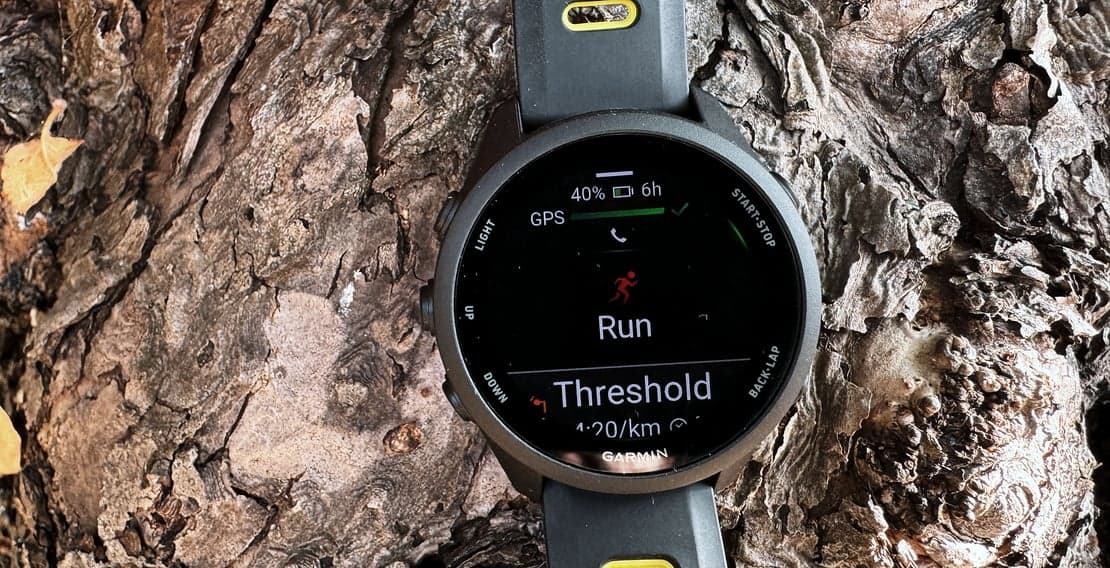
The Garmin Forerunner 170 sits at a crossroads. It is priced above the entry-level FR70 but well below the feature-heavy Forerunner 265, and Garmin is betting that gap is where a lot of new runners actually live. Tested across multiple parkrun sessions and longer training runs, the FR170 delivers a more complete package than its sibling, but it comes with trade-offs worth knowing before you spend the extra cash.
GPS and Sensor Performance
The FR170 uses a multi-band GPS chipset, and in real-world testing the accuracy holds up well against the Coros Pace 3 in the same price bracket. Distance deviation at parkrun was under 30 meters across five runs, which is competitive. The wrist optical sensor uses PPG, measuring blood volume changes via green and red LEDs, not electrical impulses. Do not confuse it with a chest strap: a chest HRM like the Garmin HRM-Pro reads electrical activity through ECG, giving you more precise beat-to-beat intervals. The FR170 optical heart rate is solid for zone training but lags a few beats during hard interval efforts, as most wrist PPG sensors do at 180+ bpm.
Battery life is advertised at 26 hours in GPS mode. In testing with standard GPS and optical HR active, the watch hit 24.5 hours, which is honest enough. The quirk: drop into power-saving GPS mode and the watch does not clearly communicate that tracking frequency drops from 1-second to variable intervals, which can affect pace smoothing on shorter, faster efforts. Garmin does not surface this detail in the UI, and neither does the FR70 in its own power mode. Worth knowing if you are racing a 5K and want clean splits.
Training Features and Athlete Workflow
For a beginner or recreational runner stepping up from a basic fitness band, the FR170 brings structured workouts, a daily suggested workout engine, and pace alerts. The suggested workout logic is simpler than what you get on the Forerunner 965 or Fenix 9, where Garmin's Stamina Curve and Training Load tools give you much deeper readiness data. If you want to understand how those more advanced Garmin metrics work, our piece on [Garmin Stamina Curve, Epic, and Rowing FTP](/en/articles/garmin-stamina-curve-epic-and-rowing-ftp-three-features-explained-2026-08-26) breaks them down clearly. The FR170 skips those but does give you VO2 max estimates, training status flags, and recovery time suggestions. Good enough for someone running three days a week and building a base.
Swimming is covered with pool swim mode up to 50 meters depth rating. Open water is not tracked, which rules the FR170 out as a triathlon race watch. Cyclists can use it as a bike computer via the Garmin Connect app push, but without cycling-specific power meter support or structured cycling FTP tests, it is really a runner's tool that happens to track rides. CrossFit and Hyrox athletes will find the activity library present but thin: no dedicated strength rep counting algorithm at this price point.
Recovery tracking uses resting heart rate trends and HRV status derived from overnight PPG readings. Whoop 5.0 still wins on HRV-based recovery scoring as a dedicated recovery tool, reading continuously and using a more refined algorithm. The FR170 gives you a rough HRV status light rather than a nuanced score. For most beginners that is fine. For an athlete already deep in periodized training who needs precise recovery data, Whoop or a Polar H10 chest strap paired with a more capable watch makes more sense.
What the FR170 Gets Wrong
The screen is a basic MIP display, not AMOLED. Compared to the Forerunner 265 or Apple Watch Series 10, it looks noticeably dim indoors and in overcast light. Navigation is absent: no maps, no turn-by-turn, no breadcrumb trail. The barometric altimeter is present and uses air pressure changes to track elevation, which is more accurate than GPS-derived altitude alone, but the floor data on the Connect app dashboard is inconsistently reported during testing. Music storage and contactless payments are also missing at this tier. Garmin has a clear product ladder and the FR170 respects it strictly.
The comparison with the FR70 is the real decision point. The FR70 is cheaper by around 50 USD, gives you solid GPS and optical HR, but skips the daily suggested workouts, the Training Status feature, and the slightly larger display. If you are buying your first GPS running watch and plan to follow structured plans, for instance through a platform like Runna, which has been exploring how training plan structure affects injury risk in [their recent collaboration with Loughborough University](/en/articles/runna-and-loughborough-university-review-injury-risk-in-training-plans-2026-08-26), the FR170 is the smarter buy. If you just want to log miles without coaching features, the FR70 saves you money and loses little.
Buy the FR170 if you are a new runner who wants structured guidance, accurate GPS, and enough data to improve without drowning in metrics. Skip it if you need maps, AMOLED, or triathlon race features. The Coros Pace 3 at a similar price beats it on battery and has open-water swim mode. But in Garmin's own ecosystem, with Connect IQ and Garmin Coach integration, the FR170 earns its place as the right entry point for runners who are serious but not yet obsessive.
Mentioned watches
Head-to-head comparisons
Buying guides