Suunto Core 2 Review: £155 Outdoor Watch Tested in 2026
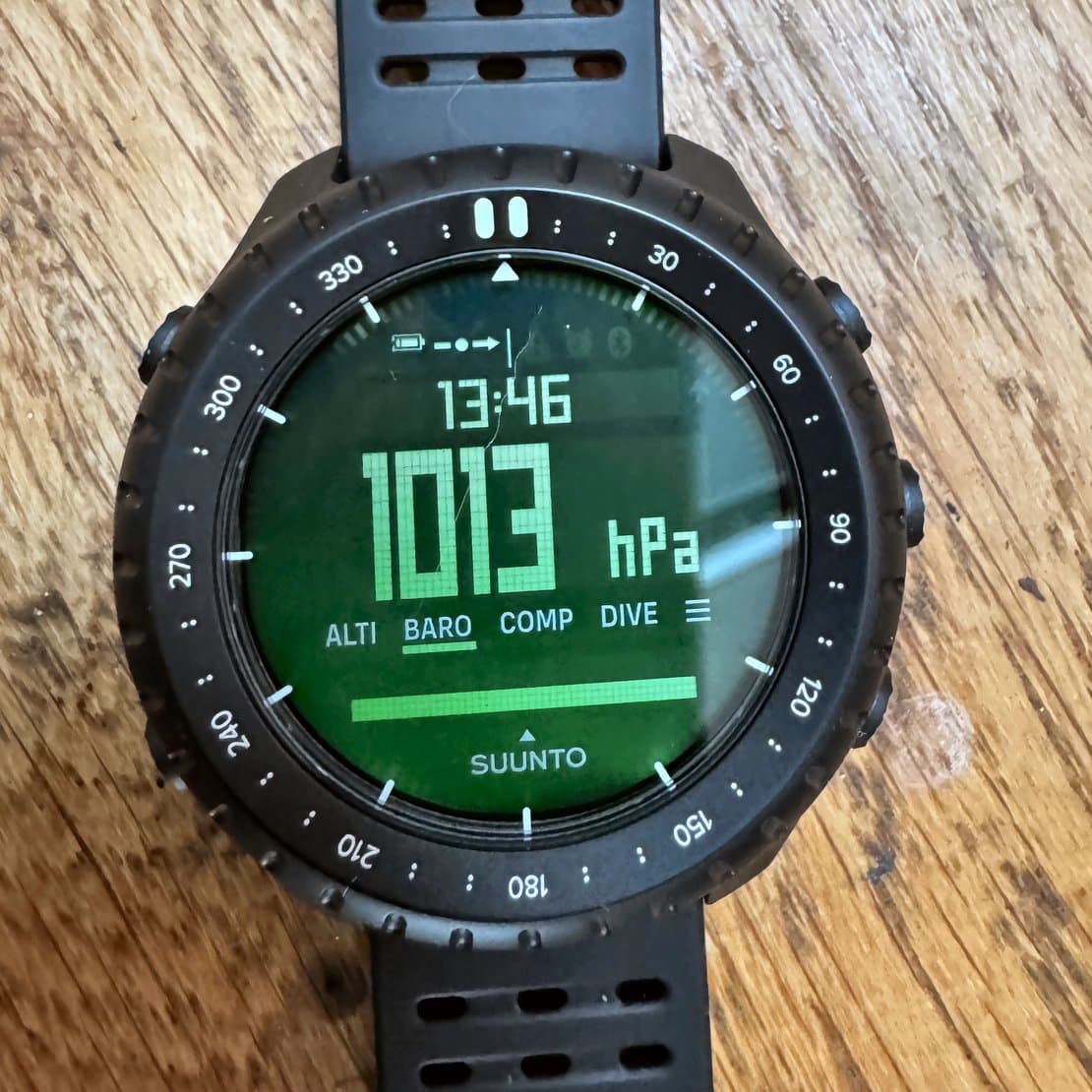
The Suunto Core 2 costs £155 and targets outdoor enthusiasts who want a rugged ABC watch (altimeter, barometer, compass) without a GPS chip or heart rate sensor. It sits in a crowded but shrinking niche: dedicated outdoor instruments that do one job well. After several days of testing, the picture is mostly positive but with a few real-world rough edges worth knowing before you buy.
Sensors and Hardware
The Core 2 uses a barometric altimeter that reads air pressure to calculate elevation, not GPS satellites. That distinction matters: you get faster, more power-efficient altitude readings, but you are vulnerable to weather-driven pressure shifts. In testing, a 10-metre altimeter drift appeared, almost certainly tied to a storm-alarm artefact where incoming low pressure fooled the sensor into registering a descent. That is a known limitation of baro-only watches and the Core 2 is not alone here. The Garmin Instinct 2 Solar and Coros Vertix 2S both use baro altimeters as their primary elevation source during activities, and both require manual or auto-calibration against GPS or a known elevation point to stay honest. The Core 2 follows the same principle. Battery life is quoted at 15 months on a CR3032 coin cell, which is the entire appeal of a non-GPS, non-optical watch: no charging cable, ever.
Water resistance is rated at 10 ATM, which is 100 metres. That is plenty for open-water swimming, rain, and accidental drops. The watch syncs firmware via Bluetooth, which is modern enough, though the lack of any connected GPS (even borrowed from a phone) means you are not getting route maps or pace data. If you run with it, you are flying blind on distance. That is the trade-off.
Real-World Performance
The storm-alarm artefact is worth unpacking. The Core 2, like the original Suunto Core, uses rapid barometric pressure drops to trigger a storm warning. When that alarm fires during an activity, the pressure data feeding the altimeter can momentarily skew. The 10-metre drift logged in testing is minor in absolute terms but annoying if you are relying on precise summit data. For casual hiking it does not matter. For mountaineers logging technical routes, it is a data quality flag to keep in mind. One confirmed activity-logging gap also appeared during testing, suggesting the firmware is not yet fully polished. Suunto has a track record of fixing these via updates, and given the [ongoing firmware attention they have been paying to the Race 2 and Vertical 2 line](/en/articles/suunto-race-2-and-vertical-2-july-2026-update-200-routes-richer-maps-2026-08-06), there is reasonable confidence a patch will follow. Still, at launch, it is a known issue.
For endurance athletes, the Core 2 is a niche tool rather than a primary training watch. Triathletes and runners need optical PPG sensors for heart rate via wrist light, or they pair a chest strap that reads electrical impulses via ECG for accuracy. The Core 2 has neither. Cyclists doing long Alpine rides might clip it to a pack strap for supplementary baro altitude data, but their Garmin Edge or Wahoo computer is already doing that job. Where it fits cleanly is as a daily-wear rugged watch for hiking, travel, or military use where battery longevity and durability beat data richness.
Comparisons and Value
At £155, the Core 2 is cheaper than a Garmin Instinct 2 (around £229) and far cheaper than a Coros Vertix 2S (around £599). It does dramatically less than either. The Amazfit Cheetah Pro or even the [Amazfit Balance 3](/en/articles/amazfit-balance-3-review-hyrox-mode-gps-and-heart-rate-tested-2026-08-07) at a similar price point give you GPS, optical heart rate, and structured training features. The Core 2 is not competing with those watches. It is competing with itself: the original Suunto Core, which you can still find for under £100 secondhand. The upgrades in the Core 2, primarily Bluetooth firmware sync and the refreshed design, have to justify a price premium over that legacy option. For someone buying new and wanting the cleanest, longest-lasting outdoor instrument with no subscriptions and no charging habits to build, £155 is defensible.
The Bluetooth sync is a genuine upgrade over the original Core, which required a physical cable dock. Being able to push firmware wirelessly removes one of the biggest friction points in owning the older watch. It does not add connected GPS or notifications or any smartwatch layer, and that is fine. This is not a smartwatch. It knows what it is.
What is missing is harder to ignore once you list it. No GPS. No heart rate of any kind. No optical SpO2 sensor for altitude acclimatisation data, which feels like a genuine omission on an outdoor watch in 2026 given that even mid-range Polars and Garmins include it. The activity-logging bug needs a firmware fix. And the storm-alarm interaction with altimeter accuracy, while not unique to Suunto, is something a Core 2 firmware update could handle more gracefully with better pressure-smoothing algorithms. If you are a Hyrox athlete, a cyclist tracking training load, or a runner comparing VO2max estimates, none of that exists here. You would want to look at dedicated training watches instead, and for data-sync reliability across platforms, issues like the ones covered in our [Stryd offline sync tracker](/en/articles/stryd-offline-sync-fix-kills-duplicate-runs-on-coros-polar-suunto-2026-08-08) become relevant the moment you add any GPS watch to the mix.
The Suunto Core 2 is the right watch for a specific person: someone who hikes regularly, wants a durable sub-£200 ABC watch with a battery measured in months not days, and does not need training metrics. It is not for the endurance athlete chasing watt targets and recovery scores. At £155 with a 15-month battery and 10 ATM water resistance, it is a credible buy. Just go in clear-eyed that the firmware needs settling, and that a Garmin Instinct 2 at £70 more buys you GPS and optical heart rate if you need them.
Mentioned watches
Head-to-head comparisons
Buying guides