Amazfit Balance 3 Tested: HR, GPS, Swimming, and Sweat Data
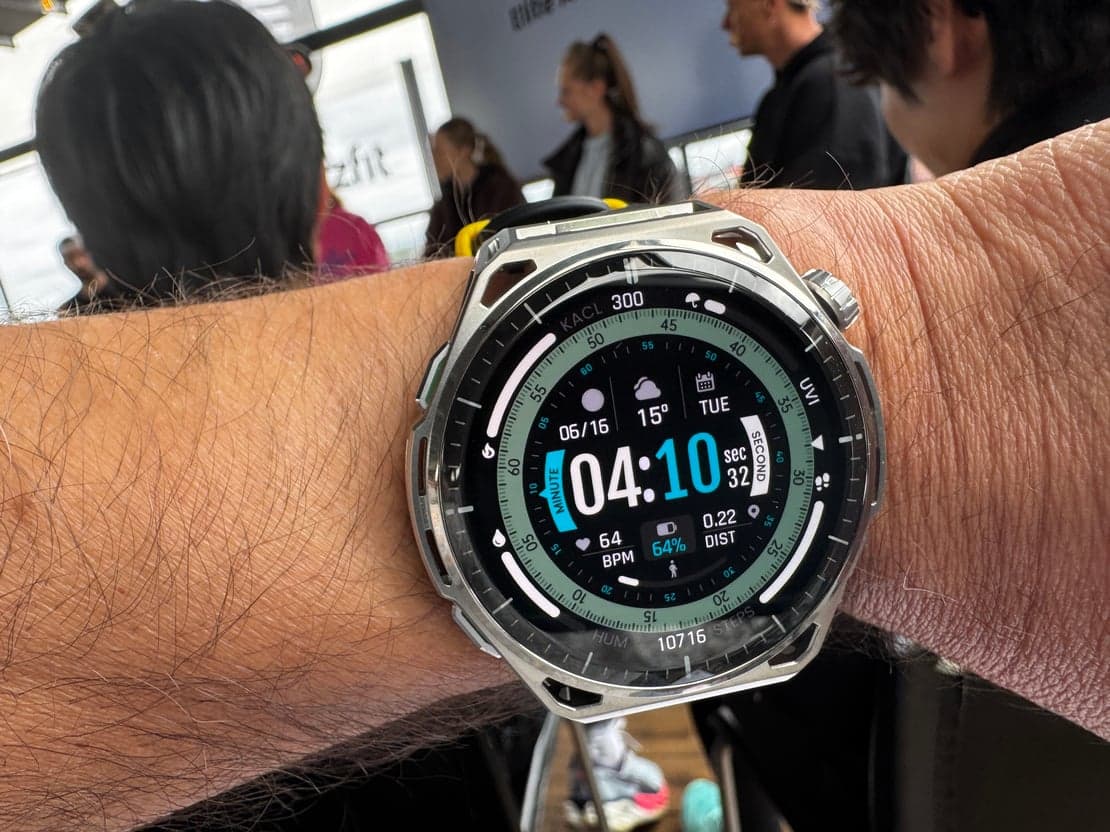
The Amazfit Balance 3 has now been put through a serious multi-sport gauntlet: a HYROX simulation, a 108 km cycling sportive in 26°C heat, an outdoor pool swim session, and a structured 2x20 cycling effort. That is more real-world testing than most mid-range watches ever see, and the results are genuinely useful for athletes deciding where to put their money in 2026.
Heart Rate Accuracy Across Disciplines
On the wrist, the Balance 3 uses a PPG optical sensor that reads blood volume changes via light pulses. During the HYROX sim, HR tracked within about 3 bpm of reference across most of the session, though there was one cadence lock incident where the sensor briefly followed arm cadence instead of cardiac rhythm. That is a known failure mode for wrist optical sensors during mixed-modality efforts, and the Garmin Forerunner 970 is not immune to it either. The bigger story was at the Dartmoor Classic: 108 km over open moorland in real heat, and the Balance 3 delivered near-chest-strap HR accuracy for the bulk of the ride. A chest HRM strap reads electrical impulses via ECG, which is the gold standard, so getting close to that output from a wrist PPG sensor in those conditions is a solid result. Swimming HR is more nuanced. Lap counting was flawless in outdoor pool testing alongside the FORM Smart Swim 2 LT goggles, but wrist-based PPG in water is always noisier than in air, and the raw numbers require some interpretation.
GPS and hDrop Sweat Sensor Performance
GPS on the Dartmoor Classic was described as good on open moorland and drifted on tree-lined descents. That is a familiar pattern: multiband GPS handles open sky well, but canopy and canyon interference causes track deviation on most watches in this category, including the Coros Pace 3 and the Polar Vantage V3. For HYROX-style indoor work, GPS is largely irrelevant anyway, so the sensor that matters more in that context is the hDrop sweat patch. The hDrop estimated 3.1 litres of fluid loss against a roughly measured 2.5 kg body weight drop in the HYROX session, which is a meaningful overestimate. Outdoors during the cycling 2x20 at 27°C, the overestimation was even more pronounced at 51% above body weight change. The Garmin Connect IQ data field for hDrop worked cleanly on the Forerunner 970, so the integration is functional, but the sweat volume numbers themselves need calibration work before you would trust them to drive precise hydration strategy in a race.
Cycling, Swimming, and HYROX Use Cases
For cycling, the Balance 3 is a credible companion if you pair it with a power meter via ANT+ or Bluetooth. HR accuracy in moderate-to-high heat was strong enough that you could use it without a chest strap for training rides, accepting a small margin of error around threshold efforts. For triathlon swimming, the flawless lap counting is a genuine practical win, better than what cheaper Garmin and Coros options produce, and the HR data is usable as a trend even if individual values have more noise than a pool-side chest strap would give. For HYROX athletes specifically, the cadence lock incident is worth knowing about. During sled pushes and farmer carries, arm movement patterns can fool wrist optical sensors, and one incident across a full sim is actually not a bad hit rate. If you want a deeper look at how the Balance 3 stacks up on all these metrics side by side, the [Amazfit Balance 3 Accuracy Review](/en/articles/amazfit-balance-3-accuracy-review-gps-hr-swimming-cycling-tested-2026-07-03) covers the consolidated picture, and the [HYROX-specific breakdown with sweat data](/en/articles/amazfit-balance-3-hyrox-sim-hr-accuracy-sweat-data-and-lvmh-deal-2026-07-03) goes deeper on the hDrop integration.
What is disappointing here is primarily the hDrop sweat sensor reliability. A 51% overestimate in outdoor cycling conditions is too large to ignore. Whoop MG was running alongside during the HYROX test and offers its own recovery and strain metrics, but it does not attempt sweat volume estimation, so there is no direct apples-to-apples comparison on that specific data point. The Balance 3 also lacks the barometric altimeter precision that you get on the Polar Vantage V3 or the Garmin Forerunner 970 for climbing data, and the GPS drift on forested descents is a real limitation for mountain cyclists who care about accurate elevation and route trace. Battery life figures and sleep tracking quality were not covered in these specific test sessions, which leaves a gap if recovery monitoring is central to your training setup.
The Amazfit Balance 3 is a strong mid-range multi-sport watch for athletes who want credible HR accuracy across running, cycling, and swimming without paying Garmin Forerunner 970 prices. The hDrop sweat integration is interesting but not yet reliable enough to replace a simple weight-change protocol for hydration planning. If you are a HYROX athlete, runner, or triathlete on a tighter budget, this is worth serious consideration. If you are already running a Garmin 970 or Polar Vantage V3, the Balance 3 does not offer enough to justify switching. For those curious about other Amazfit hardware in the accuracy conversation, the [Amazfit Cheetah 2 Ultra review](/en/articles/amazfit-cheetah-2-ultra-review-gps-heart-rate-battery-tested-2026-07-03) is worth reading for comparison.
Mentioned watches
Head-to-head comparisons
Buying guides