Amazfit Balance 3 vs Balance 2: What Actually Changed in 2026
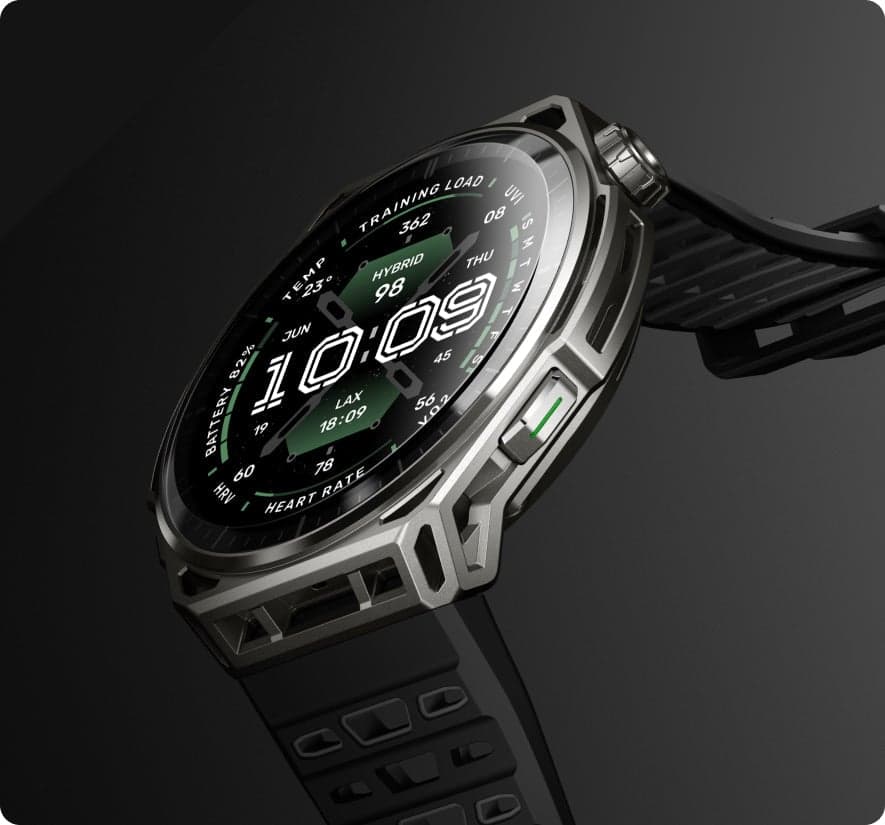
Amazfit has two new watches sitting above the Balance 2: the Balance 3 at £369.90 and the Balance Ultra at £599.90. Both launched in 2026 and both target the same athlete the Balance 2 was built for, the everyday endurance athlete who wants training load, recovery metrics, and a watch that looks fine at a desk. The question is whether the upgrades justify the price jump, and whether Amazfit's improving hardware can actually compete with Garmin and Polar at these price points.
What's New on the Hardware Side
The Balance 3 and Ultra both get a brighter display and a faster processor compared to the Balance 2. That sounds minor until you've tried to read a GPS map in direct sunlight on a trail run. Brightness matters. The faster chip reduces the lag that plagued early Amazfit menus, and if you've used a Coros Pace 3 or a Garmin Forerunner 265, you know how much snappy navigation changes the daily feel of a watch. Both new models also add dedicated HYROX tools, which puts Amazfit directly in competition with Garmin's HYROX workout modes on the Forerunner 970, a watch that also sits at £599.90.
The optical PPG sensor on the wrist reads blood volume changes via light to estimate heart rate and SpO2 continuously. That's the same principle used by Garmin, Polar, and Apple Watch Ultra 3, all of which use green and sometimes red or infrared LEDs against the skin. The Balance Ultra sits at the same price as the Amazfit Cheetah 2 Ultra, which scored 81% on a standardised 10-mile GPS accuracy test using dual-frequency GNSS, better than the Cheetah 2 Pro but still behind the Forerunner 970 on that same test. It's worth reading our [Amazfit Cheetah 2 Ultra review](/en/articles/amazfit-cheetah-2-ultra-review-gps-hr-and-smo2-tested-2026-06-08) for direct GPS data at this price tier.
GPS, Heart Rate, and Sensor Reality
First impressions of the Balance 3, tested on a lumpy Stockholm trail against the Forerunner 970 and Apple Watch Ultra 3, showed the watch handling mixed terrain with reasonable GPS fidelity. A misread lake section in that test highlighted the kind of edge-case error you still see from watches that aren't yet at Garmin's level of firmware maturity. For road running and structured track sessions, the Balance 3 should hold up. For gnarly trail routes with heavy canopy and elevation changes, the Cheetah 2 Ultra is the better Amazfit choice, and it projects 55 hours of GPS battery life per our trail testing.
Heart rate accuracy is where things get interesting. The Cheetah 2 Ultra hit five Excellent ratings from six test sessions in structured testing, up from 73% GPS accuracy on the Pro to 85% on the Ultra across sessions. The Balance 3's optical sensor shares similar hardware lineage. Wrist optical PPG is always context-dependent: running cadence lock is the biggest enemy, and high-intensity intervals on a treadmill will challenge any wrist-based sensor. If you want reliable HR for threshold bike sessions or HYROX workouts, pairing with a chest strap that reads electrical impulses via ECG-based detection is still the right call, regardless of which watch you're using. We tested the Cheetah 2 Ultra's HR in exactly those conditions in our [HYROX and heat HR accuracy piece](/en/articles/amazfit-cheetah-2-ultra-hr-accuracy-bike-hyrox-and-heat-tested-2026-06-01).
Recovery, Training Load, and the Whoop Comparison
The Balance line has always leaned into recovery metrics and sleep tracking as differentiators against pure-sport watches like the Coros Vertix 3. Zepp OS's readiness and body battery equivalents are now more refined than they were on the Balance 2. That still doesn't put them in the same league as Whoop 5.0 for recovery-focused athletes, where the entire product is built around strain and recovery without a display. But Amazfit is clearly targeting the athlete who wants one device for training, recovery, and daily wear without paying Garmin Fenix 8 money. The Balance Ultra at £599.90 positions itself as exactly that, a watch that covers triathlon, HYROX, and recovery in one package.
For triathletes specifically, swim tracking and open-water GPS are relevant. The Balance 3 and Ultra both carry the water resistance you'd expect at this price. Stroke detection, pool lap counting, and open-water GPS quality will matter more to competitive swimmers than casual ones. The Garmin Forerunner 970 remains the benchmark for multisport accuracy at this price, and Amazfit has not yet closed that gap completely based on available data.
What's Still Missing
The core disappointment is firmware and ecosystem maturity. Zepp Health posted 33.8% revenue growth in Q1 2026 with improving margins, but the share price dropped 19% in five days because profitability is still a question mark. That financial pressure shows up in software: third-party app support lags behind Garmin Connect IQ, training analytics lack the depth of Polar's running performance features, and routing tools are nowhere near Garmin's level. The Balance Ultra at £599.90 is competing against watches that have years of firmware iteration behind them. Hardware catches up faster than software trust does.
The Balance 3 at £369.90 makes more sense as a value proposition for the athlete who trains consistently but doesn't need elite-level data granularity. The Balance Ultra at £599.90 is a harder sell when the Forerunner 970 exists at the same price with a longer proven track record in multisport accuracy. If you want the Amazfit ecosystem at its most capable right now, the Cheetah 2 Ultra is the more focused choice for trail and endurance running, as detailed in our [Cheetah 2 Ultra GPS and battery test](/en/articles/amazfit-cheetah-2-ultra-gps-battery-and-trail-climb-feature-tested-2026-05-25). The Balance 3 is for the HYROX and gym athlete who also runs. Not perfect. But genuinely competitive for the price.
Mentioned watches
Head-to-head comparisons
Buying guides