Amazfit Cheetah 2 Ultra Leads ZeppBench on Storage
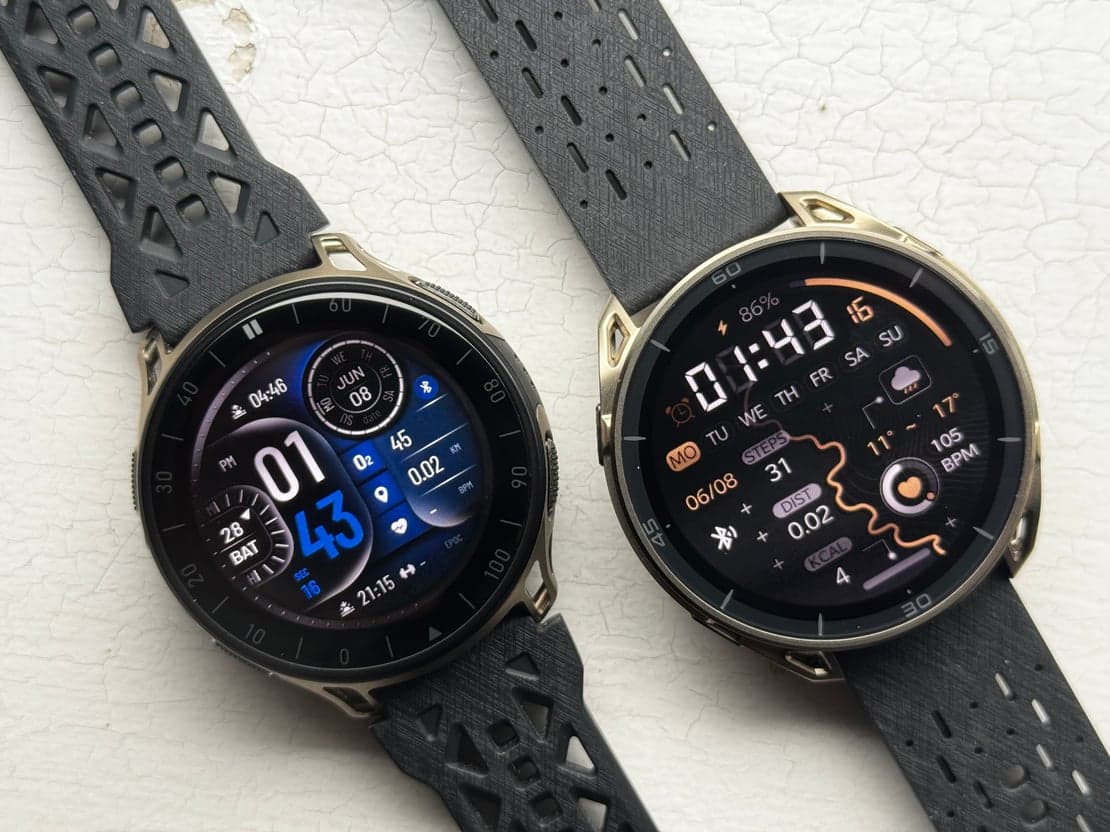
The Amazfit Cheetah 2 Ultra sits atop the community-run ZeppBench database with a total score of 1,093, ahead of the Balance 3 at 967. That is a useful result for runners and hikers who care about on-watch maps, but it is not proof that the Ultra has a fundamentally faster processor. According to the5krunner’s analysis, the advantage is storage performance, not calculation speed.
Faster map handling, not faster maths
The detail matters. The Cheetah 2 Ultra recorded 804 for local storage, 498 for EasyStorage and 402 for large files. Those are the two areas lifting its overall position. By contrast, the recent Amazfit watches with calculation results listed cluster tightly: Balance 3 scores 2,639, Bip 6 scores 2,633, Balance 2 scores 2,606 and T-Rex 3 Pro scores 2,442. In plain English, the newer platform seems better at moving map data around than crunching workout numbers.
That lines up with Amazfit’s launch claim that the Cheetah 2 Ultra renders maps 2.5 times faster and refreshes them 12 times faster than before. Amazfit made the same claim for the Balance 3. Maps are a demanding watch task because panning and zooming means fetching and drawing lots of data. If a watch gets that data from storage faster, the athlete sees a more responsive map even if its raw calculation performance barely changes.
A Reddit theory cited by the5krunner points to 8 MB of on-chip memory in the relevant “S” revision chips, compared with about 2.5 MB in older chips. It is plausible, and it could explain smoother mapping, but it remains unconfirmed by Zepp. We would not buy on that theory alone. ZeppBench does not test map rendering directly, and the Bip 6’s near-Balance 3 total is a reminder that a headline benchmark cannot capture every limitation.
Garmin’s map lag puts the result in context
For athletes navigating trail routes or long unfamiliar rides, this is where the Cheetah 2 Ultra and Balance 3 look most interesting. The5krunner contrasts Amazfit’s responsiveness with Garmin’s vector maps, which require the watch to draw roads, paths and contour lines from raw data during each pan or zoom. In that publication’s map-lag tests, the Fenix 9 Pro took up to 6 seconds to pan with layers enabled and up to 15 seconds to redraw when zoomed out. That is the sort of delay that breaks the flow at a junction.
What is missing is the confirmation we actually want: official detail on the Cheetah 2 Ultra’s memory, plus a repeatable head-to-head map test. The Reddit post also claims benefits for GPS tracks in forests and canyons, but the5krunner rejects that leap. GPS uses a separate positioning chip, and the publication gave the Cheetah 2 Ultra 85% in its 10-mile accuracy test, which is good but not presented as class-leading.
Our verdict: choose the Cheetah 2 Ultra, or the Balance 3, if quick map interaction matters more than benchmark bragging rights. This result is a win for Amazfit’s mapping experience, not a blanket win for processor power or GPS accuracy.
Mentioned watches
Head-to-head comparisons