Darefore Run: How a Belgian Dev Cracked Garmin's BLE Running Dynamics Protocol
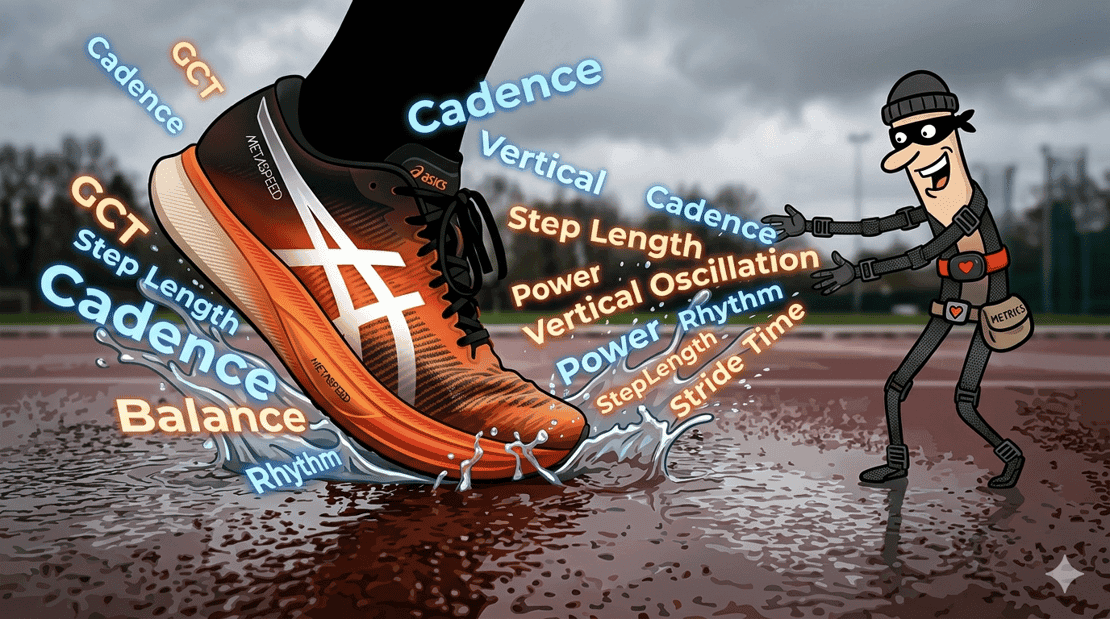
A Belgian developer has reverse-engineered Garmin's proprietary Bluetooth Low Energy Running Dynamics protocol, and the result is Darefore Run: a third-party chest sensor that feeds data directly into Garmin's native analytics pipeline as if it were a first-party device. This is not a workaround through a companion app or a data export hack. The sensor talks Garmin's own language, natively, at the source.
How the BLE Protocol Trick Actually Works
Garmin's Running Dynamics ecosystem normally requires either a compatible HRM strap (like the HRM-Pro Plus) or a compatible pod (like the Running Dynamics Pod). These devices broadcast over BLE using a proprietary Garmin profile that standard third-party sensors do not speak. What Darefore Run does is impersonate that profile precisely enough that Garmin watches accept the incoming data stream without complaint. The watch sees it as a trusted Garmin-style source and routes the metrics straight into the native fields: vertical oscillation, ground contact time, stride length, cadence, and the rest of the Running Dynamics suite. Worth being clear on the sensor physics here: Darefore Run is a chest-worn device, which means heart rate is measured via electrical impulses in the same way any ECG-based chest strap works, not through optical PPG like a wrist sensor. That matters for accuracy during high-intensity intervals where wrist optical sensors on devices like the Apple Watch Series 10 or Garmin Forerunner 965 regularly lag by 10 to 20 bpm.
The Running Dynamics metrics themselves are captured through an accelerometer in the chest pod, not through optical or electrical cardiac sensing. Ground contact time, vertical oscillation, and stride ratios all come from inertial measurement. Garmin's own HRM-Pro Plus uses the same general approach, and third-party options like the Polar H10 capture raw RR intervals over standard BLE but do not transmit running dynamics in the Garmin-native format. That gap is exactly what Darefore Run closes.
What Athletes Actually Get in the Field
For a Garmin watch user, the practical payoff is real. Running Dynamics fields populate on your watch face during a run without any post-processing, without a secondary app, and without a data bridge. Cadence, vertical ratio, and ground contact time appear live, the same way they do when you pair a genuine HRM-Pro Plus. The HRM-Pro Plus retails around 130 euros. Darefore Run positions itself as a competitive alternative, with the added angle that the developer is independent and the protocol access was earned through reverse engineering rather than a licensing deal. For triathletes training with a Garmin Forerunner 965 or a Fenix 8, this means a potential cost saving without losing native data integration, which matters when you want clean automatic uploads to Garmin Connect and Training Peaks without manual CSV imports.
Cross-sport athletes should note the chest placement also gives cleaner ECG-based heart rate during cycling and swimming compared to wrist optical sensors. On a bike at threshold power, wrist PPG sensors can introduce smoothing artifacts that mask real cardiac response. A chest strap reading electrical impulses directly avoids that. Whoop 5.0 uses wrist-based optical PPG and has faced its own scrutiny around data practices, including a lawsuit over third-party data sharing without user consent that is worth reading about if you care about where your biometric data goes: [Whoop Sued Over Third-Party Data Sharing Without User Consent](/en/articles/whoop-sued-over-third-party-data-sharing-without-user-consent-2026-05-16). Darefore Run being an independent developer product raises different but related questions about long-term firmware support and data handling transparency.
Limitations and Open Questions
The reverse-engineering approach is clever but carries real risk. Garmin pushes firmware updates, and there is no contractual guarantee that the proprietary BLE profile will remain stable. One firmware revision on your Fenix 8 or Forerunner 265 could silently break compatibility, and the Darefore team would need to patch and revalidate. Coros, Polar, and Suunto do not appear to be targets for native integration at this stage, which limits the product's appeal to the Garmin ecosystem specifically. There is also no public accuracy benchmark yet comparing Darefore Run's running dynamics figures against Garmin's own HRM-Pro Plus or the Stryd foot pod under controlled conditions. Vertical oscillation figures can vary by several millimeters depending on sensor placement and algorithm, and without independent validation, it is hard to know how much to trust the numbers for serious form analysis.
Battery life and build quality data are also thin on the ground right now. The HRM-Pro Plus manages roughly 200 hours in pure HR mode and around 30 hours with full running dynamics active. Where Darefore Run lands on that spectrum matters for long-course triathletes doing 10-plus hour training weeks.
Darefore Run is worth serious attention if you are a Garmin user who wants native Running Dynamics without paying for an HRM-Pro Plus and you are comfortable with the firmware fragility risk that comes with a reverse-engineered protocol. If you are already in the Garmin ecosystem and own a Forerunner 965 or Fenix 8, the native integration alone makes this more compelling than any Bluetooth workaround through a third-party app. If firmware stability is non-negotiable for race-day use, the HRM-Pro Plus at 130 euros is still the safer bet.
Mentioned watches
Head-to-head comparisons
Buying guides