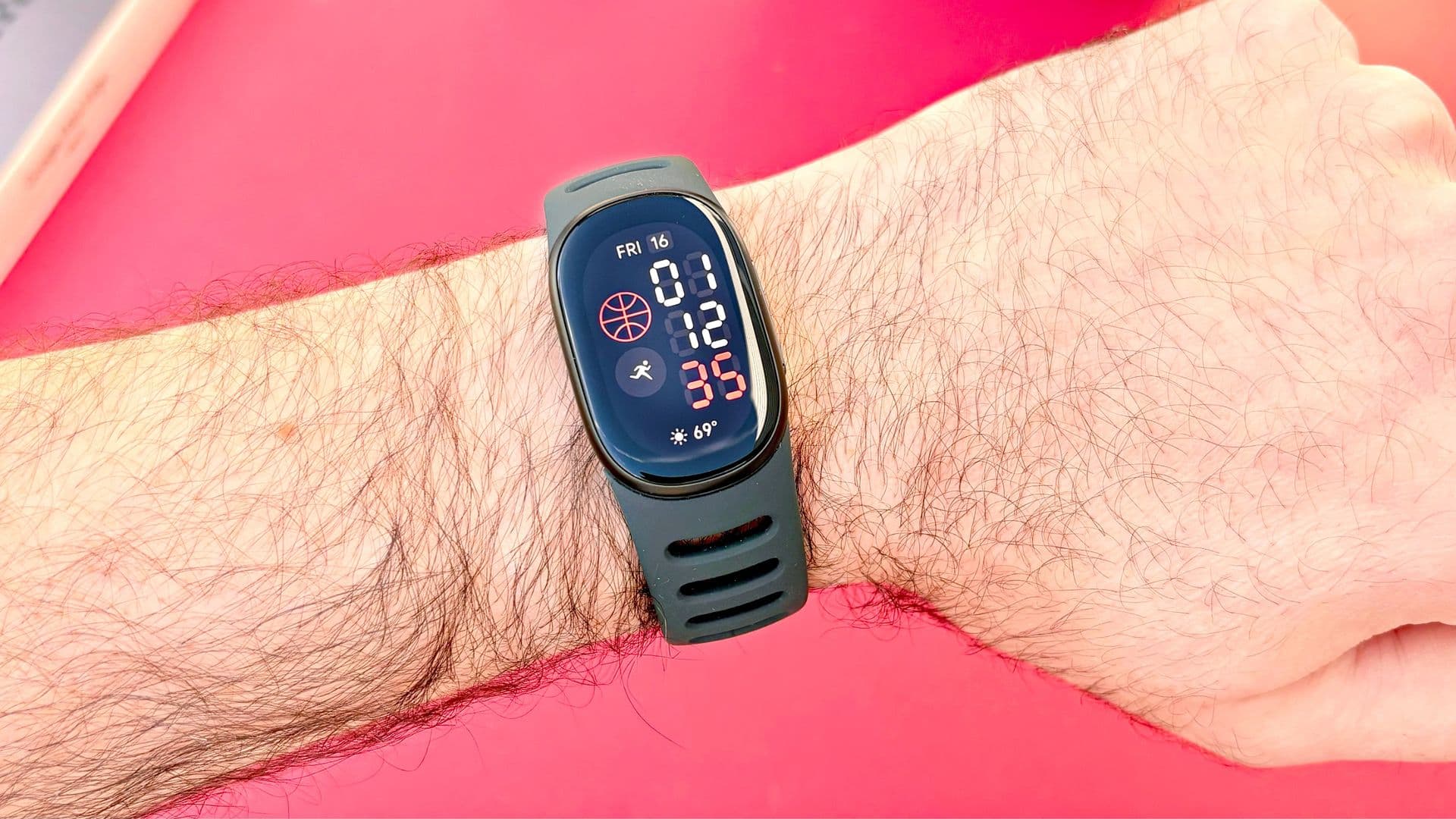
Garmin CIRQA Review: Specs, Sensors, and Real Athletic Use
The Garmin CIRQA launched in 2026 as a dedicated recovery and wellness band, positioned squarely against Whoop. It sits on the bicep, not the wrist, uses a PPG optical sensor array to read blood volume changes for heart rate and HRV, and feeds data into Garmin's Connect+ ecosystem. That last part matters more than any single spec: if you already run a Fenix 8 or Epix Pro, the CIRQA plugs into a data stack you already trust.
Hardware and Sensor Setup
The CIRQA uses a multi-LED PPG cluster for continuous optical heart rate and HRV tracking, plus SpO2 monitoring via the same light-based system. Bicep placement gives it a flatter, more consistent skin contact than a wrist band, which helps with optical signal quality during high-movement activities like box jumps or rowing. It also carries a barometric altimeter for floor and elevation tracking, and Bluetooth 5.3 for sync. No GPS onboard, which is expected for a recovery-focused band. Battery life sits at around 14 days in standard mode, which beats Whoop 5.0's claimed 14 days in practice and comfortably clears the 4 to 5 days you get from an Apple Watch Series 10 used daily.
The HRV measurement is taken during sleep and via spot checks, using Garmin's established HRV Status metric. That metric has been in the Fenix and Epix line for two years, so the CIRQA isn't introducing new algorithms here. It's porting a proven system into a smaller, always-on form factor. Resting HR accuracy from bicep optical PPG is generally solid at rest, less reliable during intense effort, which is fine given the device's purpose.
Connect+ Integration and Training Load
Where the CIRQA earns its price is the Connect+ integration. Recovery data from overnight HRV and resting HR feeds directly into your existing Garmin Training Status and Body Battery scores alongside data from your primary GPS watch. You're not managing two separate apps or manually reconciling numbers, unlike pairing a Whoop with a Garmin or a Polar Vantage V3. Body Battery in particular benefits from the richer overnight data stream: the CIRQA stays on while your Fenix charges, closing the gap in continuous monitoring that dedicated Garmin watch users have complained about for years.
For female athletes, the CIRQA supports Garmin's cycle-synced training feature, which adjusts perceived exertion benchmarks and recovery expectations based on menstrual cycle phase. This is relevant because estrogen and progesterone directly influence HRV baselines, meaning a flat HRV score mid-luteal phase reads differently than the same number in the follicular phase. The CIRQA doesn't solve the deeper algorithmic issue around [Garmin VO2max estimates for female runners](/en/articles/garmin-vo2max-for-female-runners-why-the-algorithm-misleads-2026-07-06), but it does give the cycle-tracking feature more continuous data to work with, which improves its reliability.
Optical HR Accuracy and Skin Tone Considerations
Optical PPG sensors measure light absorption in blood vessels beneath the skin. Melanin in darker skin tones absorbs more of the green light wavelengths traditionally used by PPG sensors, which degrades signal quality. Garmin uses a multi-wavelength approach on the CIRQA, including red and infrared LEDs alongside green, which helps but does not fully eliminate the accuracy gap. Independent lab testing of similar multi-wavelength setups shows resting HR error of roughly plus or minus 2 bpm across skin tones at rest, rising to plus or minus 5 to 8 bpm during moderate exercise. Whoop 5.0 uses a comparable multi-LED array with similar reported performance. Neither brand has published peer-reviewed skin-tone-stratified accuracy data for the CIRQA or Whoop 5.0 specifically.
For athletes tracking signs of RED-S or energy availability, wearable data has real limits. HRV suppression, elevated resting HR, and poor sleep quality can all appear in CIRQA data and may flag patterns worth discussing with a clinician. The CIRQA does not diagnose anything, but [what your wearable data actually shows in RED-S contexts](/en/articles/red-s-in-female-athletes-what-your-wearable-data-actually-shows-2026-06-22) is worth understanding before interpreting your recovery scores.
What's Missing
No onboard GPS is expected, but the CIRQA also lacks ECG capability. Chest HRM straps like the Garmin HRM-Pro Plus use electrical impulse detection for beat-to-beat accuracy that optical sensors simply cannot match during high-intensity intervals. If you're a triathlete doing threshold swim sets or a CrossFitter running 400m repeats, the CIRQA won't give you reliable real-time HR data during those efforts. It also lacks the social recovery leaderboard and strain coaching that Whoop has built a community around. For athletes who are emotionally invested in that competitive recovery culture, the CIRQA feels clinical by comparison.
The bicep form factor also creates a practical issue for cyclists. Under a tight-fitting arm warmer or a compression sleeve, the CIRQA's optical sensor can be occluded, which kills data quality. Garmin's guidance is to wear it above the sleeve, which works in summer but gets awkward in cold-weather kit. Whoop users have the same problem.
The CIRQA is the right buy if you're already in the Garmin ecosystem and want continuous recovery monitoring without keeping your primary watch on 24/7. At around $199, it undercuts Whoop's subscription model significantly over a two-year horizon. Whoop 5.0 costs nothing upfront but runs $239 per year for the membership. If you're cross-shopping against a standalone device like the Polar Vantage M3, which does GPS, recovery, and training in one unit, the CIRQA only makes sense as a companion piece. Pure Garmin users doing serious endurance training: this fills a real gap.
Mentioned watches
Head-to-head comparisons
Buying guides