Garmin Elevate 4.1 in CIRQA: Why Not Gen 5?
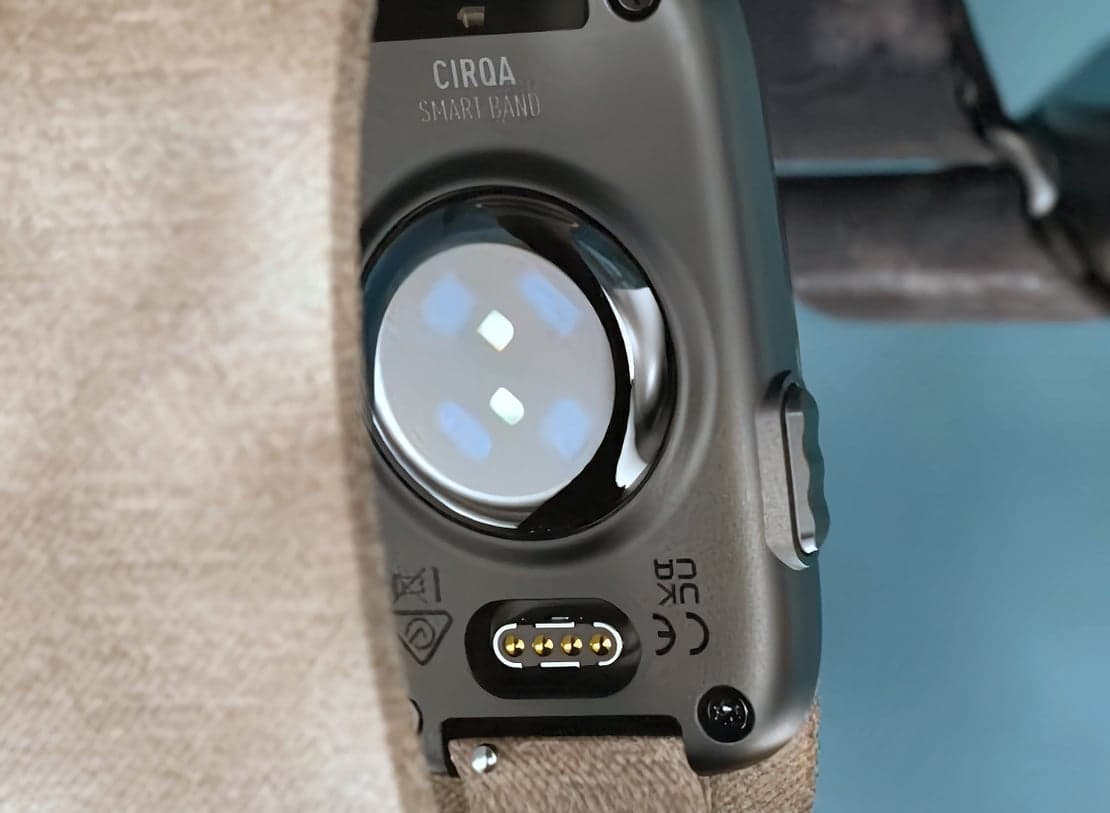
Garmin's new CIRQA band runs the Elevate Gen 4.1 optical sensor, not the newer Gen 5 found in flagship devices like the Fenix 8 and Epix Pro. That choice is deliberate, and it tells you a lot about where Garmin is heading with sensor stratification across its lineup. If you care about what's inside your wrist-based PPG hardware, this matters.
What Elevate 4.1 Actually Does
The Gen 4.1 sensor reads blood volume changes through skin using multiple LED wavelengths, standard PPG physics. Garmin added skin temperature monitoring to this revision, which is the key upgrade over vanilla Gen 4. Skin temperature is measured continuously via an infrared thermistor, not the optical array itself. The result is a sensor package that tracks heart rate, heart rate variability, SpO2 via optical light absorption, and skin temp, all from the same module on the back of the CIRQA band. In real-world accuracy tests, Elevate Gen 4 and 4.1 typically land within 2 to 3 BPM of a chest ECG strap during steady-state running. Interval efforts and high-cadence cycling are where optical sensors struggle universally, and Gen 4.1 is no exception.
The skin temperature addition is genuinely useful for recovery tracking. Whoop 5.0 uses skin temp as a core input for its recovery score, and Garmin is now doing the same in Body Battery calculations on compatible devices. Polar's Vantage V3 has offered continuous skin temp since 2023. Garmin is not early here, but the integration into the CIRQA's screenless recovery-focused form factor makes sense. For athletes using the CIRQA as a 24/7 health monitor alongside a primary GPS watch, having that overnight skin temp baseline is worth having. See our [full CIRQA breakdown](/en/articles/garmin-cirqa-specs-price-and-bicep-wear-explained-2026-08-07) for the hardware specifics.
Gen 5 Exists. So Why Gen 4.1?
Garmin's Gen 5 sensor, found in the Fenix 8 series and the Forerunner 965, adds higher LED sampling rates and improved motion artifact rejection algorithms. It also draws more power. The CIRQA targets a 14-day battery life at $199, and dropping Gen 5 into that chassis would compromise that number significantly. Garmin is making a deliberate trade: accuracy ceiling versus battery duration. That is a reasonable call for a recovery band, less so if you wanted the CIRQA to be your primary training sensor.
The bigger concern is what this signals for mid-range Garmins. The5kRunner's reporting suggests Garmin is standardizing on two sensor tiers going forward: Gen 4.1 for budget and mid-range devices, Gen 5 for premium. That means the Forerunner 165, Vivoactive line, and any new entry-level devices will likely stay on Gen 4.1 hardware. Coros is doing something similar, keeping its older optical hardware in the Pace and Apex entry models while reserving better sensors for the Vertix 2S. It is a market segmentation strategy, not a technical limitation. Athletes who want Gen 5 accuracy will need to spend Fenix or Forerunner 965 money.
Implications for Training and Recovery
For the endurance athlete using the CIRQA as a dedicated recovery tracker worn on the bicep overnight, Gen 4.1 is more than adequate. HRV accuracy during sleep, where motion artifact is minimal, is where optical sensors perform closest to ECG-grade chest straps. Whoop 5.0 uses a similar approach and charges $239 per year for the privilege. The CIRQA at $199 outright is a better financial proposition for athletes who already own a Garmin GPS watch and just want the recovery data layer. Check our [CIRQA vs Whoop 5.0 review](/en/articles/garmin-cirqa-review-199-screenless-band-vs-whoop-5-0-2026-08-06) for direct metric comparisons.
For running and cycling, the picture is different. Gen 4.1 in a bicep-worn device will produce cleaner PPG data than wrist placement during high-intensity intervals, because the bicep moves less and has better skin contact. Triathletes doing track sessions or threshold bike efforts should still pair a chest ECG strap for precise heart rate zones. The CIRQA does not replace that. What it does well is continuous passive monitoring: resting heart rate trends, HRV baselines, sleep staging, skin temperature deviation, and SpO2 spot checks. The barometric altimeter is absent from the CIRQA, which is fine given it has no GPS either.
What is missing is real-time workout feedback. No screen means no lap splits, no zone alerts, no pacing cues. For CrossFit or Hyrox athletes who want a recovery tool that also tracks WOD heart rate without a bulky watch, the CIRQA works if you accept that analysis happens post-session in the Garmin Connect app. The app integration is solid, and structured swim session support via tools like [AquaPlan](/en/articles/aquaplan-sends-structured-swim-sessions-directly-to-garmin-2026-07-30) adds usefulness for swimmers already in the Garmin ecosystem.
The disappointment is firmware stability. Garmin's recent track record on new hardware launches has included sensor dropout bugs and sync issues, as tracked in our [July 2026 firmware bug log](/en/articles/garmin-and-suunto-firmware-bugs-july-2026-tracker-2026-08-07). Buying the CIRQA at launch means accepting that some features may be rough for the first 60 to 90 days. Whoop has the same problem. Neither brand ships polished firmware on day one.
The CIRQA with Gen 4.1 is the right buy for Garmin-ecosystem athletes who want Whoop-style recovery tracking without a subscription. At $199 against Whoop's ongoing fees, the math works over two years. If you need the best optical accuracy Garmin makes, you are waiting for a Gen 5 device or spending on a Fenix 8. Mid-range runners happy with Gen 4.1 performance should not feel shortchanged: it is a capable sensor for everything except peak-intensity heart rate precision.
Mentioned watches
Head-to-head comparisons
Buying guides