Garmin Fenix 9 Adds Faster Maps and Brighter AMOLED
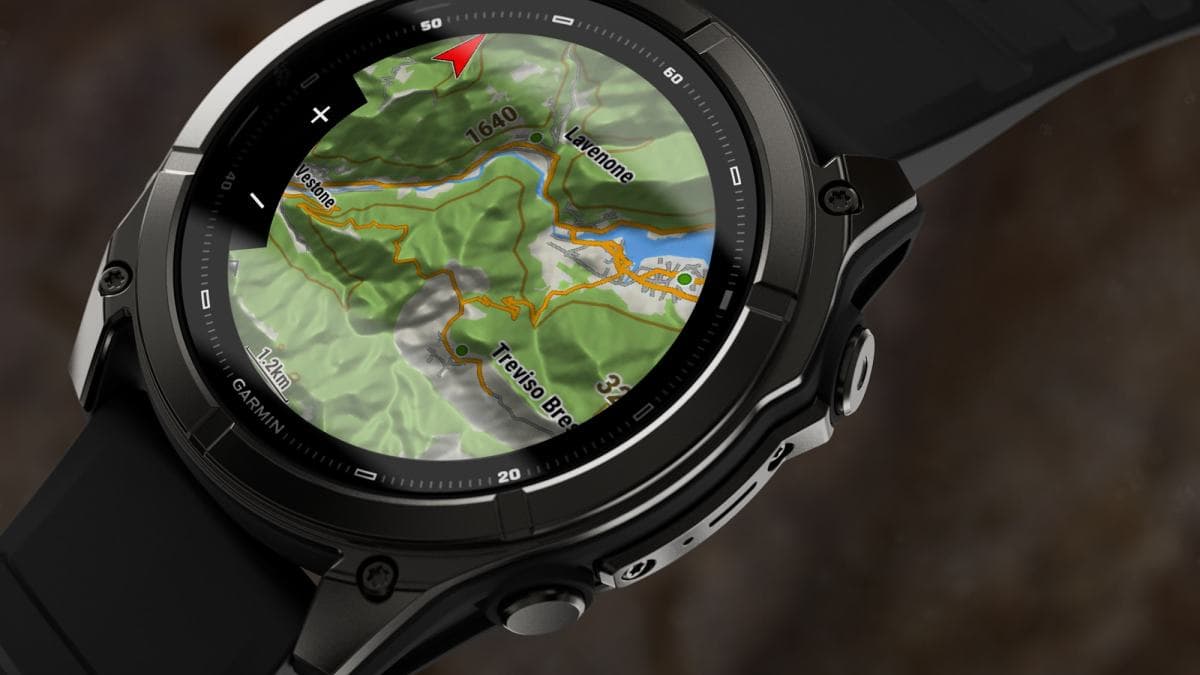
Garmin’s Fenix 9, presented on 25 August 2026, pushes its flagship outdoor watch toward smoother on-watch navigation and a brighter AMOLED display. Frandroid reports that the 47 mm model launched at €999.99 and is currently listed at €941.91 on Amazon. For endurance athletes, the meaningful upgrade is not a longer feature list. It is being able to read and move around topo maps more easily while already deep into a trail day.
The navigation upgrade matters
The 47 mm Fenix 9 pairs a titanium bezel and rear cover with a reinforced polymer case, sapphire crystal, a 1.4-inch 454 x 454 AMOLED display, and 64 GB of storage. Its display reaches around 2,000 nits, roughly twice the brightness of the Fenix 8 according to Frandroid. That is the kind of improvement we appreciate on exposed climbs, where a beautiful screen is worthless if it washes out in direct sun.
Garmin also says map panning is up to 30% faster than on the Fenix 8, aided by more RAM and a revised map engine. The practical benefit should be most obvious when zooming or dragging around a route junction, rather than during routine turn prompts. With twice the Fenix 8’s storage, the watch can hold more road or ski-resort maps, plus up to 7,000 songs. This is a proper self-contained long-run tool, not just a notification watch with a route line.
For positioning, the Fenix 9 uses multiband GPS through SatIQ and supports GPS, GLONASS, Galileo, QZSS and BeiDou. It also has an LED flashlight, microphone and speaker, 10 ATM water resistance, and a recreational dive mode to 40 metres. Garmin rates it for up to 16 days in smartwatch mode, 30 hours with GPS active, or 12 hours with GPS and music. Those are strong claimed figures for an AMOLED watch, especially for runners and mountain athletes who would rather leave the charging cable at home.
Training hardware, not just an outdoor shell
The Fenix 9 retains Garmin’s fifth-generation Elevate optical heart-rate sensor. Optical wrist sensing uses PPG, reading changes in blood volume with light. Frandroid says the watch tracks heart rate, blood oxygen saturation through optical SpO2 measurement, skin temperature, and supports ECG. Garmin also adds Garmin Epic, which brings several activities into one shareable illustrated story, while Stamina gets a graph and Stamina zones. We see the latter as the more useful training addition: a clearer visual view of Garmin’s estimate of remaining effort capacity could make pacing decisions easier during long races.
There is a compelling in-house alternative for athletes who want most of the premium running and trail toolkit in a lighter package. The Forerunner 970 is a single 47 mm model weighing 56 g, with sapphire crystal, titanium bezel, AMOLED display, locally stored mapping on 32 GB, LED flashlight and ECG support. Frandroid’s testing found its GPS very reliable and its heart-rate tracking good. It launched in May 2025 at €749.99 and is listed at €599 through Joybuy, according to the publication. The Fenix is the tougher, more water-ready navigation-first choice; the Forerunner looks like the more sensible performance-watch route for many runners.
What still falls short
The standard Fenix 9’s sensor package is unchanged, so this is not the update to expect a new wrist-based physiological breakthrough from. The 47 mm case also weighs 75 g, versus 53 g for the case alone, which is substantial for athletes who sleep in their watch to collect recovery data. And while the Pro version offers a fully titanium case plus LTE and satellite connectivity in its inReach variants, those functions are not part of the regular Fenix 9. For athletes worried about charge planning, our look at [Garmin CIRQA battery life and Connect+ dependency](/en/articles/garmin-cirqa-battery-life-and-connect-dependency-explained-2026-08-08) is useful background.
Our verdict: choose the Fenix 9 if durable sapphire hardware, bright mapping and long claimed GPS endurance matter more than wrist weight. Choose the Forerunner 970 if your focus is running and trail training and you want much of the same Garmin experience in a 56 g watch. Not cheap. But the Fenix 9’s map and display improvements are upgrades athletes will actually feel outdoors.
Mentioned watches
Head-to-head comparisons
Buying guides