Garmin fenix 9 and 9 Pro Bring Titanium and Built-In Satellite
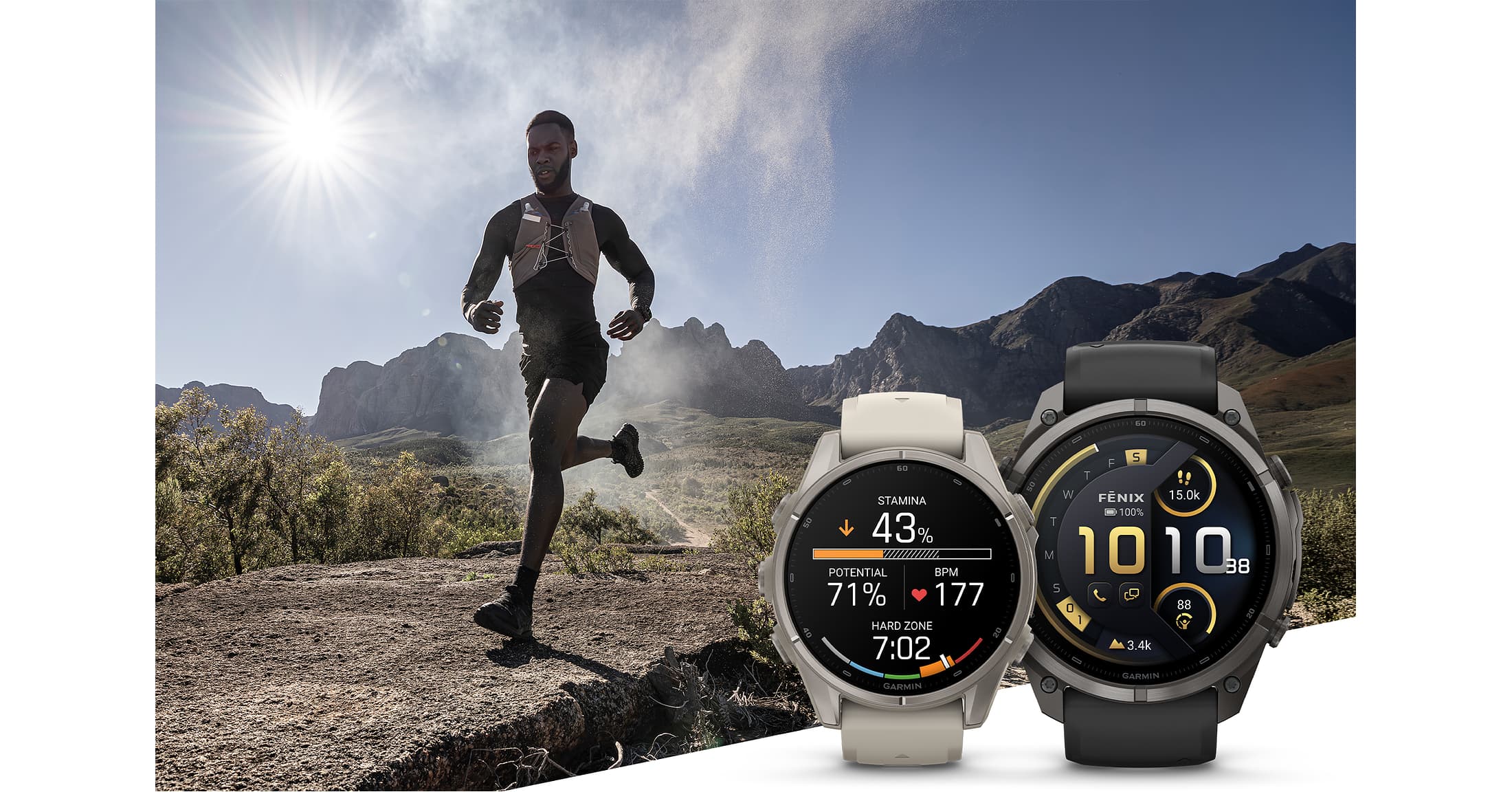
Garmin unveiled the fenix 9 and fenix 9 Pro on August 25, 2026 at its Play Harder event, and the lineup just got a lot bigger. Five configurations ship right away: the standard model, the titanium Pro, the MIP-screen Pro Solar, the Pro inReach, and the Pro inReach Solar, each available in 43mm, 47mm, and 51mm. The fenix 9 starts at $999.99, the Pro at $1,099.99, and both are available now. On paper, this is the biggest overhaul of Garmin's outdoor lineup since the fenix 8 switched to AMOLED.
Screen and Case: Titanium Shows Up
The AMOLED panel on the Pro hits 3,000 nits, twice as bright as the fenix 8, and the 51mm Pro gets a 1.5-inch display, the largest ever fitted to a fenix without growing the case. Scratch-resistant sapphire lens, leakproof buttons, 10 ATM water resistance, and a dive rating to 40 meters round out the shell. On materials, the fenix 9 Pro is the first fenix with a full titanium case, built using nano-molding tech. The standard fenix 9 sticks with a fiber-reinforced polymer case, titanium rear cover, titanium bezel, and sapphire lens as standard. The Solar models keep the transflective MIP screen instead of AMOLED, trading brightness for battery life.
Storage doubles to 64GB, up from 32GB on the fenix 8, enough for roughly 7,000 offline songs, and RAM is up 50%, which shows up as 30% faster map panning and a new perspective navigation view. Battery life on the standard fenix 9 tops out at 29 days in smartwatch mode on the largest size, the Pro reaches 31 days, and the Solar versions clear 57 days thanks to solar charging. The 47mm Pro inReach rates 18 days of GPS and tracking use, up from 15 days on the fenix 8 Pro. On this front Garmin still edges out Coros and its Vertix 2S, which claims around 60 days in watch mode but without the same onboard navigation depth.
Software: Epic, Stamina, and Two New Modes
Garmin Epic is the headline feature: it automatically compiles photos, health data, and performance highlights from a multi-day trip into a shareable story in Garmin Connect. Stamina zones and stamina curves track how endurance changes over time, a finer read than the training load numbers Coros and Polar already offer. Two new activity modes show up too: ArcheryX for archery, with shot timing and aim-stability tracking, and a rucking mode with pack weight adjustments up to 100kg and GORUCK workout integration. Neither Coros nor Suunto has anything at this level of detail for either sport right now.
VO2 max estimates now extend to indoor rowing, with a dedicated power curve alongside the existing running and cycling numbers. The catch is that Garmin's rowing features have always needed a power-meter-equipped machine to stay accurate, and nothing suggests that changes here. The wrist sensor itself hasn't moved: same optical PPG sensor for heart rate as the fenix 8, optical SpO2 for blood oxygen, a barometric altimeter for elevation, and HRV for recovery. No new heart-rate hardware generation, which is a bit surprising for a launch this size.
Pro Connectivity: Satellite and LTE Onboard
The Pro models build satellite and LTE connectivity straight into the watch, with an active subscription required to use it: messaging and SOS without a phone nearby, LiveTrack and location sharing through the Garmin Messenger app, satellite or LTE weather forecasts, and SOS routed through the 24/7 Garmin Response coordination center. Against the Apple Watch Ultra 2, which only offers basic satellite SOS with no full messaging and no native LTE on the watch itself, Garmin has a real edge on staying reachable in the backcountry. Coros and Polar still have no built-in satellite option on any watch, so for this kind of coverage the only other route is a separate inReach device, Garmin's own or nothing at all.
What's disappointing is the price, no way around it. The fenix 9 Pro clears $1,100 on the higher-end configurations, a steep entry point next to a Coros Vertix 2S or Suunto Vertical, both considerably cheaper for comparable non-satellite battery life. The most talked-about software additions, ArcheryX and rowing VO2 max, serve a narrow slice of users; most triathletes, runners, and cyclists will never touch either one. And the subscription needed to actually use satellite and LTE on the Pro models adds a recurring cost that doesn't show up in the sticker price.
The fenix 9 fits anyone who wants the brightest screen and the most storage in the lineup without paying for satellite, at around $1,000. The Pro is built for the climber or the thru-hiker who goes off-grid and wants to call for help from the wrist, provided the subscription and the $1,100-plus price tag are acceptable. For strictly sport-focused use with no need for satellite communication, a Coros Vertix 2S is still the more rational buy.
Mentioned watches
Head-to-head comparisons
Buying guides