Garmin Hits 15% Global Smartwatch Share, Matching Samsung in 2026
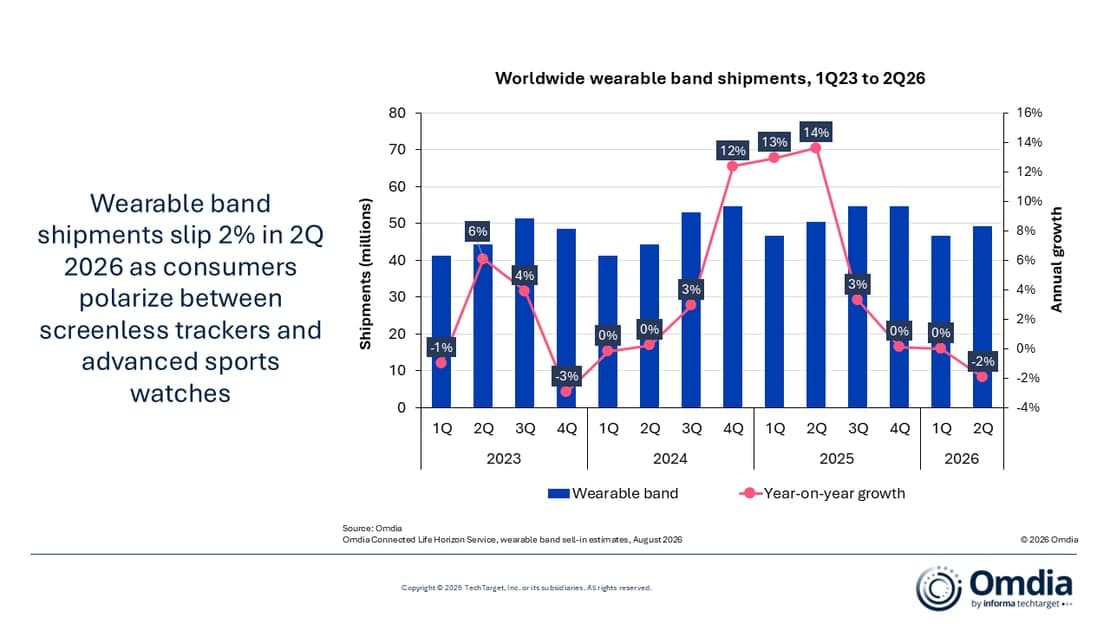
Garmin now holds 15% of the global smartwatch market, up from 11% a year ago, according to Omdia data. That puts it level with Samsung and still behind Apple, which continues to dominate the broader consumer segment. For a brand built almost entirely on athletes and outdoor users, that number is striking.
What the Market Share Numbers Actually Mean
Market share figures like these count unit shipments, not revenue, and not the kind of user who actually trains with their watch. Garmin's average selling price sits well above Samsung's mass-market Galaxy Watch lineup, so pulling even on units while maintaining premium pricing is a stronger result than the headline suggests. Samsung is moving smartwatches at $200 to $250. Garmin is moving Forerunners, Fenix, and Epix models that routinely land between $350 and $1,000. These are not the same market.
The growth also reflects a genuine product expansion. Garmin has pushed hard into the recovery-tracker space with the CIRQA, its wristband aimed squarely at WHOOP and Polar LOOP users. The CIRQA uses a PPG optical sensor to read blood volume changes for HRV, resting heart rate, and sleep staging, which is the same optical approach you find on the wrist in every Garmin watch. It is not ECG. That distinction matters when you are comparing HRV accuracy to a chest strap reading electrical impulse data. The CIRQA had a rough launch, including stock issues and reported accuracy problems, as covered in our [launch breakdown](/en/articles/garmin-cirqa-launch-sold-out-accuracy-problems-bugs-mapped-2026-08-15) and [15-night sleep test](/en/articles/garmin-cirqa-sleep-tracking-accuracy-15-night-real-test-2026-08-16).
How Garmin Stacks Up Against the Competition
The comparison with Samsung obscures the more relevant competitive question for endurance athletes: how does Garmin measure against Coros, Polar, and Suunto for the people actually training 10 to 20 hours a week. Coros has gained serious ground with the Pace 4 and Vertix 3, offering GPS accuracy and battery life that matches or beats Garmin in back-to-back tests. The Coros Pace 4 runs 40 hours in full GPS mode. The Garmin Forerunner 965 runs around 31 hours. Battery still matters more than market share on a 70.3 bike course.
Polar remains the most credible name in optical heart rate accuracy at the wrist, particularly during cycling and rowing where wrist movement is more controlled. In running at threshold pace, wrist PPG across all brands, including Garmin, Polar, and Coros, still loses ground to a chest strap reading true electrical impulse data. If your training depends on zone precision, a Garmin HRM-Pro Plus paired to any of these watches will outperform the wrist sensor alone. That is not a Garmin weakness specifically. It is a physics problem.
What Garmin's Growth Tells Us About Athlete Buying Habits
The 4-point jump in market share over 12 months is not accidental. Garmin has widened its price range, pushed its Connect app harder, and leaned into ecosystem lock-in through Training Readiness, Body Battery, and now the CIRQA integration. Athletes who start with a Forerunner 165 at $299 are being pulled toward a Fenix 9 later, then a CIRQA, then a Rally power meter pedal set. That ecosystem play is exactly what Apple does in the consumer space and what Samsung has never fully pulled off for sport users.
The Fenix 9 is still unconfirmed but filing evidence and likely variant details point to a late 2026 release, as tracked in our [Fenix 9 and Enduro 4 filing roundup](/en/articles/garmin-fenix-9-and-enduro-4-filing-evidence-variants-likely-dates-2026-08-08). If Garmin drops a Fenix 9 with improved optical sensor performance and extended battery, it will hold that market position. If the CIRQA accuracy issues persist and firmware problems continue, as flagged in the [August 2026 firmware bug roundup](/en/articles/garmin-wahoo-suunto-firmware-bugs-august-2026-roundup-2026-08-15), some of that growth could reverse.
What the Omdia numbers leave out entirely is churn. How many WHOOP users trialed the CIRQA and went back? How many Samsung Galaxy Watch owners are actually using SpO2 or sleep tracking past week two? Market share counts the sale, not the retention. For a brand like Garmin, whose users tend to be obsessive and vocal, retention is the real metric.
The one honest gap in this story is the software side. Garmin Connect has improved but still lacks the coaching depth of TrainingPeaks integration at the app level, and the social layer is thin compared to Strava. Coros has a cleaner training plan structure. Polar Flow is better for HRV trend interpretation over time. Garmin wins on hardware breadth and sensor variety, including barometric altimeter, GPS multi-band, and body temperature, but the data interpretation layer is still catching up to what athletes actually want from a platform in 2026.
Bottom line: the market share gain is real and earned. Garmin at 15% means endurance athletes are voting with their wallets at scale. If you are choosing between a Garmin Forerunner 965 at $599 and a Coros Vertix 3 at a similar price, Garmin wins on ecosystem depth and data variety. If you train primarily for running performance and want cleaner training load metrics with longer battery, Coros is still a legitimate answer. Samsung at the same unit share is a different product for a different person entirely.
Mentioned watches
Head-to-head comparisons
Buying guides