Garmin Vivoactive 5 Deal Drops Below Nearby Retail Listings
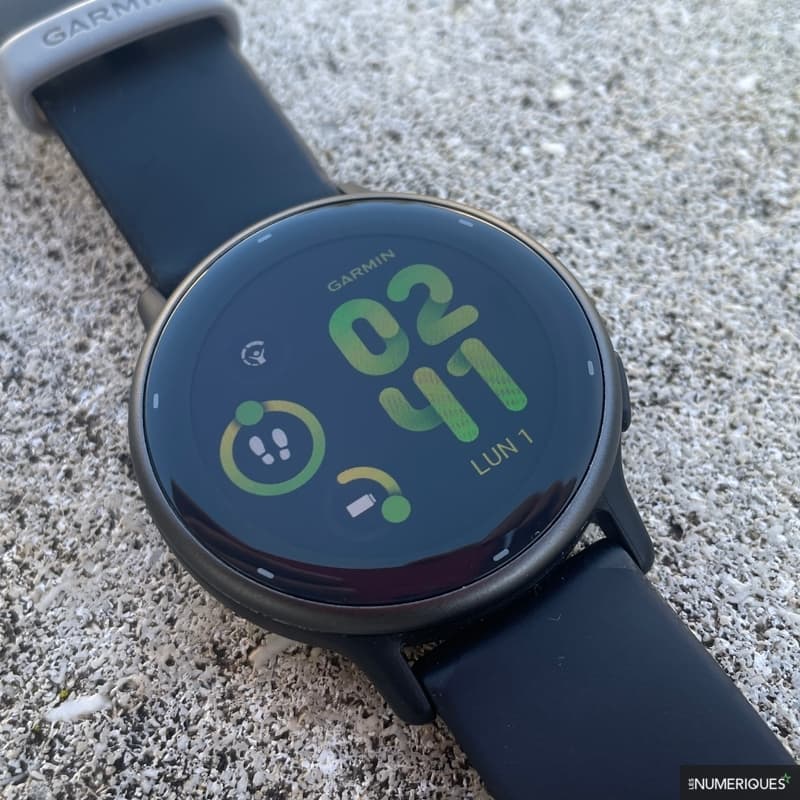
The Garmin Vivoactive 5 is currently listed below several nearby retail offers, according to Les Numériques. That puts Garmin’s fitness-focused AMOLED watch into more affordable territory for athletes who want reliable everyday tracking, a clean interface and GPS without stepping up to a more training-specialist model.
Les Numériques says Garmin revived the Vivoactive line after four years, giving this fifth version a new-look case and extensive software changes. Its review verdict is broadly positive: the OLED screen looks good, the interface works well, and the watch performs particularly well for endurance sessions. For steady runs, long rides, easy aerobic work and general gym use, that is a convincing core package.
Built for steady training
The important distinction is how the wrist sensor behaves. Les Numériques found the optical heart-rate tracking very accurate during endurance workouts. Wrist optical sensors use PPG, reading changes in blood volume with light, and they tend to have an easier task when effort is stable. That makes the Vivoactive 5 a sensible fit for runners and cyclists whose training is built around sustained sessions rather than constant pace changes.
GPS reliability is another clear positive in the review. Pair that with the stated 11-day battery life and the Vivoactive 5 looks practical as a daily watch that can follow a week of training, sleep and ordinary life without becoming another device that needs constant attention. It is a different proposition from Garmin’s higher-end endurance hardware, such as the [Edge 1040 Solar price drop](/en/articles/garmin-edge-1040-solar-falls-to-449-for-black-friday-2026-11-07): less cycling-specific, far easier to wear all day.
Where it falls short
The caveats matter for structured athletes. Les Numériques reports odd heart-rate readings during interval training. This is a familiar weak point for wrist PPG when intensity shifts sharply, arm movement increases and the watch has less time to settle on a reading. For track reps, hard CrossFit work or Hyrox-style sessions, we would treat wrist heart rate as useful context, not the final word. An ECG chest strap reads electrical impulses from the heart and remains the better choice when accurate interval data matters.
There is also no barometric altimeter. A barometric altimeter measures air pressure to estimate elevation, so its absence is a real limitation for runners and cyclists who care about climbing and descending data. GPS comes from satellites and can still record a route, but it is not the same tool for elevation tracking. Les Numériques also flags slow charging, an annoying miss on a watch otherwise praised for battery life.
The Vivoactive 5 is a strong value pick for endurance athletes focused on steady runs, rides and everyday health tracking, with a better fit than a more expensive performance watch if advanced training data is not the priority. Choose something more workout-focused if intervals and elevation are central to your sport. Not perfect. But solid.