Suunto Race 3S Brings Sapphire Glass to 46 mm Trail Watch
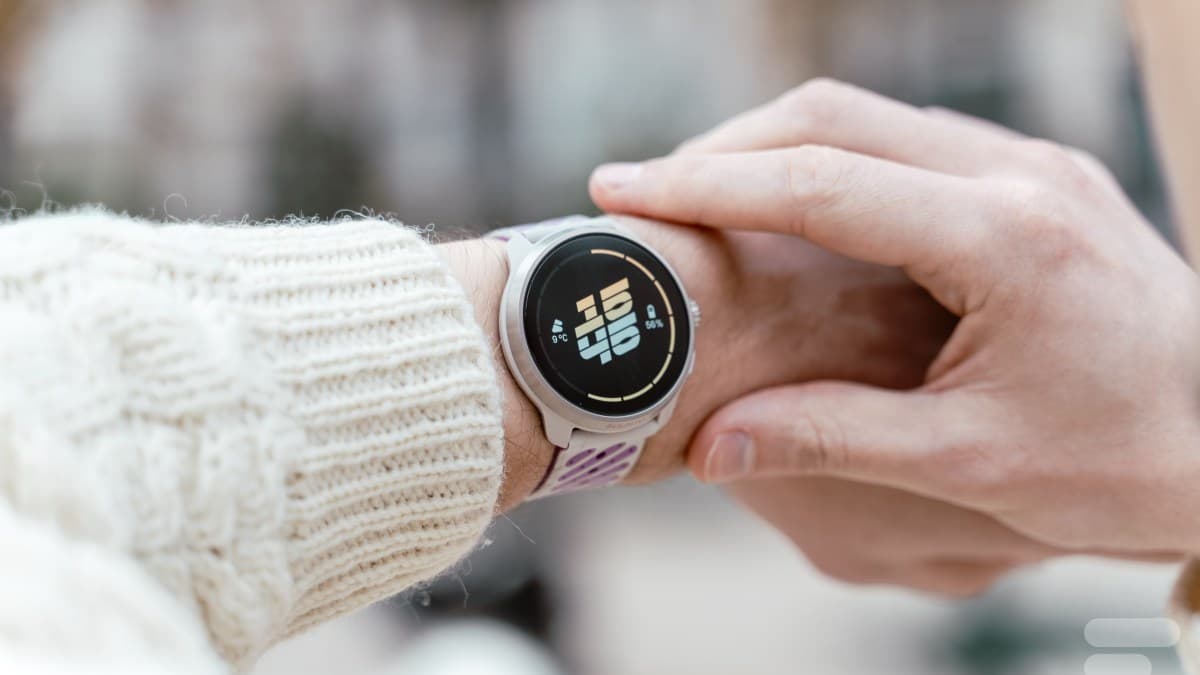
The Suunto Race 3S is a 46 mm trail-focused watch that combines a titanium bezel, sapphire crystal and dual-frequency GNSS in a 56 g package. Frandroid’s testing puts it in a useful spot in Suunto’s range: more compact than the Race 2, tougher than the Run 2, and available in France since 15 October 2026 for €499.
Built for rougher routes
This is a sensible form factor for runners who want proper mountain-watch protection without strapping on the biggest case available. The 46 x 46 x 11.4 mm Race 3S has a largely plastic case to keep weight down, while the sapphire screen should be far better suited to rocks, scrapes and inevitable trail mishaps than Gorilla Glass. It is rated to 5 ATM, so pool sessions are fine, though this is not a dive watch.
The 1.32-inch AMOLED display delivers 466 x 466 pixels and a claimed peak brightness of 2,000 cd/m². That is a major stated jump from the earlier Race S, which peaked at 600 cd/m². Always-on display support and automatic brightness are welcome for daily use. Still, Frandroid points out that the screen occupies only 53.12% of the watch face. With a wide black border around it, this is a compact watch whose display does not feel as expansive as it could.
Navigation and training are the point
For trail runners, the important hardware is here: four-constellation, dual-frequency GNSS, a barometric altimeter, compass, optical heart-rate sensor and optical pulse oximeter. The 64 GB of internal storage supports onboard mapping, with roads, street names and nearby points of interest. This follows the direction Suunto took with the more streamlined [Run 2](/en/articles/suunto-run-2-review-offline-maps-meet-a-leaner-watch-2026-10-24), but the Race 3S adds the more protective sapphire and titanium hardware.
Frandroid compared its GPS tracks against a Garmin Fenix 8 over five runs. Total recorded distance was 57.960 km on the Race 3S against 58.435 km on the Garmin, a difference of 0.81%. The report says the Suunto could draw tighter turns and place the route more accurately in narrow city streets. Its wrist optical heart-rate sensor was good in steadier runs when checked against a Garmin HRM 600 chest strap, which measures electrical cardiac signals through single-lead ECG. During harder changes of pace, the watch could read a little high, so serious interval athletes should still pair a Bluetooth LE chest strap.
Suunto’s new AI Coach is the software angle. In the phone app, it can summarize training progression, recovery and volume, answer questions about health data, build a workout or create a multi-week plan. It is included for Race 3S owners for three months until 31 December 2026, after which Suunto has not disclosed a price. We like the practical direction, especially alongside structured workouts, VO2 Max, training-load analysis, ascent guidance and support for up to 120 sport modes.
What is missing? On-watch route recalculation, which Frandroid says Garmin offers. The interface also needs patience: the tester still found navigation unintuitive after two weeks and disliked being limited to one right-swipe widget. There is no microphone or speaker for wrist calls, no ECG, no 4G, and the magnetic charging connector can take several attempts to align.
The Race 3S is for trail and endurance athletes who value durable compact hardware, offline maps and convincing GPS over smartwatch extras. Against Suunto’s Run 2, it is the more rugged choice. Against Garmin, it looks like a strong navigation and training watch, but one that still leaves convenience features and route recalculation on the table.
Mentioned watches
Head-to-head comparisons
Buying guides