Garmin VO2max for Female Runners: Why the Algorithm Misleads
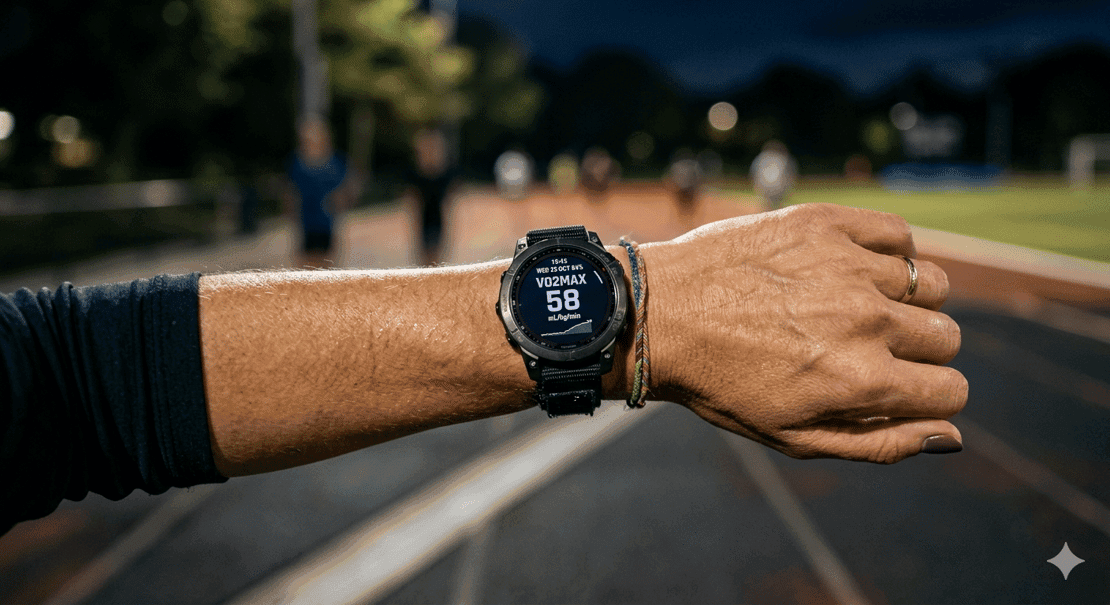
Garmin's VO2max estimate is one of the most-watched numbers on any training watch, but for female runners it can be systematically off. The algorithm Garmin uses to generate that figure is trained predominantly on male physiological data, and that bias creates real problems for women trying to use the metric to guide training load, race prediction, or fitness progression.
How Garmin Actually Calculates VO2max
Garmin's VO2max estimate is not a lab test. It uses optical PPG data from the wrist sensor, which reads blood volume changes via light, combined with GPS pace and heart rate data to model oxygen efficiency. The watch compares your pace against your heart rate effort and derives an estimate. That sounds logical, but the underlying model was built on datasets skewed toward male subjects, which means the baseline assumptions about cardiac output, hemoglobin concentration, and oxygen-carrying capacity do not reflect average female physiology.
Women typically have lower hemoglobin levels than men, smaller heart chambers on average, and different cardiac stroke volume dynamics. These are not performance deficits; they are biological differences. But when Garmin's algorithm treats those variables through a male-calibrated lens, the output gets distorted. Some female runners see VO2max scores deflated by 3 to 8 points compared to lab measurements. Others, particularly at lower intensities, see inflated scores. Neither direction helps you train smarter.
Comparing the Problem Across Brands
This is not exclusively a Garmin issue, but Garmin is the most widely used platform among endurance athletes, so the impact is broader. Polar's VO2max algorithm, called Fitness Test, has also faced similar criticism, though Polar has published more transparency around its female-specific corrections in recent firmware cycles. Coros takes a simpler approach, pulling from Firstbeat-adjacent modeling, and shows the same structural weakness. Apple Watch does not surface a VO2max number in the same training-focused way, which sidesteps the problem but is not useful for athletes who need the data. Whoop does not offer VO2max at all.
The Firstbeat Analytics engine, which powers Garmin's calculations, has acknowledged in published methodology documents that female VO2max prediction carries higher error margins. The company has not yet released a major algorithmic update that corrects for this at scale. That is a meaningful gap in 2026, given how central that number is to Garmin's training load, race predictor, and recovery features.
What This Means for Real Training Decisions
If your Garmin says your VO2max is 42 and you are a competitive female runner targeting a sub-4:00 marathon, that number feeds into the watch's race predictor. A deflated VO2max will suggest a slower finish time than you are capable of. A inflated one will push suggested training paces above what you can sustain. Either way, you are training off a faulty input. The 5K time trial remains a more reliable calibration point: run a genuine hard 5K effort, let the watch log the effort at full GPS and optical HR, and see whether the resulting VO2max shift aligns with your perceived fitness.
Heart rate strap pairing helps here. A chest strap uses electrical impulse detection, similar to ECG, giving a much cleaner HR signal than the wrist optical sensor during variable-pace running. Feeding more accurate heart rate data into the algorithm reduces one layer of error, even if the male-calibrated model remains the underlying issue. Pairing a Garmin Forerunner 965 or Fenix 8 with a HRM-Pro Plus strap is the best realistic workaround available right now.
What Is Still Missing
The core disappointment is the lack of a female-specific toggle or correction factor inside Garmin Connect. The watch knows your biological sex, entered at setup. There is no technical barrier stopping Garmin from applying a corrective offset to the Firstbeat model for female users, or at minimum flagging wider confidence intervals on the estimate. Polar and Garmin both have the research available. The fix is a software problem, not a hardware one, and it has not arrived.
If you are a female endurance athlete using Garmin, treat your VO2max number as directional, not absolute. Track the trend over weeks and months rather than fixating on the raw score. Cross-reference with race results and time trial performances. And keep an eye on Garmin firmware updates, particularly around Firstbeat algorithm revisions. The [July 2026 firmware bug tracker](/en/articles/garmin-wahoo-suunto-coros-firmware-bugs-july-2026-tracker-2026-07-03) is worth bookmarking for exactly that reason. Until Garmin ships a female-corrected model, the number on your wrist is a useful signal with a known flaw baked in.
Mentioned watches
Head-to-head comparisons
Buying guides