Oura Ring 5 Cannot Be Repaired: Battery Death Ends Its Life
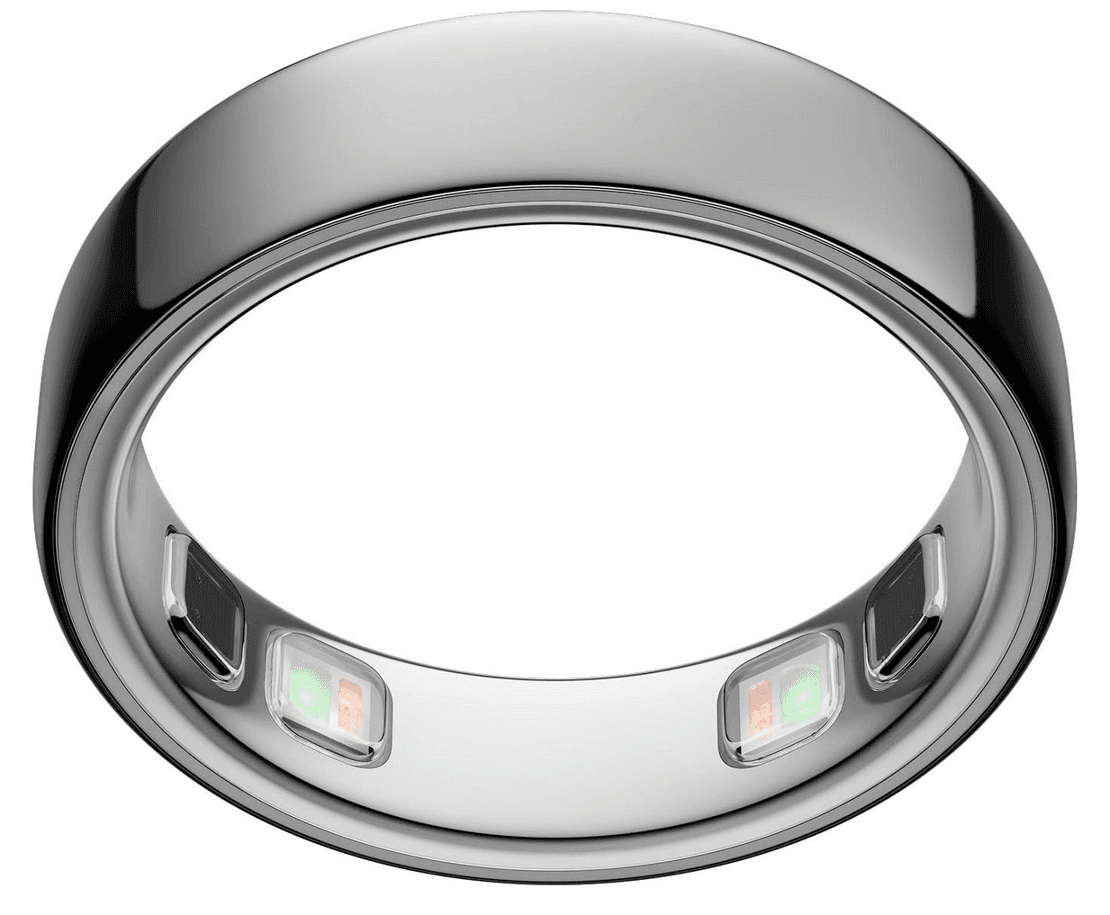
The Oura Ring 5 is the smallest smart ring Oura has ever built. That's genuinely impressive engineering. But an iFixit teardown confirmed what many suspected: the ring is completely sealed, cannot be opened without destroying it, and once the battery degrades past usefulness, the device is finished. No repair path. No battery swap. Just a dead ring.
What's Inside the Oura Ring 5
The Ring 5 packs PPG optical sensors for continuous heart rate and heart rate variability tracking, plus SpO2 monitoring via light-based blood oxygen readings. There's also a temperature sensor for recovery and cycle tracking, and a 3-axis accelerometer handling movement and sleep staging. All of that is crammed into a titanium shell that iFixit describes as bonded shut. The optical sensors here read blood volume changes through the skin on your finger, which actually gives better signal quality than wrist-based PPG on a Garmin Fenix 8 or Apple Watch Ultra 2, simply because fingers have denser capillary networks and less motion artifact during rest.
The form factor is genuinely small. Oura says the Ring 5 is lighter and thinner than the Ring 4, which already sat at around 2.3 to 2.8 grams depending on size. For sleep tracking specifically, a ring this light beats wearing a Whoop 5.0 band or a Garmin Forerunner 965 to bed every single night. Less pressure, less awareness, cleaner sleep data as a result.
Recovery Tracking Versus Whoop and Garmin
Oura's core value proposition has always been recovery and readiness, not active sport tracking. The Ring 5 continues that focus. Its HRV4Training-compatible overnight HRV data is solid, and the readiness score draws on resting heart rate trends, HRV baselines, sleep staging, and skin temperature deviation. Whoop 5.0 does something similar with its Recovery score, but Whoop requires a monthly subscription starting at around $19 per month. Oura Ring 5 costs roughly $349 to $449 depending on finish, with a $5.99 per month membership on top. Neither is cheap. Garmin's Body Battery on a Fenix 8 or Forerunner 265 gives you a comparable readiness metric with no subscription, built into a watch that also does full GPS training loads.
For endurance athletes, the ring shines specifically at sleep quality assessment and multi-day recovery trends. If you're a triathlete logging two-a-days and want to know whether your parasympathetic nervous system has actually recovered before a threshold run, Oura's overnight data is genuinely useful. What it cannot do is replace a sport watch. There's no GPS, no barometric altimeter for elevation, no pace data, no workout structure. You're pairing this with a Garmin, a Coros, or an Apple Watch for training. The ring handles the biological signal between sessions.
The Repairability Problem Is Real
Here's where it gets frustrating. Lithium-ion batteries in wearables typically hold around 80 percent capacity after 300 to 500 full charge cycles. For a device charged nightly, that's roughly 12 to 18 months before noticeable degradation, and 2 to 3 years before it becomes genuinely unreliable. With a watch, Garmin will replace the battery in a Fenix or Forerunner for around $80 to $100. That extends device life by years. With the Oura Ring 5, there is no such option. iFixit confirmed the internal construction makes non-destructive disassembly impossible. When the battery dies, the ring dies. You buy another one.
This is an environmental and economic problem. A $400 device with a built-in two to three year hard ceiling is a tough sell when Garmin Forerunner watches routinely last five-plus years with basic maintenance. The sealed design is almost certainly a manufacturing and waterproofing choice , getting IPX8 water resistance in a ring that thin requires aggressive bonding , but the consequence for the user is planned obsolescence baked into the hardware. It's worth factoring that into the total cost of ownership before you buy.
What else is missing? Active workout tracking is still not there in any meaningful way. Cyclists and runners who want cadence, power zone tracking, or interval structure won't find it here. The app ecosystem is better than it was in 2024, but it still doesn't push data as cleanly into Garmin Connect or TrainingPeaks as you'd want. For Hyrox or CrossFit athletes who switch between heavy lifting and aerobic work, the ring's PPG-based heart rate during high-grip movements like barbell work is going to underperform versus a chest strap using electrical ECG signal.
The Oura Ring 5 is the right tool for a specific athlete: someone who already wears a capable sport watch during training and wants the best passive overnight recovery data available. At $350 to $450 plus subscription, it outperforms a Whoop 5.0 on sleep comfort and holds its own on HRV accuracy. But the inability to replace the battery is a legitimate flaw that shortens its viable lifespan significantly. Buy it knowing you'll likely replace it in three years. If that trade-off works for you, it's the best recovery ring available right now. If you want longevity, a Garmin with Body Battery and a Polar H10 chest strap for ECG-accurate training HR will serve you longer for similar money.
Mentioned watches
Head-to-head comparisons
Buying guides