Suunto Run 2 Adds Maps and Dual-Band GNSS
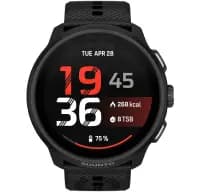
The Suunto Run 2 is a substantial update to Suunto’s running-focused GPS watch, bringing offline mapping, a dual-frequency GNSS chip, a new optical heart-rate sensor with blood-oxygen tracking, and a brighter AMOLED display. According to Montre Cardio GPS, a November 2026 update also brought its maps in line with other Suunto watches, adding street names and points of interest. For runners, trail athletes and triathletes who want navigation without moving into Suunto’s higher-end range, that changes the proposition.
Better hardware, with a few ergonomic snags
The 46 mm Run 2 uses a 33.5 mm, 466 x 466 AMOLED display rated at 2,000 nits, surrounded by a steel bezel. It weighs 55 g with its silicone strap, despite the widely quoted 35 g figure applying to the case alone. That is still manageable for long runs, though it is heavier than the PACE 4 and Forerunner 265S figures cited in the test. Suunto also includes a barometric altimeter and compass, while Bluetooth support allows external sensors such as a chest strap or arm-band heart-rate monitor.
Battery life looks competitive on paper: up to 40 hours in its maximum multi-GNSS mode, 28 hours in multi-GNSS, 24 hours in dual-frequency multi-GNSS, and 10 days for daily use. The important bit is that the Run 2 has no GPS-only mode. Even its longest-lasting satellite setting remains multi-GNSS. There are Performance, Endurance and Eco presets, though athletes cannot build a custom battery profile. The rotating crown is more divisive. Montre Cardio GPS found its haptic “clicks” do not reliably match menu movement, which is exactly the kind of tiny irritation that becomes very obvious when scrolling mid-run.
Maps make the Run 2 more useful off road
Mapping is the headline upgrade. Maps download by region or, for smaller countries, by country, and routes can include turn-by-turn alerts. Climb Guidance joins the package too, giving trail runners useful ascent context. The 4 GB and 64 GB versions matter here: a French region can take roughly 200 to 500 MB, so 4 GB will require more storage discipline if you also want MP3 files. The 64 GB model removes much of that compromise.
Suunto has also equipped the Run 2 properly for structured endurance training. It supports workouts built around heart rate, pace or power, plus targets, alerts, a metronome and a virtual partner. Energy Sense is a beta running tool intended to show an energy reserve during an effort, while the Marathon profile supplies a live predicted finish time for events from 5 km through marathon distance. There are 35 sport profiles covering running, swimming, cycling, triathlon, trail, CrossFit and HYROX, among others. We also like that workouts appear before sport profiles when opening the activity menu. It signals what this watch is for: training, not just recording.
A deliberately limited Suunto
The weak point is segmentation. The Run 2 remains incompatible with the SuuntoPlus Store, leaving out more technical tools such as running economy, cardiac drift, gear wear tracking and a backyard ultra screen. Music is restricted to MP3 files, with no Deezer or Spotify playlists. Mapping also lacks the layer-customisation options found on other Suunto watches. The test flags a strap keeper that comes loose too easily, limited map zoom, and only four configurable data fields per screen. Those are not deal-breakers, but they keep the Run 2 below the flexibility of Suunto’s more expensive watches, including the [Race 3S](/en/articles/suunto-race-3s-review-premium-small-watch-premium-price-2026-10-16).
The Run 2 is a strong fit for runners, new trail racers and triathletes who value maps, dual-frequency positioning and structured sessions over app-store depth. Against a PACE 4 with newly added maps, it is a close call. Choose Suunto if its training workflow and navigation approach suit you. Skip it if you want richer sports analytics or streaming music.
Mentioned watches
Head-to-head comparisons
Buying guides