SuuntoPlus Hits 40 Community Apps Three Months After Opening
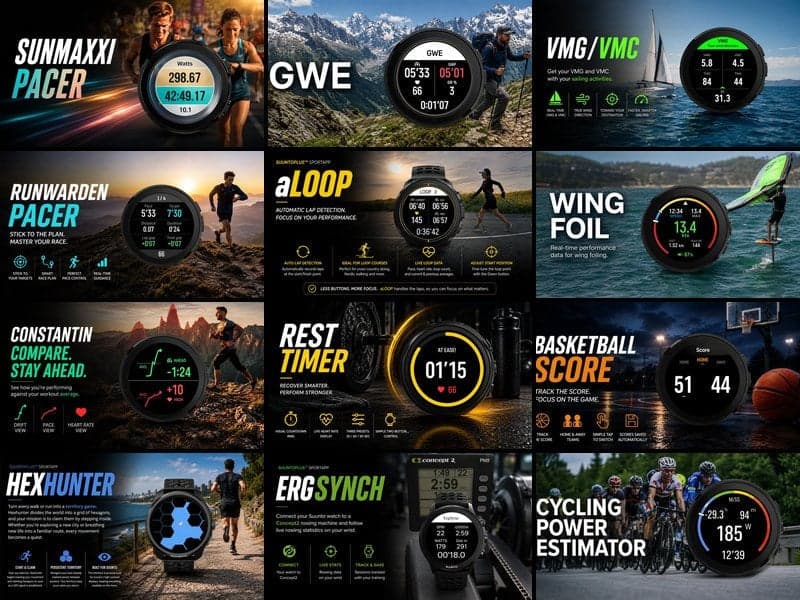
Three months after Suunto unlocked SuuntoPlus to independent developers, the platform has crossed 40 community-built apps. That is a real number worth paying attention to, because Suunto has historically been the brand athletes trust for hardware quality while quietly losing ground on the software side. This milestone does not close the gap with Garmin Connect IQ overnight, but it signals that the ecosystem is finally moving.
What SuuntoPlus Actually Is
SuuntoPlus is Suunto's native app layer, running directly on the watch rather than syncing post-workout. That matters for athletes who want real-time data fields during a session. Think custom pace zones, structured workout overlays, or sport-specific metrics that the factory firmware does not expose by default. Before the platform opened, SuuntoPlus apps were exclusively first-party, meaning Suunto wrote them all. The decision to open the SDK to community developers mirrors what Garmin did with Connect IQ years ago, and what Apple built with watchOS app extensions. Execution, though, is what separates ambition from a working ecosystem.
The 40-app count needs context. Garmin Connect IQ has thousands of apps across data fields, watch faces, widgets, and full activities. Apple Watch has an entire App Store behind it. Coros remains closed, full stop. Polar has dabbled with partner integrations but nothing resembling a true third-party app layer. So Suunto at 40 apps sits well behind Garmin, roughly on par with where Connect IQ was in its first year, and light-years ahead of Coros for customization. The honest framing: this is a credible start, not a mature platform.
What the Best Apps Actually Do
Among the community submissions, the strongest ones cluster around three use cases: triathlon pacing tools, running power data fields, and recovery metric dashboards. Running power is particularly relevant because Suunto watches carry barometric altimeters that read air pressure to calculate elevation changes, which feeds directly into grade-adjusted power algorithms. The sensor physics matter here. The wrist-based optical PPG sensor handles heart rate via blood volume changes under the skin, while the barometer handles elevation. A well-built third-party power app can pull both streams together in real time. Some of the new apps are already doing exactly that, giving Suunto users a Stryd-like experience without external hardware.
For triathletes, a handful of apps add sport-specific data fields for open-water swim pacing and bike power-to-heart-rate decoupling. These are niche metrics, but they are precisely the metrics that define a good race-day watch for an Ironman athlete. Garmin's Connect IQ has had similar tools for years, offered by brands like Garmin itself and third parties. Suunto is arriving late to this conversation, but the hardware underneath, specifically the GPS accuracy and optical heart rate sensor quality on recent Suunto models, is competitive enough that the app layer was genuinely the missing piece.
How the Platform Compares to Garmin and Apple
Garmin Connect IQ remains the benchmark. The review period, update frequency, and developer tooling are all more mature. Garmin also has a financial incentive structure for top developers that Suunto has not matched yet. Apple Watch, as covered in our [Apple Watch SE 3 vs SE 2 comparison](/en/articles/apple-watch-se-3-vs-se-2-three-changes-same-core-watch-2026-05-16), benefits from the entire iOS developer community, but it is still a compromised tool for endurance athletes due to battery constraints and GPS accuracy in dense canopy. Suunto's edge has always been battery life and GPS reliability in tough conditions. Adding a growing app layer on top of that hardware foundation makes the value proposition meaningfully stronger for athletes who train long.
The disappointments are real and worth naming. Forty apps sounds promising until you start browsing. Quality is uneven. Several submissions are basic watch faces with minimal functionality. Developer documentation, according to community feedback, is still thin in places. There is no clear revenue or visibility mechanism for developers yet, which is the structural problem that could stall growth. Garmin solved this partly through its large installed base. Suunto needs to actively cultivate its developer community rather than waiting for momentum to build on its own. The Coros comparison is easy because Coros has nothing here, but Suunto should be measuring itself against Garmin, and on that scale, 40 apps is a gap, not a victory.
The verdict is straightforward. If you are already a Suunto athlete running a Race or Vertical, this update genuinely improves your watch without buying new hardware. The best third-party apps add real training utility. If you are choosing between Suunto and a Garmin Fenix 8 purely on software depth, Garmin still wins. But if battery life, build quality, and GPS precision are your priorities and you have been waiting for Suunto to get serious about the app layer, three months in, it is getting serious.
Mentioned watches
Head-to-head comparisons
Buying guides