Wahoo Adds Wind Data Support: The Cycling Metric That Actually Matters
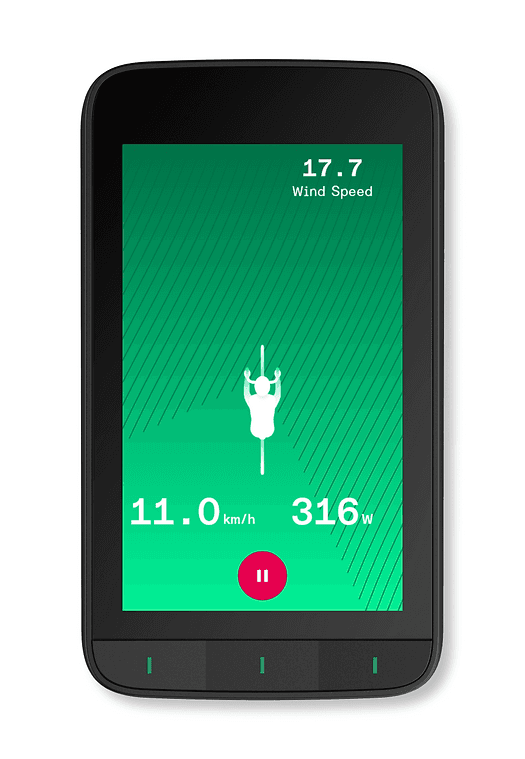
Wahoo has quietly pushed a significant update to its ELEMNT ecosystem, adding support for hDrop and Tymewear data alongside a renewed focus on wind speed and direction as a live cycling metric. This is not a minor firmware tweak. For road cyclists and triathletes chasing real performance data, knowing what the wind is doing in real time changes how you pace, how you position, and how you read your power numbers.
Wind Data: Why It's Harder Than It Looks
Wind is the biggest uncontrolled variable in outdoor cycling performance, and it has been almost completely absent from head unit displays in any useful form. Your GPS unit knows your speed. Your power meter knows your output. But neither tells you how much of that effort is going into pushing air versus moving the bike forward. Platforms like Jespr have shown what this data screen could look like when done properly, overlaying wind vector data onto your ride so you can see headwind, tailwind, and crosswind in relation to your direction of travel. Wahoo's move to support hDrop and Tymewear signals that the ecosystem is starting to take this seriously, even if the implementation is not yet native.
HDrop is a small aero sensor that mounts to your handlebar stem and measures wind speed and direction directly. Tymewear integrates environmental data into its performance platform. Neither is as seamless as having the metric baked into the head unit itself, but they push data to the ELEMNT display in real time, which is what cyclists actually need during a race or hard training block. Compare this to Garmin, which still has no dedicated wind sensor support on the Edge 1050 or Edge 540, relying instead on forecast data pulled from weather services, which is essentially useless at the granular level a cyclist needs on a rolling route.
How hDrop and Tymewear Actually Work
HDrop uses a physical pitot-tube-style sensor combined with an accelerometer to calculate air speed and direction relative to the bike's heading. It communicates over Bluetooth to the ELEMNT head unit, displaying live figures in the 0 to 60 kph range with direction shown as a compass bearing or simple vector arrow depending on the data field you configure. Tymewear takes a slightly different approach, pulling in GPS heading from the ELEMNT itself and combining it with its own environmental sensor pod to derive effective wind angle. Both systems are optical and pressure-based in their sensor stack, not electrical, so there is no ECG-style signal chain involved. The barometric pressure sensor in the ELEMNT ACE, which we covered in detail at [our piece on Wahoo's new sensor additions](/en/articles/wahoo-elemnt-ace-gets-core-temp-sweat-and-breathing-sensors-in-2026-2026-06-14), plays a supporting role in altitude correction but is separate from the wind measurement pipeline.
For a cyclist doing a 70.3 bike leg or a sportive with variable terrain, this kind of data is actionable in ways that post-ride analysis never is. If you can see a 25 kph headwind incoming as you crest a climb, you know to shift gears early, drop your cadence, and protect your power budget before the effort hits. Coros Dura and the Polar Vantage V3 offer no equivalent, nor does Garmin at the head unit level in 2026. Wahoo is genuinely ahead here, even if it requires third-party hardware to make it happen.
Real-World Use Cases for Triathletes and Cyclists
For triathletes specifically, wind data on the bike matters more than almost any other environmental metric. Swim splits vary by maybe 2 to 3 percent in open water conditions. Run splits have some wind sensitivity but far less than cycling. A 20 kph crosswind on a flat bike course can cost 15 to 20 watts of extra drag and completely invalidate your normalized power targets if you are not adjusting in real time. Having that data on your handlebars rather than guessing from your speed-to-power ratio is a meaningful operational advantage.
For club cyclists and gran fondo riders, the use case is slightly different. Wind sector awareness helps with group dynamics, knowing when you are getting a genuine draft benefit versus when the peloton is not protecting you from a sidewind. No other head unit currently on the market gives you this with live sensor data rather than forecast approximations. Check the [known bugs tracker](/en/articles/garmin-and-wahoo-known-bugs-june-2026-fix-tracker-2026-06-18) if you are already on ELEMNT firmware and want to know whether connectivity issues with third-party sensors have been patched.
What is missing here is native integration. You are paying extra for hDrop (around 149 euros) or a Tymewear subscription on top of your ELEMNT hardware. The data fields are not as polished as Jespr's visualization approach, which shows wind vector in a genuinely intuitive graphic rather than raw numbers. Setup is also fiddly, requiring Bluetooth pairing steps that are a few taps more complex than connecting a standard power meter. Battery life on the hDrop sensor is rated at around 12 hours, which covers most rides but will make ultra-distance cyclists nervous.
This update is best suited to serious age-group triathletes and road cyclists who already own an ELEMNT ACE or ELEMNT Bolt V3 and are frustrated with guessing wind impact on their power data. If you are on a Garmin Edge and happy there, this is not a reason to switch ecosystems. But if you are already in the Wahoo world and willing to spend 149 euros on hDrop, you are getting a live wind data capability that Garmin cannot match in 2026, and that is worth something.
Mentioned watches
Head-to-head comparisons
Buying guides