Wahoo ELEMNT ACE Gets Core Temp, Sweat, and Breathing Sensors in 2026
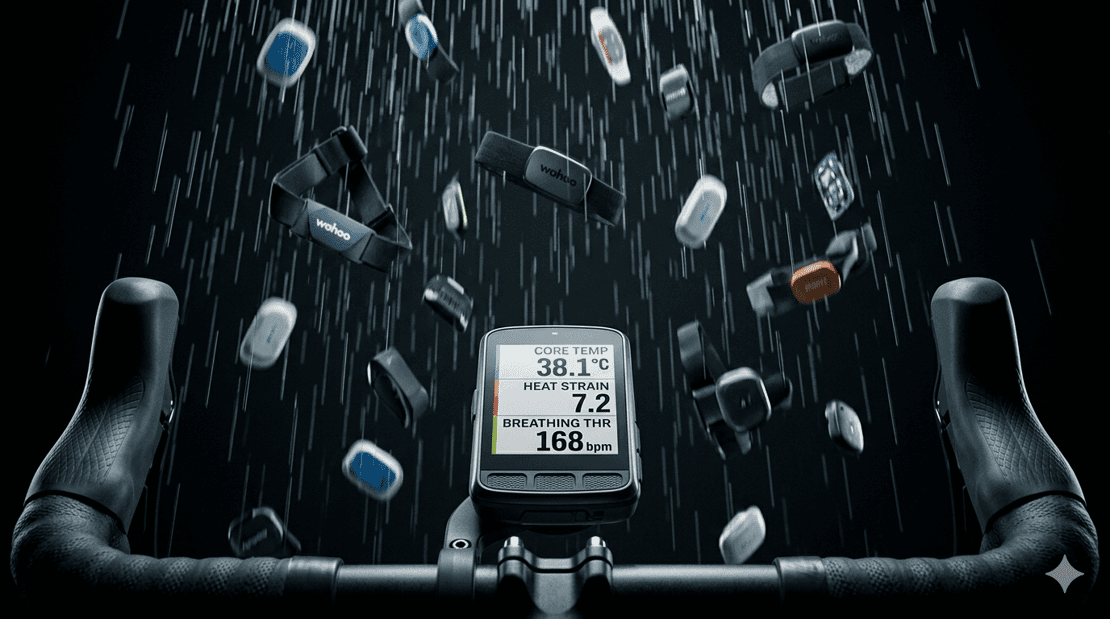
Wahoo just pushed its ELEMNT ecosystem into physiological territory that most cycling computers have never touched. The ELEMNT ACE, ROAM 3, and BOLT 3 now support four new external sensors covering core body temperature, sweat loss, and breathing thresholds, displayed alongside the usual power and heart rate fields. This is not a software tweak. It requires physical sensors pairing to the head unit, and it shifts Wahoo from a navigation-and-power platform into something closer to a real-time physiological monitoring system.
The Four Sensors and How They Actually Work
The key players here are hDrop and Tymewear, two sensor brands now officially integrated into the ELEMNT display ecosystem. hDrop focuses on hydration and sweat rate monitoring, using skin-contact sensors to estimate fluid loss during effort. Tymewear handles respiratory metrics, specifically breathing rate and ventilatory thresholds, which are genuinely useful for pacing at race intensity. These sensors communicate wirelessly to your ELEMNT head unit and put the data directly on your ride screen, not locked behind a companion app you check post-ride. For a cyclist doing a four-hour Gran Fondo in summer heat, seeing real-time sweat rate and core temperature is more actionable than a heart rate number alone.
The core temperature piece is the most technically interesting. True core temperature monitoring without a pill or rectal probe is hard, and most wrist-based solutions (including the Garmin Fenix 8 series and Polar Vantage V3) estimate skin temperature through optical PPG sensors, then apply algorithms to infer core values. The ELEMNT integration with dedicated external sensors is a step toward more direct measurement, though riders should understand these are still estimates unless explicitly stated otherwise. SpO2 readings on most sport devices, including Garmin and Whoop, are also optical, using light absorption through skin to measure blood oxygen saturation. Sweat sensors are different again: they typically measure electrical conductivity or ion concentration at the skin surface. None of these are the same as a chest strap ECG, which reads actual electrical impulses from the heart muscle.
Wahoo vs. Garmin and Coros on Physiological Data
Garmin has had body battery, HRV status, and skin temperature on the Fenix and Forerunner lines for a couple of years now, but most of that data lives on the watch, not the bike computer. The Edge 1050 shows some physiological fields but stays shallow on hydration and breathing specifics. Coros recently partnered with Wahoo on data sync and hardware reselling (see our breakdown at [/en/articles/coros-and-wahoo-partner-on-data-sync-and-hardware-reselling-2026-05-16](/en/articles/coros-and-wahoo-partner-on-data-sync-and-hardware-reselling-2026-05-16)), but neither brand has pushed breathing thresholds onto a head unit screen in real time the way Wahoo is attempting here. Whoop 5.0 tracks respiratory rate and HRV as recovery tools, not in-activity guidance. Wahoo is positioning these metrics as training inputs, not just post-session scores.
The ventilatory threshold display from Tymewear is worth singling out. Most athletes know their FTP from a 20-minute test, and Wahoo's own 4DP system adds nuance with DTL, STL, and LTL stress metrics (explained in depth at [/en/articles/wahoo-4dp-metrics-dtl-stl-ltl-and-fitness-score-explained-2026-05-16](/en/articles/wahoo-4dp-metrics-dtl-stl-ltl-and-fitness-score-explained-2026-05-16)). But ventilatory threshold, the point where breathing becomes labored and lactate accumulates faster, is something coaches track in lab tests. Getting a real-time field for it on a BOLT 3 screen during a threshold interval is genuinely useful for cyclists who cannot afford regular lab testing.
Practical Use Cases for Triathletes and Cyclists
For an Ironman athlete in a hot race, core temperature creep is a real performance and safety issue. Seeing that number tick up past 38.5C on your ELEMNT ACE during the bike leg, before you feel the cognitive effects of heat stress, gives you a window to act: back off, take on fluids, dump water at the next aid station. That is a use case no watch metric fully covers during a race because the watch is off your wrist on the run. A dedicated head unit with sensor integration fills that gap. Sweat rate data, even as an estimate, helps with on-bike fueling decisions in a way that a static pre-planned hydration schedule cannot match.
Breathing threshold data suits cyclists targeting sweet spot and threshold work more than it suits triathletes mid-race. If you are doing 2x20 intervals and you can see when your breathing pattern crosses into the second ventilatory threshold zone, you can use that as a real-time ceiling, not just watts. For CrossFitters and Hyrox athletes, the ELEMNT ecosystem is irrelevant. For runners, the head unit form factor does not translate. But for road cyclists and time trialists who already run an ELEMNT computer, adding a Tymewear or hDrop sensor costs less than a lab test and delivers data that was previously inaccessible outside a sports science facility.
What is missing is disappointing but not surprising. Wahoo has not confirmed whether the core temperature and sweat metrics are validated against clinical standards or disclosed the margin of error on sweat rate estimates. The sensor hardware costs money on top of the ELEMNT investment, and the ELEMNT ACE alone sits at the premium end of cycling computer pricing. Wind speed and direction, which Jespr has been showing as a promising on-screen metric for cyclists, is still not part of the Wahoo display setup despite being arguably more universally useful for pacing than sweat rate. Battery life impact from running additional Bluetooth sensors simultaneously has not been published.
Wahoo ELEMNT with hDrop and Tymewear sensor support is built for the data-hungry cyclist who wants physiological feedback without stopping for a lab test. It competes less with the Garmin Edge 1050 on features and more with the idea that your bike computer should be a real-time coach. If you are already in the Wahoo ecosystem and training seriously for hot-weather racing or precision threshold work, the sensor pairing makes sense. If you are Garmin-first and happy with post-session HRV scores from your watch, you can skip it for now.
Mentioned watches
Head-to-head comparisons
Buying guides