WHOOP Biceps HR Algorithm Update: Swim and Run Accuracy Tested
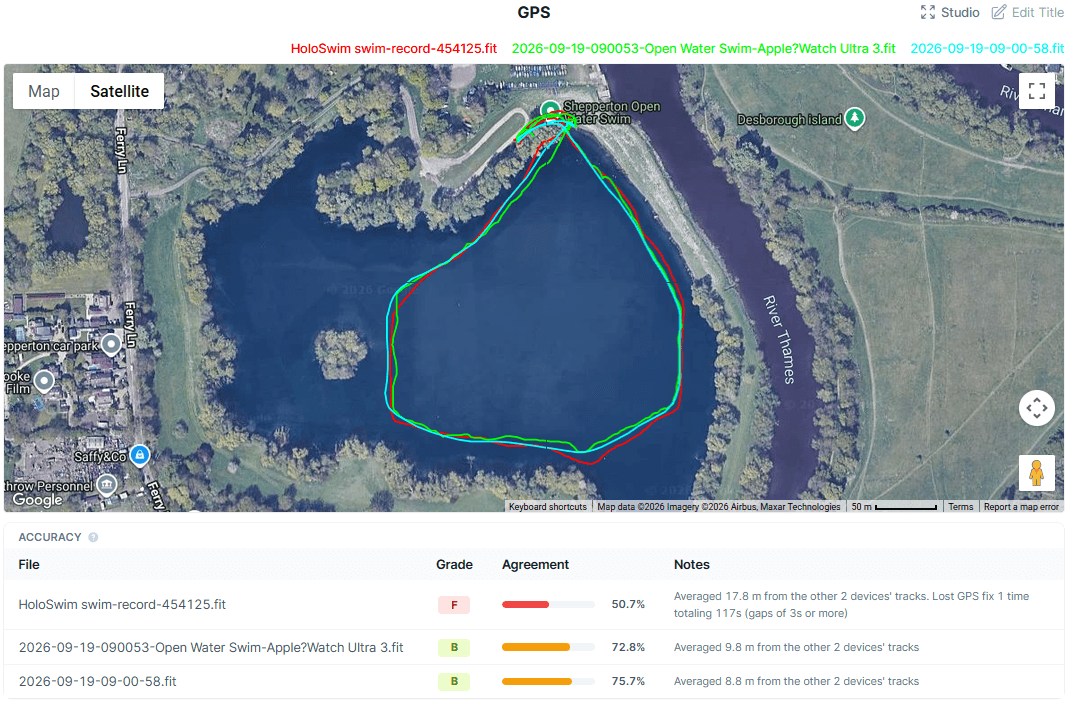
WHOOP pushed a new heart rate algorithm on 6 July 2026, and the early numbers are hard to ignore. Two tests conducted since the update, one swim and one run with the band worn on the biceps, produced some of the tightest agreement figures recorded all year at The5kRunner. For a subscription wearable that costs $30/month and has faced repeated scrutiny over optical HR accuracy, this matters.
How WHOOP Reads Heart Rate
WHOOP uses a PPG optical sensor, meaning it shines light into the skin and measures changes in blood volume to estimate heart rate. This is the same fundamental approach used by Garmin, Polar, and Apple Watch on the wrist, though WHOOP positions its sensor on the biceps or wrist depending on placement preference. It is not an ECG like a chest strap. Chest straps, such as the Garmin HRM-Pro or Polar H10, detect electrical impulses from the heart directly, which is why they remain the gold standard for accuracy, especially at high intensities or during water sports. WHOOP's algorithm update appears to improve how the device filters motion artifact from the PPG signal, which is the core challenge for any optical sensor during dynamic movement.
Swimming is the hardest environment for optical HR. Water immersion, arm stroke motion, and pressure changes all create noise in the PPG signal. Most wrist-based devices struggle badly in the pool. The Garmin Forerunner 965 and Apple Watch Ultra 2 both show degraded HR accuracy during swim sets compared to steady-state running. WHOOP wearing on the biceps has an anatomical advantage here: the biceps sits closer to the brachial artery, which carries stronger blood volume pulses than the radial artery at the wrist. The post-update swim test showed agreement figures that stand out versus previous WHOOP results recorded earlier in 2026.
Run Test Results and What They Mean
The run test results were equally tight. For context, "tight agreement" in sports science testing typically means mean absolute error below 3 to 5 beats per minute across a session, with high correlation coefficients when compared against a reference device like a chest strap ECG. WHOOP has historically struggled more during interval running than steady aerobic efforts, because rapid HR transitions expose algorithm latency in optical sensors. If the July update holds up across tempo runs and track sessions, that would close a meaningful gap on Polar's Vantage V3, which uses a 9-LED optical cluster and has been one of the stronger wrist-optical performers in 2026 testing.
For triathletes and open-water swimmers specifically, this update could shift how WHOOP fits into a training stack. Pairing WHOOP with a chest strap for key sessions has always been the workaround, but if biceps optical accuracy is now reliable enough in the pool, the subscription cost becomes easier to justify on accuracy grounds alone. The recovery metrics, HRV, resting HR, and sleep staging, have generally been WHOOP's strongest selling point. Accurate real-time HR during training adds a second pillar. If you want a broader comparison of WHOOP against the new Garmin CIRQA and Polar LOOP in 2026, [our full comparison piece covers all three head to head](/en/articles/garmin-cirqa-vs-whoop-vs-polar-loop-vs-fitbit-air-vs-helio-strap-pro-2026-comparison-2026-08-14).
Caveats and What Is Still Missing
Two tests do not make a validation study. A swim and a single run, while promising, are not enough data to declare the accuracy problem solved. Rigorous HR accuracy testing requires dozens of sessions across multiple athletes, intensity zones, and conditions. High-intensity intervals, sprint cycling, and CrossFit-style mixed-modal efforts are where optical sensors fail most visibly, and none of those appear in the post-update dataset yet. Garmin's CIRQA, which we reviewed and tested in Hyrox conditions [here](/en/articles/garmin-cirqa-accuracy-tested-hyrox-open-water-real-results-2026-08-07), still edges WHOOP on real-time HR during explosive efforts based on current evidence. WHOOP also still lacks a screen, GPS, and barometric altimeter, so it functions as a recovery and HR monitor only, not a training computer. Athletes who want workout metrics on the device will need to pair it with a watch or head unit.
The subscription model remains divisive. At $30/month or roughly $360/year, WHOOP costs more annually than a Coros Pace 3 ($229 outright) and competes with Garmin Connect Premium. You are paying for the platform, the coaching insights, and now apparently an improving algorithm, not hardware you own outright. For athletes already bought into the WHOOP ecosystem, this update is a clear positive with no extra cost. For anyone evaluating entry in mid-2026, accuracy improvements are welcome but two-test evidence is thin justification for a subscription commitment.
Verdict: the July algorithm update is a genuine step forward for WHOOP biceps HR accuracy based on early swim and run data. Most relevant for triathletes and swimmers who already use WHOOP for recovery tracking and want cleaner in-session data without reaching for a chest strap every workout. If you are cross-shopping, the Garmin CIRQA at $199 screenless [reviewed here](/en/articles/garmin-cirqa-review-199-screenless-band-vs-whoop-5-0-2026-08-06) is the closest direct alternative. Wait for more test volume before treating these two results as a final verdict.
Mentioned watches
Head-to-head comparisons
Buying guides