Amazfit Balance 3 HYROX Review: HR Accuracy and Partnership Assessed
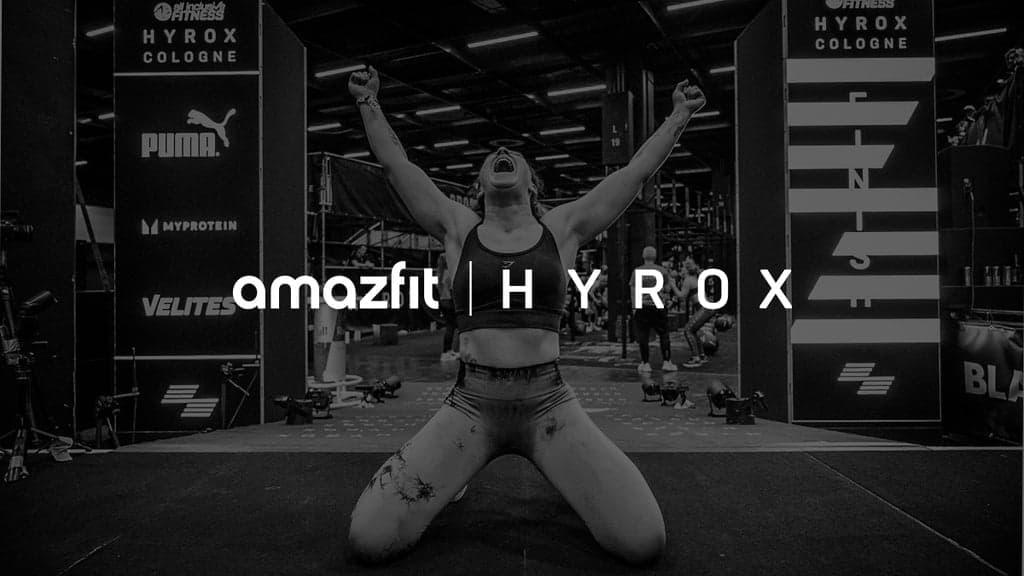
Amazfit signed a three-year exclusive global wearable partnership with HYROX in April 2026, locking in rights through 2029. That deal now looks more interesting following an LVMH-backed investment vehicle taking a large stake in HYROX, giving the series serious financial momentum. For Amazfit, a company that has not yet turned a consistent profit, this is a meaningful bet. The Balance 3 is the first watch to carry that partnership into real-world testing.
HR Accuracy: What the Numbers Actually Show
In a HYROX simulation test, the Balance 3 ran alongside a Whoop MG, a Garmin Forerunner 970, and hDrop sweat analysis. The Balance 3's optical PPG sensor at the wrist read approximately 3 bpm high on average, with one cadence lock incident during the rowing station. A 3 bpm positive bias is not catastrophic, but it is measurable. For context, the Forerunner 970 with a chest strap delivers ECG-based electrical impulse readings that are significantly more reliable during high-motion workouts like sled pushes and burpee broad jumps, where wrist optical sensors struggle with motion artifact. The Whoop MG showed tighter HR tracking during those same high-intensity transitions.
The cadence lock issue is worth flagging separately. Cadence lock happens when the wrist optical sensor picks up arm movement frequency instead of actual blood volume pulses, and it is a known weakness of PPG sensors during functional fitness workouts. One incident across a full HYROX sim is not a disaster, but HYROX athletes should know it can happen. If HR accuracy during every station is critical to your training, a chest strap running in parallel is still the honest recommendation. Amazfit's own [Helio Strap Pro](/en/articles/amazfit-helio-strap-pro-hands-on-review-for-endurance-athletes-2026-06-21) pairs with the Balance 3 and would address this directly.
Sweat and Recovery Metrics
The hDrop sweat patch estimated 3.1 litres of fluid loss during the sim. The athlete's weight drop measured roughly 2.5 kg, which implies around 2.5 litres of sweat loss assuming minimal fuel consumption offset. That 600 ml gap between hDrop and scale weight is within a reasonable margin given the imprecision of the scale method, but it suggests hDrop may read slightly high. The Balance 3 does not output a sweat rate figure directly, so this comparison is about ecosystem context rather than watch output. Still, for HYROX athletes thinking about hydration strategy, the combination of a sweat patch and a wrist watch is more informative than either alone.
Recovery tracking on the Balance 3 uses optical PPG for overnight HRV and resting heart rate. Whoop MG tracks the same metrics continuously at the wrist using the same optical principle. In direct comparison, Whoop's longer track record and tighter sensor-to-skin contact via its band design gives it an edge for HRV consistency. Polar's H10 chest strap, which uses electrical impulse detection, remains the gold standard for HRV measurement if you want lab-grade numbers. The Balance 3 is competitive for a watch at its price point, but it is not displacing dedicated recovery tools yet.
The Partnership Logic
The LVMH-backed investment into HYROX matters for Amazfit's strategy. HYROX is growing fast, with tens of thousands of athletes competing globally each season, and the demographic skews toward exactly the buyer who spends on wearables. Exclusive wearable rights through 2029 means no Garmin HYROX edition, no Coros HYROX mode, no Polar co-branding during that window. That is real competitive insulation. Whether Amazfit can convert brand visibility into watch sales at scale is the open question, especially given the brand's [20% price increases in 2026](/en/articles/amazfit-prices-up-20-in-2026-is-the-ceiling-near-2026-06-21) pushing it closer to Garmin territory.
The Forerunner 970 sits around $599 and offers superior GPS multi-band accuracy, a more mature training load algorithm, and Garmin's broader ecosystem. The Balance 3 comes in below that, and the HYROX-specific workout profiles and station-by-station tracking give it a genuine differentiator for that specific athlete. Coros does not have a comparable functional fitness mode. For a pure runner or cyclist, the Balance 3 is harder to recommend over the Forerunner 970 or even the Coros Pace 4. For someone whose training week centers on HYROX prep, the native integration starts to make more sense.
What Is Missing
The 3 bpm HR bias and the single cadence lock are not deal-breakers, but they point to a sensor suite that is not yet best-in-class. The barometric altimeter, which reads air pressure to estimate elevation, performed adequately during the sim, but stair and sled push elevation data was not broken out separately. GPS satellite acquisition was not a factor inside the sim venue. The software still lacks some depth in post-workout analysis compared to Garmin Connect, and the [Q3 2026 software roadmap](/en/articles/amazfit-q3-2026-software-roadmap-19-devices-four-key-features-2026-06-18) suggests improvements are coming, but they are not here yet. The LVMH investment gives HYROX more runway, and Amazfit benefits from that, but the watch itself needs to close the sensor accuracy gap before the partnership fully pays off on the wrist.
The Balance 3 is the right watch for a HYROX-focused athlete who wants native workout profiles, does not want to pay Garmin prices, and is comfortable with slightly imperfect HR data during the most explosive stations. At its price, it beats the Whoop MG on standalone GPS and multi-sport flexibility, though Whoop still edges it on recovery tracking depth. If you train across running, cycling, and HYROX and want one device, check the [Amazfit Cheetah 2 Ultra](/en/articles/amazfit-cheetah-2-ultra-review-gps-heart-rate-battery-tested-2026-06-21) before deciding. The Balance 3 is built for the HYROX athlete specifically, and that focus is its clearest strength.
Mentioned watches
Head-to-head comparisons
Buying guides