Amazfit Balance 3 HYROX Sim: HR Accuracy, Sweat Data, and LVMH Deal
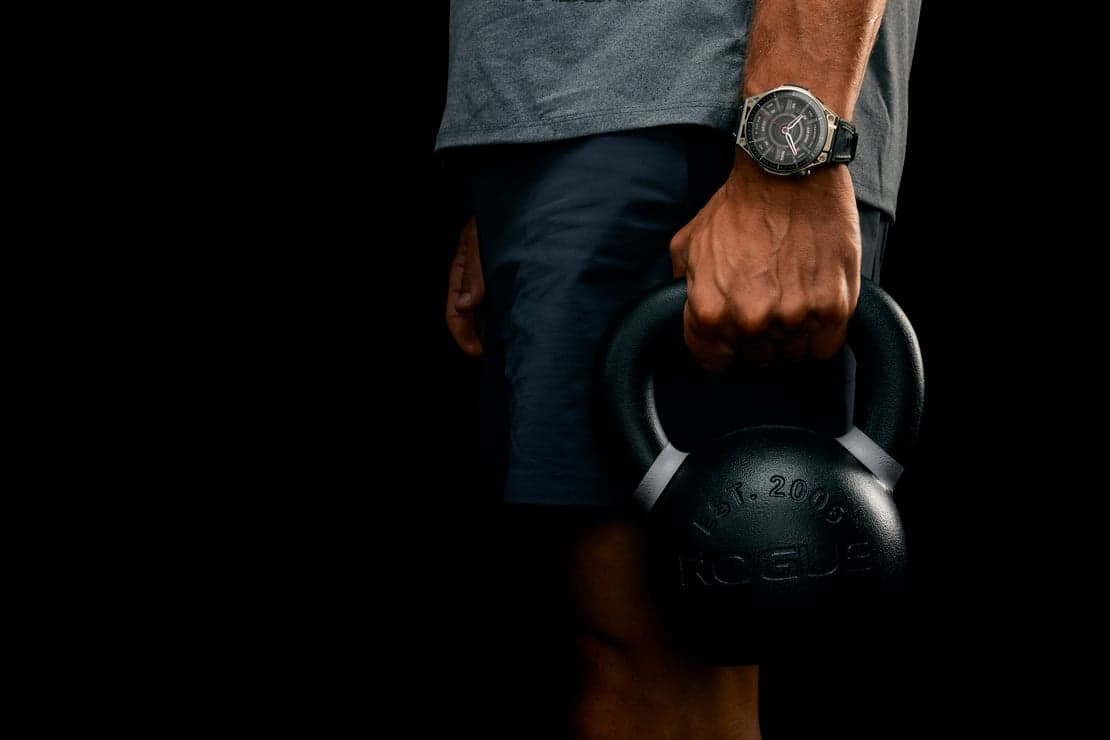
Amazfit just got a significant commercial tailwind. An LVMH-backed investment vehicle is taking a large stake in HYROX, and Amazfit holds the exclusive wearable partnership with the fitness racing series until 2029. That deal now looks considerably more valuable, and it puts the Balance 3 squarely in the spotlight as the watch HYROX athletes are supposed to reach for.
HR Accuracy During the HYROX Sim
In a structured HYROX simulation test run alongside a Garmin Forerunner 970 and a Whoop MG, the Balance 3 posted a heart rate bias of around 3 bpm high. That is a reasonable result for a wrist-based optical PPG sensor during mixed-intensity functional fitness, which includes transitions between rowing, sled pushes, burpee broad jumps, and running. The Forerunner 970 served as the primary reference, and the Whoop MG, worn on the upper arm, provided a secondary optical PPG comparison. One cadence lock incident was recorded during the test, meaning the Balance 3 briefly tracked wrist movement frequency rather than true cardiovascular signal. That is a known failure mode for wrist PPG sensors during high-cadence, arm-heavy movements, and it is worth flagging for HYROX athletes who push hard on the ski erg or wall balls.
For context, a 3 bpm bias is tighter than what we have seen from some Polar Pacer Pro units in similar functional fitness conditions, and it is broadly comparable to Coros Pace 3 performance in short-duration mixed efforts. The cadence lock issue, though brief, is the kind of event that distorts zone-based training data if you are not also running a chest strap. A chest HRM strap reads electrical impulses from the heart directly, which makes it immune to the motion artifacts that trip up optical sensors during explosive movements. If you want clean data on wall balls and burpees, pair the Balance 3 with a strap.
Sweat Analysis With hDrop
The test also incorporated hDrop sweat analysis, which estimated a fluid loss of 3.1 litres over the session. The tester's measured weight drop was roughly 2.5 kg, which translates to approximately 2.5 litres of fluid loss assuming minimal intake. That is a 0.6 litre discrepancy between the hDrop estimate and the scale-based figure. hDrop calculates sweat rate using patch-based electrochemical sensing of sweat electrolytes and volume, not PPG or GPS. The gap between its 3.1 litre figure and the 2.5 kg weight method is notable enough to treat the hDrop number as directional rather than precise. Still, having any sweat data alongside heart rate during a HYROX sim is a step beyond what the Garmin or Coros ecosystems currently offer natively on the wrist.
The Amazfit Helio Strap Pro, which Amazfit has been showing off alongside the Balance 3 in hands-on sessions, adds a second sensor module to the wrist ecosystem. The product director's pitch positions it as a recovery and biometric depth tool sitting between a standard optical wrist sensor and a full Whoop MG subscription model. Whether it adds meaningful signal for HYROX-specific recovery versus what you already get from the Zepp app's HybridCharge and Training Focus tools is a question that needs more testing data. You can read more about the Zepp app's HYROX-specific features in our [Zepp App Update breakdown](/en/articles/zepp-app-update-hybridcharge-training-focus-and-hyrox-tools-explained-2026-05-29).
What Is Still Missing
The LVMH investment makes the partnership look durable, but it does not fix the Balance 3's current gaps. The cadence lock incident matters more in a HYROX context than it would during a steady-state run, because HYROX is exactly the sport where arm movement and heart rate effort decouple most aggressively. Battery life on the Balance 3 also remains shorter than a Coros Vertix 2S or a Garmin Fenix 8 Solar in GPS-plus-sensor-always-on mode, which is relevant if you are using it for both race-day tracking and daily recovery monitoring. The Whoop MG, despite having no GPS and no display, still edges the Balance 3 on continuous HRV and recovery trend accuracy, largely because the upper-arm optical PPG position picks up cleaner blood volume pulse signals than the wrist during sleep and rest. And at its current price point, the Balance 3 is competing directly with the Garmin Forerunner 265, which has a more mature training load ecosystem and a larger third-party accessory market.
The Balance 3 is the right watch for committed HYROX athletes who want native event integration, reasonable HR accuracy within about 3 bpm in sim conditions, and access to sweat and biometric tools that Garmin and Coros do not bundle. The LVMH-backed investment into HYROX means the exclusive partnership is not going anywhere before 2029, which gives Amazfit time to close the cadence lock and battery gaps through firmware and hardware iterations. If you train primarily for HYROX and want the deepest native toolset, the Balance 3 makes sense. If you train across triathlon, running, and cycling with HYROX as a side event, the Forerunner 970 or a Fenix 8 still offers more versatile accuracy across disciplines. See also our full [Amazfit Balance 3 HYROX review](/en/articles/amazfit-balance-3-hyrox-review-hr-accuracy-and-partnership-assessed-2026-06-21) for the complete dataset.
Mentioned watches
Head-to-head comparisons
Buying guides
