Amazfit Helio Strap Pro Review: Worth Twice the Original Price?
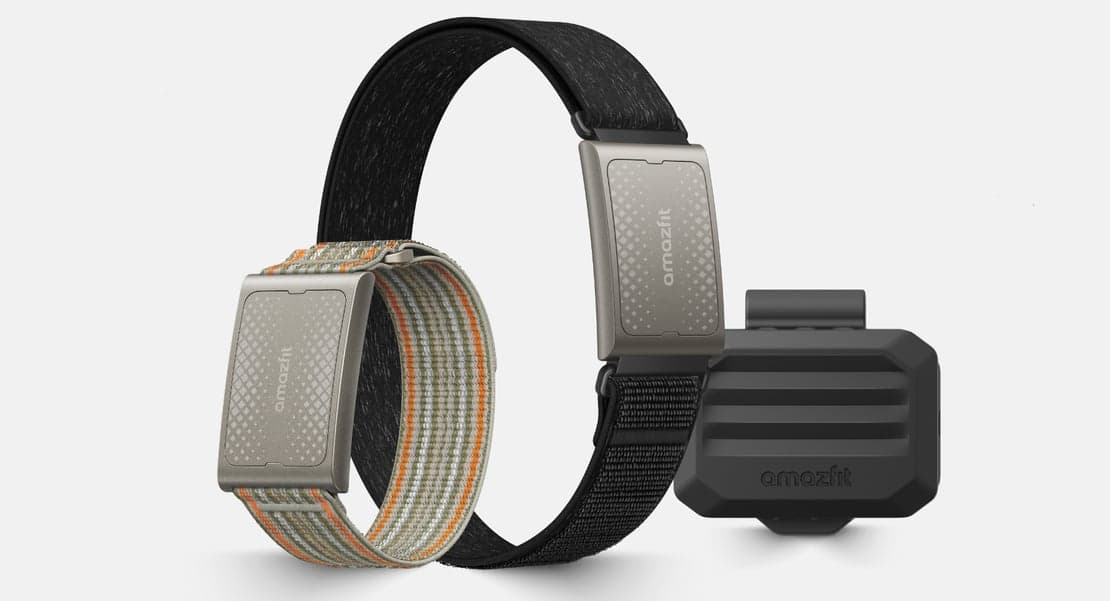
The Amazfit Helio Strap Pro is a chest strap that reads electrical cardiac impulses via ECG to deliver beat-by-beat heart rate data, and it ships with a secondary sensor module that clips onto the strap body. Amazfit is pitching it as a premium upgrade to the original Helio Strap, priced at roughly double. That price gap is the central question every endurance athlete should ask before buying.
What the Hardware Actually Does
The Helio Strap Pro uses the same electrodes-on-skin ECG approach as every serious chest strap on the market, including the Garmin HRM-Pro Plus and the Polar H10. Electrical impulses from the heart are detected directly through the skin, which is why chest straps consistently beat wrist-based PPG optical sensors in accuracy during high-intensity intervals and transitions. The Pro module adds some additional biometric capture on top of the raw ECG signal, but according to the product director interview referenced by the5kRunner, the core hardware stack is largely unchanged from the original Helio Strap. That is a meaningful admission. You are not getting a fundamentally different sensor array for double the money.
The strap pairs over ANT+ and Bluetooth simultaneously, so it works with a Garmin Forerunner 970, a Coros Vertix 3, or any head unit that accepts external HR. RR interval data broadcasts cleanly, which matters if you are using HRV-based recovery scoring alongside something like Whoop MG. Battery life sits in the 30-plus hour range for the module, which is competitive with the Garmin HRM-Pro Plus and better than the Polar H10 in terms of continuous use before a charge.
Accuracy in the Real World
For running and cycling, ECG-based chest straps are the reference standard. The Helio Strap Pro should perform at or near that level during steady aerobic work, and preliminary hands-on impressions suggest it does. Where it matters most is in HYROX-style efforts and triathlon transitions, where wrist PPG struggles badly with motion artifact and vasoconstriction. Our own testing of the Amazfit Balance 3 in a HYROX simulation showed a 3 bpm high bias on the wrist optical sensor with one cadence lock incident, which is exactly the scenario where offloading HR to a chest strap makes sense. See the full breakdown in our [Amazfit Balance 3 HYROX Sim article](/en/articles/amazfit-balance-3-hyrox-sim-hr-accuracy-sweat-data-and-lvmh-deal-2026-07-03).
Swimming is a different story. The strap stores data during pool sessions and syncs afterward, which is standard for this category. It is not a live broadcast underwater. The Polar H10 has offered this for years, and the Garmin HRM-Swim 2 is built specifically for pool use with a tighter fit. The Helio Strap Pro is not trying to beat those products in the water, but it holds its own for triathletes who want a single strap across disciplines.
What You Are Actually Paying For
This is where it gets uncomfortable. The Helio Strap Pro costs twice the original. The deep dive coverage from the5kRunner is blunt about it: almost the same hardware. What the premium pricing buys you appears to be the secondary module, some software features inside the Zepp app ecosystem, and the Pro branding. For athletes already owning the original Helio Strap, the upgrade math is hard to justify unless the specific additional metrics from the Pro module are things you will actually use and trust.
Compared to the Garmin HRM-Pro Plus at around $130, the Helio Strap Pro sits in the same price bracket once you account for the doubled cost over the base model. The Garmin strap has years of validated accuracy data, Running Dynamics metrics (vertical oscillation, ground contact time), and seamless integration with the entire Garmin ecosystem. The Polar H10 at around $90 remains the benchmark for raw ECG accuracy and RR interval fidelity. The Helio Strap Pro needs to be priced and positioned honestly against those two.
What is missing is independent accuracy data at scale. Hands-on impressions from a product interview and early unit testing are a starting point, not a verdict. There is no published comparison of RR interval accuracy against the Polar H10 or Garmin HRM-Pro Plus across multiple athletes and session types. For a product at this price, that gap is disappointing. The additional module metrics also need third-party validation before endurance athletes should trust them for training decisions.
The Amazfit Helio Strap Pro is the right product for Zepp ecosystem users who want chest-strap accuracy across running, cycling, and HYROX-style training without carrying a separate HR device. At roughly double the original Helio Strap price, it is a hard sell for existing owners and a conditional recommendation for new buyers. If you are already in the Garmin ecosystem, the HRM-Pro Plus is the safer, better-validated choice. If you want the most accurate raw ECG at the lowest cost, the Polar H10 still wins. The Pro makes sense if you specifically want the Zepp integration and the secondary module data, and you are buying in fresh rather than upgrading.
Mentioned watches
Head-to-head comparisons
Buying guides