Fitbit Air 2-Second Sampling Rate: What It Means for Sport
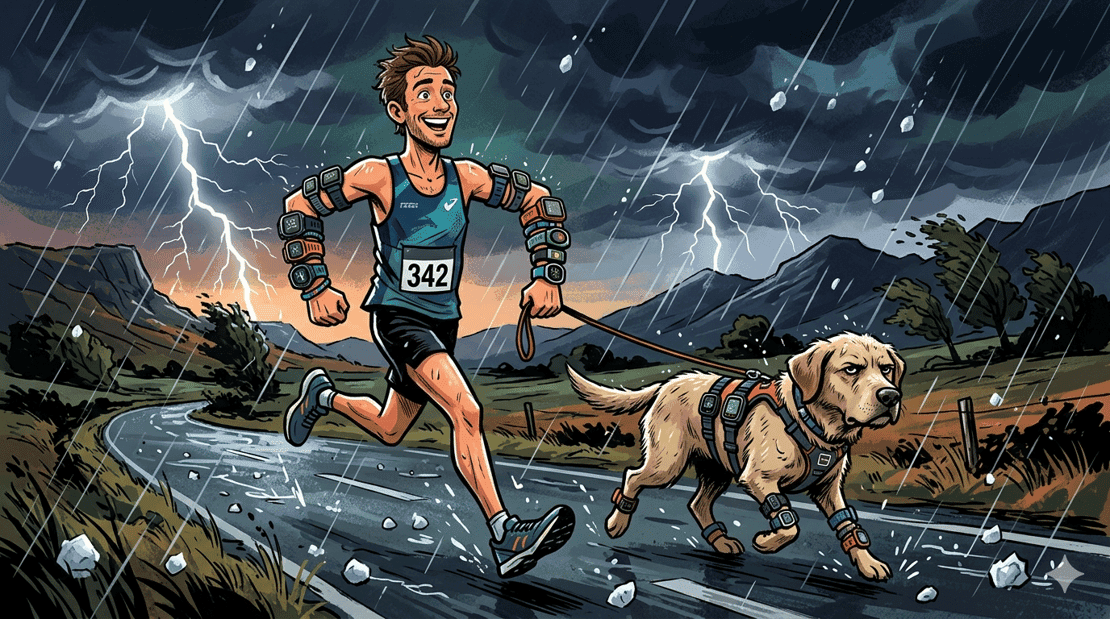
The Fitbit Air samples optical PPG data every 2 seconds. That single spec, buried in most reviews, has real consequences for athletes who want accurate heart rate data during hard efforts, and almost nobody has explained why.
What the 2-Second Sampling Rate Actually Does
Optical PPG sensors on the wrist read blood volume changes through light. The Fitbit Air's sensor fires every 2 seconds, meaning you get 30 data points per minute. Garmin's Elevate v5 sensor, by contrast, operates at roughly 1-second intervals during recorded activities, doubling the resolution. Polar's Precision Prime runs at similar high-frequency sampling. More data points means the algorithm has more raw material to work with when calculating your heart rate, and it matters most when your heart rate is changing fast.
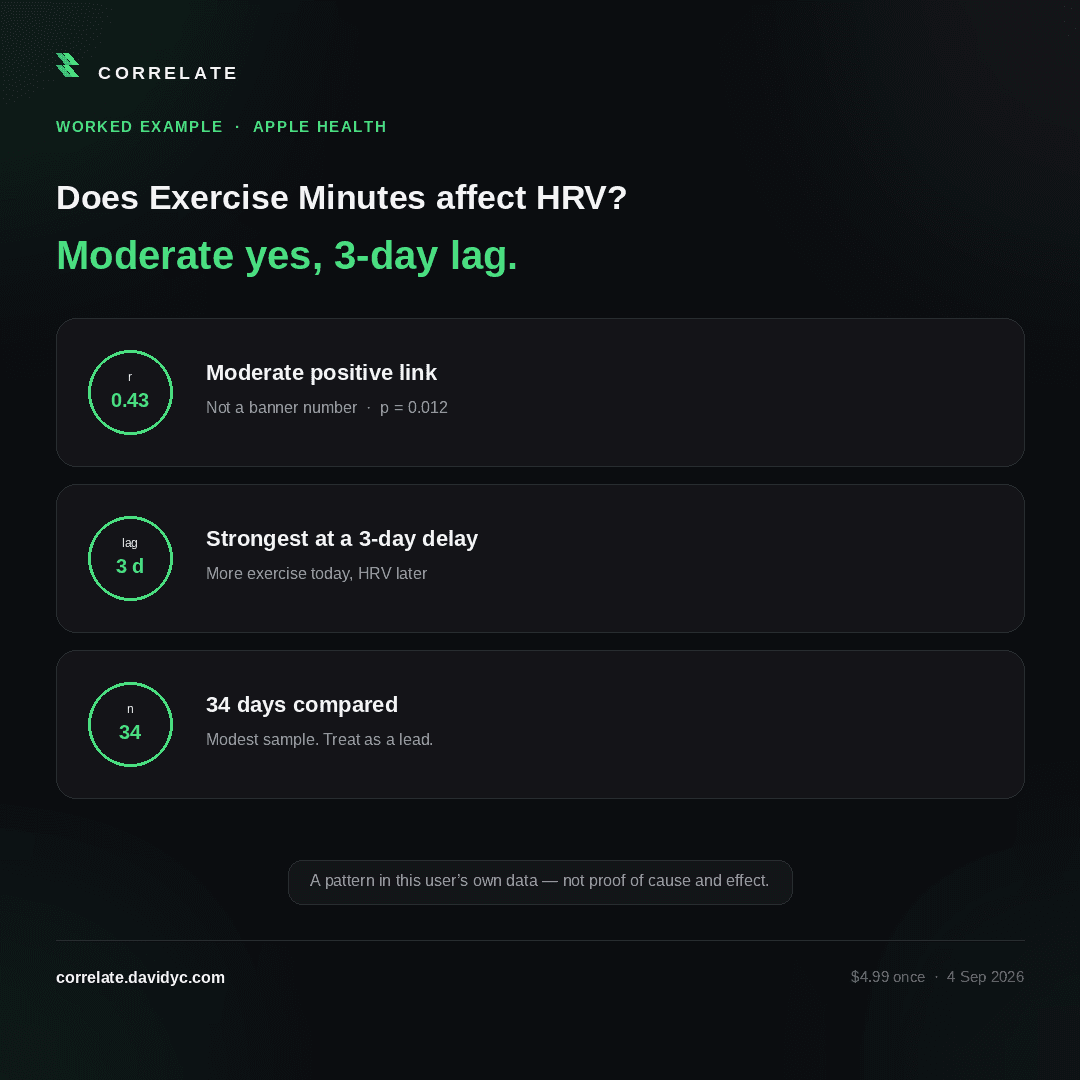
DCR Analyzer's n values tell you exactly how many data points a device contributed to a given comparison. When the Fitbit Air shows a low n value against a chest strap reference, that's not a coincidence. It's the 2-second ceiling showing up in the data. A Garmin HRM-Pro chest strap reads electrical impulses beat by beat, so its n value is limited only by your actual heart rate. The Fitbit Air's optical PPG signal is always capped at that 30-point-per-minute ceiling, no matter how hard you're working.
Why Hard Efforts Expose the Gap
At Zone 2 steady-state riding or easy running, 2-second sampling is largely fine. Your heart rate drifts slowly, and 30 samples per minute captures the trend accurately enough. The problem arrives when your heart rate spikes or drops quickly: a hard interval, a HYROX sprint station, a VO2max rep. In those moments, the true heart rate curve can swing 20 to 30 bpm in under 10 seconds. A device sampling every 2 seconds may catch the peak, or it may sample in the gap between two beats of the wave and report something 15 bpm lower. You're not getting bad hardware; you're getting a mathematical limitation baked into the design.
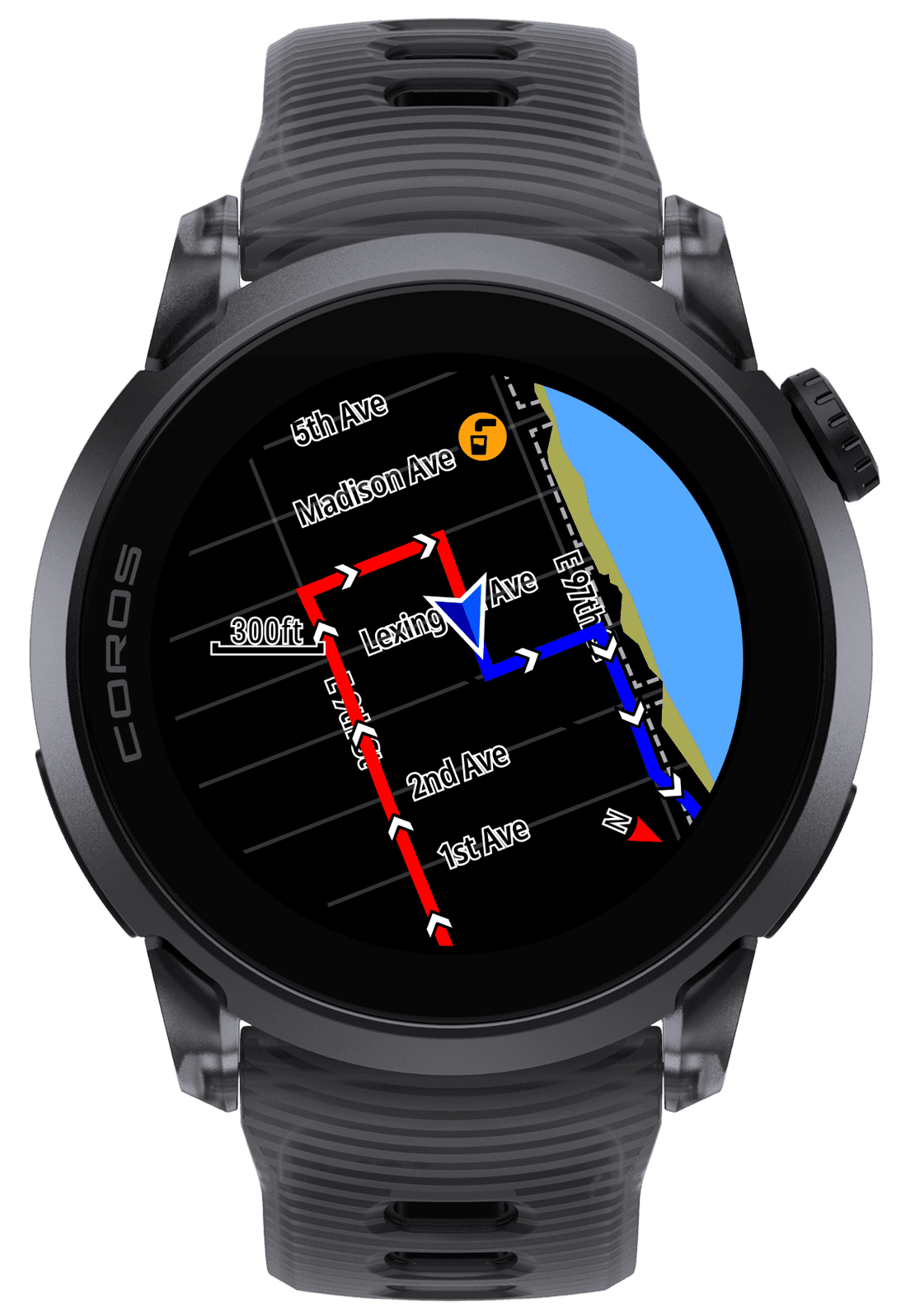
This is distinct from sensor accuracy in the traditional sense. The Fitbit Air's optical sensor may be reading blood volume correctly at the moment it samples. The issue is how often it decides to look. Compare that to Whoop MG, which also uses wrist-based PPG but pushes continuous sampling during workouts, or the Coros Pace 3, which lets you configure high-frequency optical HR during recorded activities. Our [Fitbit Air vs Whoop MG heart rate accuracy piece across HYROX and Z2 ride data](/en/articles/fitbit-air-vs-whoop-mg-heart-rate-accuracy-hyrox-and-z2-ride-data-2026-06-13) showed exactly how that gap materializes in real workout files.
Practical Impact Across Sports
For a cyclist doing a 150-minute endurance ride in Zone 2, the 2-second sampling rate is probably not your limiting factor. The data will look clean, the average heart rate will be accurate, and you'll have a usable file. Our [bicep sleeve test across a 150-minute ride](/en/articles/fitbit-air-on-your-bicep-diy-sleeve-fix-and-150-minute-ride-data-2026-06-06) confirmed this: steady-state data held up well regardless of wear position. Running tempo intervals are a different story. Heart rate response lags are already a feature of wrist PPG due to the physics of skin perfusion; stack a 2-second polling cap on top and you're smoothing out the very spikes that define interval training.
Swimming adds another layer of complexity. Water turbulence disrupts the optical signal, and open water is worse than pool. Our [open water swim data loss article](/en/articles/fitbit-air-open-water-swim-data-loss-what-athletes-need-to-know-2026-06-06) found meaningful dropout periods in open water sessions. When you combine reduced optical signal quality with a 2-second sampling floor, the effective data density drops further. SpO2 readings during swim recovery suffer from the same compounding problem: the sensor is optical, air pressure from the barometric altimeter tells you nothing about swim depth, and lower sampling makes noise harder to filter.
For CrossFit and HYROX athletes, this is the most acute limitation. Those sports feature rapid heart rate transitions: from deadlifts to sled pushes to burpees within seconds. Peak heart rate accuracy, which many athletes track for training zone prescription and load management, can be meaningfully underreported when the 2-second window happens to land between the actual physiological peak and the device's next read.
What's disappointing is that Google and Fitbit didn't offer a high-frequency mode for recorded workouts the way Coros does, or even document the sampling behavior clearly in the app. The [Google Health 5.0 app has its own data presentation problems](/en/articles/google-health-5-0-app-review-design-flaws-hurt-fitbit-air-data-2026-06-08) that compound this, making it harder to audit the raw data yourself. At $100, some compromises are expected. But a locked sampling rate with no workout-mode override is a design choice that directly limits the device's usefulness for interval training and mixed-modality sports.
The Fitbit Air is a solid recovery and sleep tracker for athletes who train mostly in steady zones. If your primary use is Zone 2 cycling, easy runs, and overnight HRV monitoring, the 2-second ceiling rarely costs you anything real. For runners doing 5K-pace work, triathletes in transition heart rate spikes, or HYROX athletes chasing peak HR accuracy, you'll get cleaner data from a Garmin Forerunner 965 with Elevate v5, a Polar Pacer Pro with Precision Prime, or pairing any device with a Garmin HRM-Pro chest strap for electrical beat-to-beat precision. The full [Fitbit Air review versus Whoop](/en/articles/fitbit-air-review-100-display-less-band-vs-whoop-in-2026-2026-06-05) covers who that $100 decision actually makes sense for.
Mentioned watches
Head-to-head comparisons
Buying guides