Four Tri Suits Tested for Postpartum Racing
Returning to triathlon after pregnancy asks more from a race suit than aero fabric and a thin chamois. Triathlete’s postpartum-focused test puts the practical priorities where they belong: supportive compression, chafe control, bathroom convenience, and, for athletes who need it, access for nursing or pumping. Across the four suits tested, the Coeur Sleeveless and Roka Generation II emerge as the strongest all-round options, while the 2XU Core and Zoot LTD Tri Aero FZ each make clearer compromises.
Access and storage matter on race day
For a first sprint back, the 2XU Core makes sense if a forgiving fit matters more than long-course storage. Its looser belly fit can accommodate weight fluctuation and body recomposition, and the open back felt unobtrusive on the shoulders in testing. But Triathlete found its midriff held heat and sweat, its zipper did not open far enough for easy pumping or breastfeeding, and the limited pockets rule it out for a half or full Ironman. A high zipper that touched the neck also caused slight run chafing.
The Zoot LTD Tri Aero FZ goes in the opposite direction. Its full frontal zipper was easy for the tester to operate and allows the top to hang loose for breastfeeding, while numerous pockets and cooling pockets at the neck and kidney area support its strong heat-management score. It also scored highly on the bike. The catch is serious: armpit chafing was severe enough that the tester could not finish a 3-mile run comfortably, and a high waistline may irritate a C-section scar. We would only consider it after a properly active try-on, not just a mirror test.
The two stronger all-round choices
Coeur’s Sleeveless Tri Suit looks like the sensible value pick. Triathlete rates it highly for compression, water performance, run performance, chafe prevention, durability and value. Its full zipper and sleeveless cut make bathroom stops and pumping more manageable, while two large hip pockets can each fit something as large as a handheld breast pump, backed by two rear pockets. That is unusually useful design, not a token pocket count. There are still fit details to check: upper-body compression made the zipper harder to pull over a larger breast size, the zipper flap was not large enough to eliminate run chafe, and the tester felt some tightness across the back on the bike.
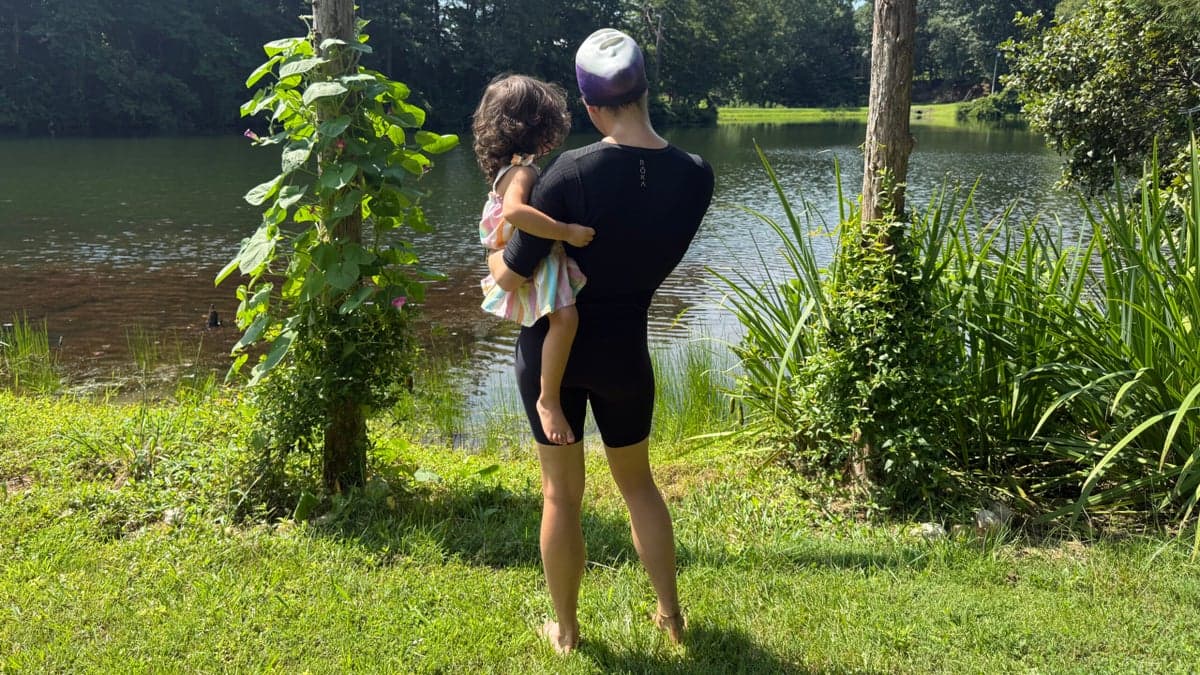
The Roka Generation II earns the top overall rating in this test. It combines high compression and core support with thin, breathable sleeves that retained full range of motion, plus top marks across swim, bike, run and chafe prevention. For athletes balancing a return to racing with broader health signals, wearable data can inform training decisions, but it cannot determine whether a suit rubs a changed body or makes feeding logistics workable. Our guide to [what wearable data actually shows for female athletes](/en/articles/red-s-in-female-athletes-what-your-wearable-data-actually-shows-2026-06-22) makes the same basic point: context wins.
What is missing? No suit is a clean solution for every lactating athlete. Even the Roka’s full zipper may take extra effort with larger or engorged breasts, and its two diagonal rear pockets are only medium-sized. Color choice is also narrow, limited to black or black-and-white, and the tester saw color leak once during handwashing. More broadly, these are individual test findings, so scar placement, breast size, posture, and chafe points still make a pre-race ride and run essential.
Our verdict: choose Coeur Sleeveless for the best balance of pocket space, comfort, compression and value; choose Roka Generation II when firmer support and broad race performance come first. The 2XU suits shorter, lower-storage racing, while the Zoot is for athletes whose fit test confirms it will not chafe. No tri suit should force a postpartum athlete to choose between racing well and feeling comfortable.
Mentioned watches