Garmin CIRQA Accuracy Tested: Hyrox, Open Water, Real Results
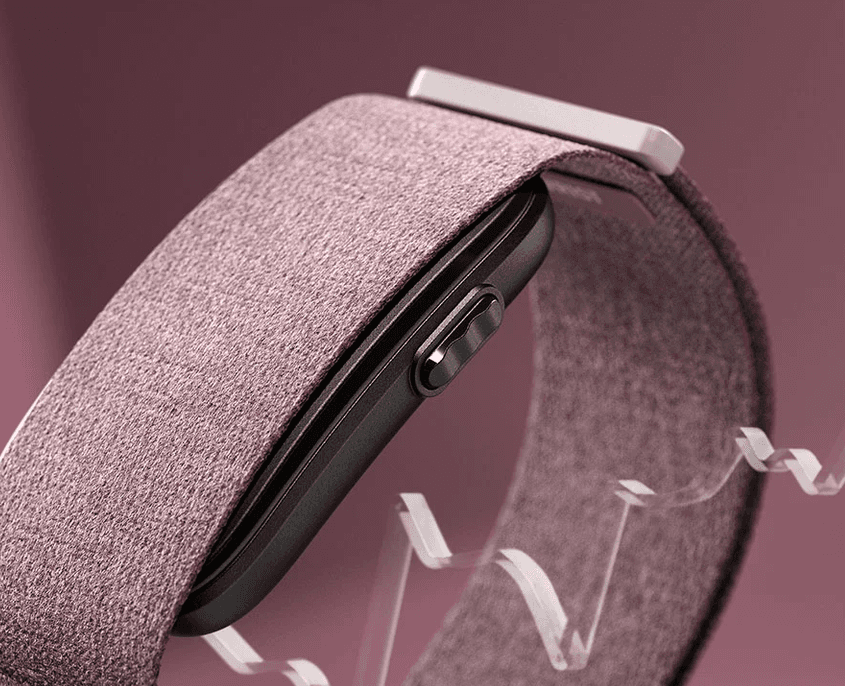
The Garmin CIRQA is a screenless optical arm band that costs $199, pairs to Garmin watches and Edge cycling computers via ANT+ and Bluetooth, and sits on your bicep instead of your wrist. It launched in 2026, sold out almost immediately after a strong Q2 showing that helped push Garmin's fitness segment up 25% in a single quarter, and it has already been through enough real-world testing to paint a clear picture. The short version: outstanding in the gym and on the bike trainer, seriously weak in open water.
Sensor Setup and Hardware Basics
The CIRQA uses a PPG optical sensor, meaning it reads heart rate by shining light into your skin and detecting changes in blood volume. That is the same underlying technology as the Garmin Elevate sensor on your Forerunner or Fenix, and if you want the full story on why Garmin chose the 4.1 generation instead of the newer Gen 5, we covered that decision in depth [here](/en/articles/garmin-elevate-4-1-in-cirqa-why-not-gen-5-2026-08-07). The device has exactly one button and one multi-colour LED, which handle everything from activity recording to pairing mode to battery status to factory reset. No touchscreen, no display. It pairs as an external heart rate source, so your Garmin watch or Edge head unit does the data processing and display.
On the bicep, the CIRQA sits better than most wrist-based devices during functional movements. Rowing, wall balls, burpees, and sled pushes all tend to introduce wrist flex and impact that tanks PPG accuracy. Moving the sensor up the arm reduces that motion artifact significantly, and that is exactly what the test data confirmed.
Hyrox and Gym Performance
In a Hyrox simulation test, the CIRQA matched WHOOP MG, Amazfit Balance 3, and Fitbit Air within a single beat per minute across the session. More telling: it outperformed the Garmin HRM 600 chest strap in that same test. Wait, stop. The HRM 600 is an ECG-based chest strap that reads electrical impulses from the heart directly, so it should theoretically be the gold standard in almost any condition. Beating it in a functional fitness context almost certainly means the HRM 600 suffered from strap movement or electrical interference during the mixed-movement stations rather than the CIRQA doing something physically impossible. Still, the practical outcome is what it is, and for a Hyrox or CrossFit athlete the CIRQA is a genuinely strong choice. You can dig into the full [CIRQA review and its comparison against Whoop 5.0](/en/articles/garmin-cirqa-review-199-screenless-band-vs-whoop-5-0-2026-08-06) for more on that positioning.
For Garmin Edge cyclists specifically, the CIRQA fills a gap that has gone unaddressed for years. Riders who use a head unit without wearing a GPS watch have had to strap on a chest HRM or go without. The CIRQA pairs directly to the Edge 1050 or Edge 540 as a heart rate source, so you get clean optical data without a chest strap and without wearing a full watch. The arm band is comfortable under a jersey, and the bicep position stays stable through the pedal stroke in a way that a wrist sensor simply does not.
Open Water: The Real Weakness
The open water swim result is a different story entirely. In a test against Apple Watch Ultra 3, Polar Sense, and WHOOP MG, the CIRQA under-read heart rate by 20 to 30 bpm. It came last in that comparison, and the margin is not close. Wrist optical sensors have always struggled with cold water, motion, and pressure changes during swimming, and a bicep optical sensor faces the same fundamental physics. Light-based blood volume detection is unreliable when the body diverts blood flow away from the limbs, when water pressure compresses tissue, and when constant arm movement shifts the sensor position. The Polar Sense, which also uses PPG technology, held up better, which suggests fit and seal quality matter enormously in that environment. If open water triathlon is your primary use case, this is a serious problem.
What else is missing? The CIRQA has no GPS, no barometric altimeter for elevation via air pressure, and no SpO2 optical sensor. It is purely a heart rate broadcasting device with basic activity detection. There is no recovery scoring native to the band itself, unlike WHOOP MG which processes HRV, respiratory rate, and sleep on-device and gives you a daily readiness number without needing a paired watch. If your Garmin watch is doing the recovery analysis anyway, that is not a dealbreaker, but athletes who wanted a standalone recovery tracker to free up their wrist completely will not find that here. The Polar Sense was filling a similar bicep-worn HRM role before reliability issues pushed reviewers toward the CIRQA, which tells you something about the maturity of this product category overall.
The CIRQA is built for athletes who already live in the Garmin ecosystem and want a cleaner data feed during training without a watch on their wrist. At $199 it is cheaper than a WHOOP MG annual subscription and more useful than a basic chest strap for multi-sport functional fitness. Buy it if you do Hyrox, CrossFit, or indoor cycling and want accurate heart rate without wrist bulk. Skip it if open water swimming is a regular part of your training, and use a chest ECG strap or waterproof arm band specifically rated for swim use instead. For triathletes who need all three disciplines covered accurately, the CIRQA does two out of three well. That might be enough, depending on how you structure your training weeks.
Mentioned watches
Head-to-head comparisons
Buying guides