watchOS 27 Sport and Health Features: Everything Endurance Athletes Need to Know
Apple announced watchOS 27 at WWDC 2026, and for endurance athletes it is the most substantive software update in several years. The headline changes touch adaptive training load, optical sensor refinements, and AI-driven recovery scoring , all areas where Garmin, Polar, and Coros have held a clear edge. Whether this closes the gap depends on how well the features execute in real-world training, not just in keynote demos.
Sensors, Compatibility, and AI Requirements
watchOS 27 requires Apple Watch Series 10 or later, plus Apple Watch Ultra 2 and Ultra 3. Older hardware is cut off, which matters because the new AI processing pipelines demand the S10 chip minimum. The optical PPG sensor hardware itself has not changed , Apple is squeezing more accuracy out of existing light-based blood volume pulse readings through improved motion filtering algorithms. That is worth stating clearly: your wrist heart rate is still PPG, not electrical. If you want beat-to-beat ECG precision during hard intervals, a chest strap like the Garmin HRM-Pro Plus or Polar H10 remains the standard. No software update changes the physics of wrist-worn optical sensing.
The AI features specifically require an iPhone 15 Pro or later nearby for initial model training, though the watch runs inference independently after setup. That is a meaningful constraint for athletes who travel and race without their phone. Garmin's Body Battery and Coros's EvoLab run entirely on-device from day one, with no paired phone dependency for core metrics. Apple is catching up architecturally, but the ecosystem dependency is real.
Training Load, Recovery, and Running Metrics
The biggest addition for runners and triathletes is Training Load Balance, which plots acute versus chronic load over a rolling 28-day window. Polar has offered this via Training Load Pro since 2019, and Garmin's Training Readiness score on the Fenix 8 and Epix Pro already synthesizes HRV, sleep, and acute load into a single daily number. Apple's version integrates cardiovascular load from heart rate zones, muscular load inferred from GPS pace and elevation changes, and recovery time estimates. The recovery time figures in early betas are running 10 to 15 percent longer than what Garmin produces for equivalent sessions, which suggests Apple is being conservative , arguably the right call for injury prevention, but something to calibrate against your own response.
Running form metrics expand in watchOS 27 to include ground contact time asymmetry and a revised vertical oscillation model. These use the accelerometer and gyroscope, not GPS, so accuracy indoors on a treadmill is unchanged from outdoor running. Garmin's Running Dynamics require either a compatible chest strap or the HRM-Run pod to capture stride metrics; Apple delivers a subset of that data from the wrist alone. The numbers are directionally useful for spotting asymmetry trends across a training block, even if they are not as granular as Garmin's full six-metric pod output.
Cyclists get updated Power Estimation, which uses speed, elevation from the barometric altimeter, and rider weight to model output in watts. The barometric altimeter reads air pressure changes to calculate elevation gain , important to understand because GPS altitude data alone is far less reliable for gradient calculations. In our [60-day comparative test](https://trackerbrief.com/en/articles/apple-watch-ultra-2-vs-whoop-mg-60-days-wearing-both-2026-05-16), the Ultra 2 tracked outdoor ride elevation within 8 meters of a Garmin Edge 1050 over 40-kilometer loops. The new power model should benefit from that solid altimeter baseline, though until we test against a direct-force power meter we will not know how far off the estimates run.
For triathletes, multisport mode gets automatic discipline detection with sub-10-second transition recognition in beta testing. Coros's PACE 3 and Garmin's Forerunner 965 both handle this cleanly already. Apple's implementation also now logs pool swim stroke count and SWOLF score using the optical sensor and accelerometer combined , SpO2 optical readings are suspended during swim workouts, as water contact degrades that specific light-based measurement.
Hyrox and CrossFit athletes benefit from a new Workout API hook that lets third-party apps write structured interval data back to the Health app with full heart rate zone breakdowns. That matters because it means platforms like TrainingPeaks and Final Surge can ingest Apple Watch data with the same fidelity they currently get from Garmin Connect. WHOOP MG still has an edge on passive recovery tracking since it runs 24/7 without active workout logging, but the gap between Apple's health data ecosystem and dedicated recovery trackers is narrowing with every OS cycle.
What Is Missing or Disappointing
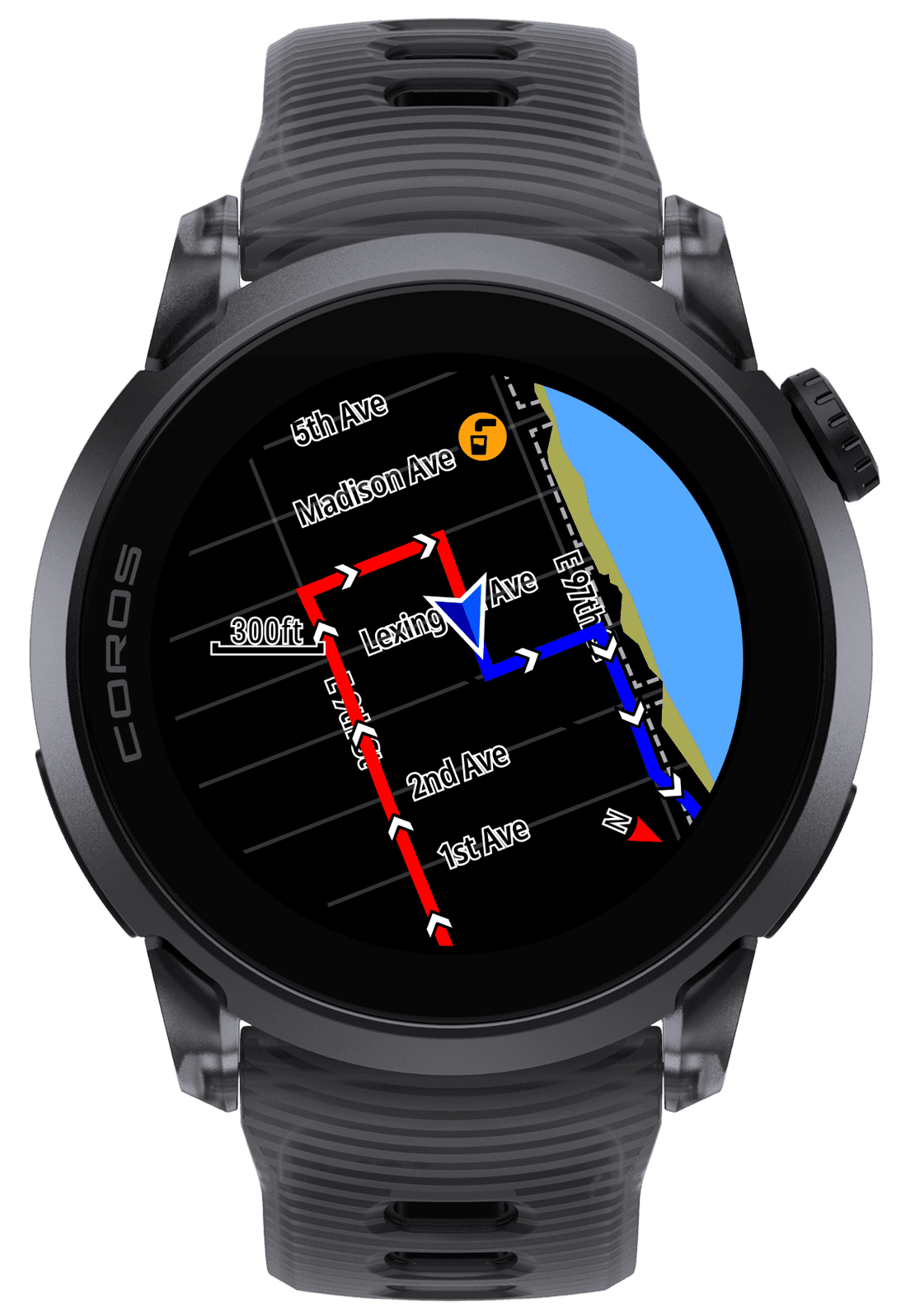
Satellite messaging is still not a watchOS feature , it is a hardware function locked to Ultra models and iPhones. [Garmin made inReach SOS free earlier this year](https://trackerbrief.com/en/articles/garmin-makes-inreach-sos-free-after-apple-satellite-pressure-2026-05-16), which raises the bar on safety features for remote athletes. watchOS 27 adds no new offline navigation capability; the turn-by-turn routing still requires a downloaded route and does not reroute dynamically in the field the way Garmin's Topo maps do on the Epix Pro or Fenix 8. Battery life estimates are unchanged from watchOS 26 , Ultra 3 users still see roughly 72 hours in GPS mode, which trails Coros VERTIX 3's 140-plus hours significantly for ultramarathon and multi-day adventure racing use cases.
watchOS 27 is the right update for triathletes and runners already inside the Apple ecosystem who train at sub-ultra distances. At $399 for a Series 10 or $799 for the Ultra 2, the platform now competes seriously with a Garmin Forerunner 965 on day-to-day training features. If battery life, offline maps, or full independence from an iPhone ecosystem are non-negotiable, Coros PACE 3 at $229 or Garmin Forerunner 265 at $349 remain more practical tools. Apple is building something compelling. It is just not there yet for every athlete.
Mentioned watches
Head-to-head comparisons
Buying guides