Eight Brands That Could Launch a Screenless Recovery Band in 2026
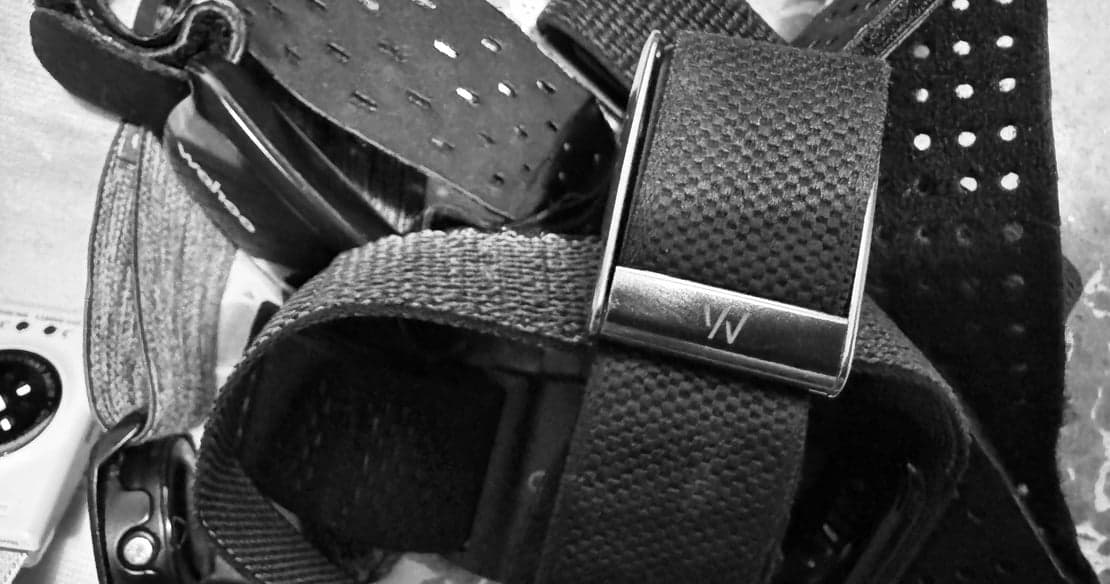
Whoop's screenless band concept now generates over $1 billion in category revenue annually, and every major wearable brand has noticed. The model is simple: no display, continuous optical PPG heart rate and HRV tracking, sleep staging, and a subscription that keeps users locked in month after month. Garmin, Polar, Coros, Fitbit, Apple, Samsung, Amazfit, and the still-unshipped CIRQA are all sitting on enough sensor and software infrastructure to build a direct competitor. The question is not whether they can. It is whether they will, and when.
The Sensor Stack Is Already There
Every brand on this list already ships wrist-based optical PPG sensors capable of continuous heart rate and SpO2 measurement. That is blood volume pulse detection via reflected light, not electrical signals like you get from a chest strap. The hard part is not the hardware. Garmin's Elevate v5 sensor, used in the Fenix 8 and Forerunner 965, already captures HRV in the sub-millisecond range needed for meaningful recovery scoring. Polar's optical sensor suite in the Ignite 3 does the same. Coros's Vertix 3 added overnight HRV tracking in late 2024. Stripping a screen off any of these platforms and shrinking the chassis to a band form factor is an industrial design challenge, not a sensor physics one.
The subscription piece is where brands get nervous. Garmin has spent 20 years building a reputation on one-time hardware purchases. Their Connect ecosystem is free. Asking a Garmin loyalist to pay $30 per month for a band with no display is a positioning problem, not a capability gap. Polar faces the same tension. Coros has kept its platform aggressively free, which is part of why [Garmin and Coros owners are among the most likely to switch brands in 2026](/en/articles/garmin-and-coros-owners-most-likely-to-switch-brands-in-2026-2026-06-09) according to recent survey data. A subscription band from either would risk cannibalizing brand trust.
Fitbit Air Proves the Market Exists Below $100
Google's Fitbit Air already shipped and costs $100 with no mandatory subscription, which is a direct shot at Whoop's $239 upfront plus $30 per month model. The [Fitbit Air review](/en/articles/fitbit-air-review-100-display-less-band-vs-whoop-in-2026-2026-06-05) confirmed it delivers continuous optical HR tracking and HRV-based recovery scores in a screenless form factor. Accuracy testing during HYROX and Zone 2 cycling showed the Fitbit Air holds up reasonably well, though [head-to-head HR accuracy data against Whoop MG](/en/articles/fitbit-air-vs-whoop-mg-heart-rate-accuracy-hyrox-and-z2-ride-data-2026-06-13) shows Whoop still edges it during high-intensity transitions. Full comparative HRV results are available in the [Fitbit Air vs Whoop MG HYROX and HRV test](/en/articles/fitbit-air-vs-whoop-mg-hr-accuracy-hyrox-and-hrv-test-results-2026-06-21).
Fitbit Air proves two things simultaneously. First, the technology is commoditized enough for a $100 price point. Second, Google is willing to undercut Whoop on price while leveraging the same display-less concept. That puts pressure on everyone. Samsung could ship a Galaxy Band with identical specs and distribution muscle within a single product cycle. Apple is the wildcard: an Apple Band without a screen contradicts everything the Apple Watch Series 10 stands for, but a dedicated recovery accessory paired to the Watch is a different product story entirely.
CIRQA and the Unshipped Threat
CIRQA has generated significant pre-launch attention but has not shipped a single unit at time of writing. The spec promises continuous PPG-based HRV, a barometric altimeter for elevation tracking via air pressure changes, and a 30-day battery target. That battery claim alone, if accurate, would beat Whoop's 4 to 5 day real-world life and the Fitbit Air's roughly 6 days. Until product reaches reviewers, CIRQA is a concept with good marketing. Brands watching this space are not waiting for CIRQA to validate the category. Fitbit already did that.
What Is Missing Across the Board
The honest gap in every non-Whoop screenless band is coaching depth. Whoop's strain and recovery algorithm has five years of iterative refinement and a dataset of millions of users. Garmin's Body Battery is a solid readiness metric but it is tuned for watch users who also track GPS activities. A screenless band wearer generates a different data profile: no active GPS workouts, fewer manual inputs, heavier reliance on passive detection. None of the challenger brands have published anything suggesting they have retrained their models for that use case. HRV accuracy at the sensor level is one thing. Translating raw HRV data into actionable daily guidance without false positives is the actual product. That takes time and data, not just hardware.
The subscription aversion problem also cuts the other way. Brands that refuse to charge recurring fees will struggle to fund the algorithm development and app support that make recovery tracking useful long-term. Fitbit Air's free tier is compelling at $100, but Google's track record of killing fitness products is not reassuring for athletes who want a 3-year data history.
If you train seriously across running, cycling, and Hyrox-style events and want a screenless recovery band, Whoop MG at $239 plus subscription remains the most mature option in 2026. Fitbit Air at $100 flat is the budget pick if you primarily want sleep and resting HRV trends without the monthly fee. For everyone else, the real competition arrives when Garmin or Samsung commits to the form factor, which this category analysis suggests is a matter of product timing rather than technical readiness.
Mentioned watches
Head-to-head comparisons
Buying guides